What You Pay
We don't have a Winnetka-specific price list to quote here, and we're not going to make one up
What we can tell you is that cost on a panel job swings on two things: how old the door is and whether the replacement section has to be special ordered. Winnetka's housing stock goes back to 1938, well ahead of the service area's overall median build year of 1985, which means a fair number of doors here were installed, or replaced once already, in a size or panel profile that current manufacturers don't keep in standard stock. A single matching panel on an older door almost always costs more than the same swap on a 1990s sectional, not because the labor changes but because the part has to be sourced. We'll tell you on the visit whether your door takes a stock panel or a special order before any work starts.
Winnetka's median household income sits at $250,001, well above the broader service area's $121,583
And we mention that only because it tends to shift the decision: owners here more often choose to replace the matching panel properly rather than patch with a mismatched one. That's a homeowner call, not something we push.
How Long It Takes
The job itself, pulling a damaged section and bolting in a new one, is usually a half-day of work once the part is on the truck. What stretches a Winnetka job past that is sourcing. With houses here built as early as 1938, you're more likely to be running a door profile that isn't sitting on a local supplier's shelf, and we travel to Winnetka from Lake Zurich, 19 miles out, so there's no quick second trip if the wrong panel shows up. We measure twice and photograph the existing panel before we order anything.
If your door is a newer sectional installed sometime after a past remodel, the timeline looks like any other job in the service area. If it's closer to original to the house, budget extra calendar days for the panel to arrive before we schedule the install visit.
Why This Fails Locally
Panels fail two ways out here: physical damage, and metal fatigue from the cold. The service area sits in a cold, moderate climate band, and steel panels that have been through enough freeze-thaw cycles get brittle at the seams and dent instead of flexing back. On a door that dates toward Winnetka's older end of the build range, that brittleness compounds with age; a steel skin from decades back wasn't built to the same gauge as what ships today, so a dent that a newer door would shrug off can crease clean through.
With only 4,268 households in Winnetka itself, a small town, you also don't get the economies of a big new-construction subdivision where every house has the identical door and parts are interchangeable down the street. Each panel job here tends to be its own match.
Can You Do This Yourself
If the panel is a standard size and you can find an exact match online
Swapping it is within reach for someone comfortable with a drill and a second set of hands. The risk in Winnetka specifically is matching: order the wrong panel height or rib pattern for a door built when the house itself went up, as early as 1938 in parts of this town, and you've got a seam that doesn't sit flush, which lets cold air and water in right at the new section.
We'd rather you call before you order the part than after
We'll tell you straight if it's a panel you can handle yourself or if the hardware behind it, hinges, rollers, track alignment, needs a trained eye first.
What the Repair Takes
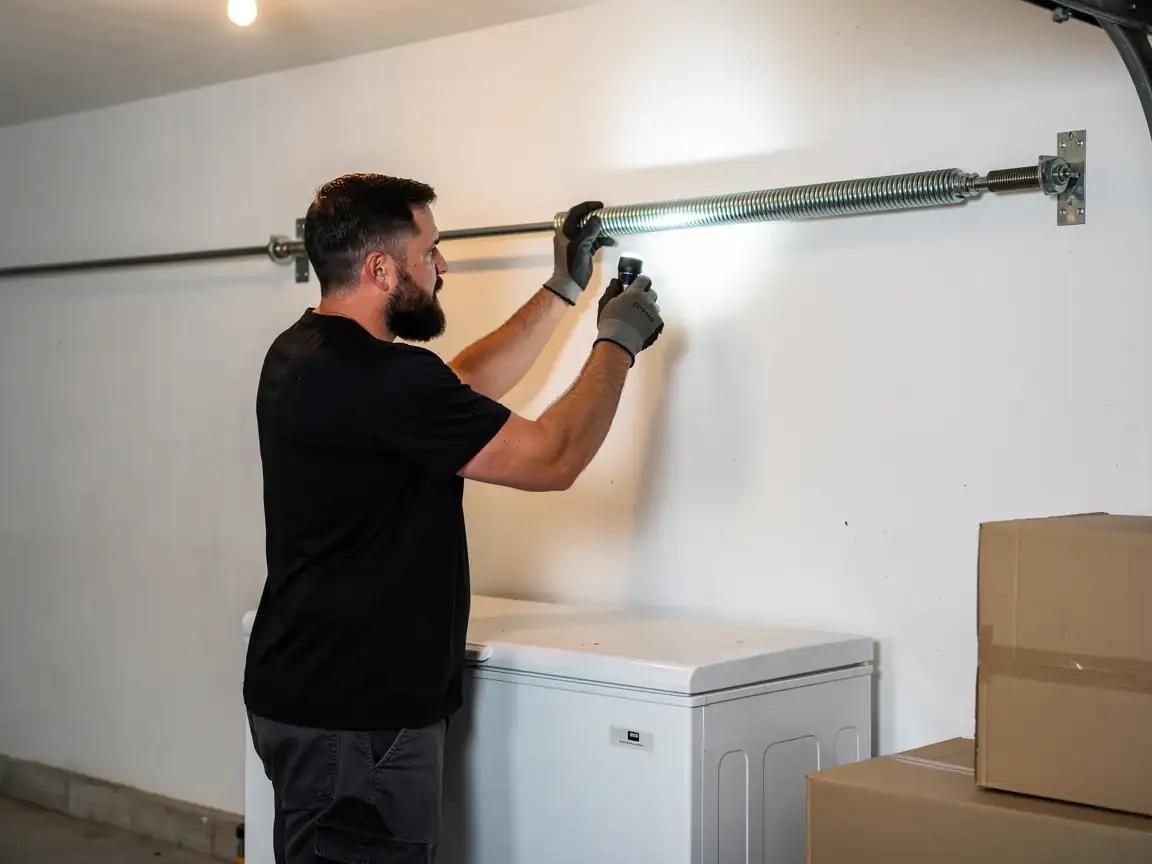
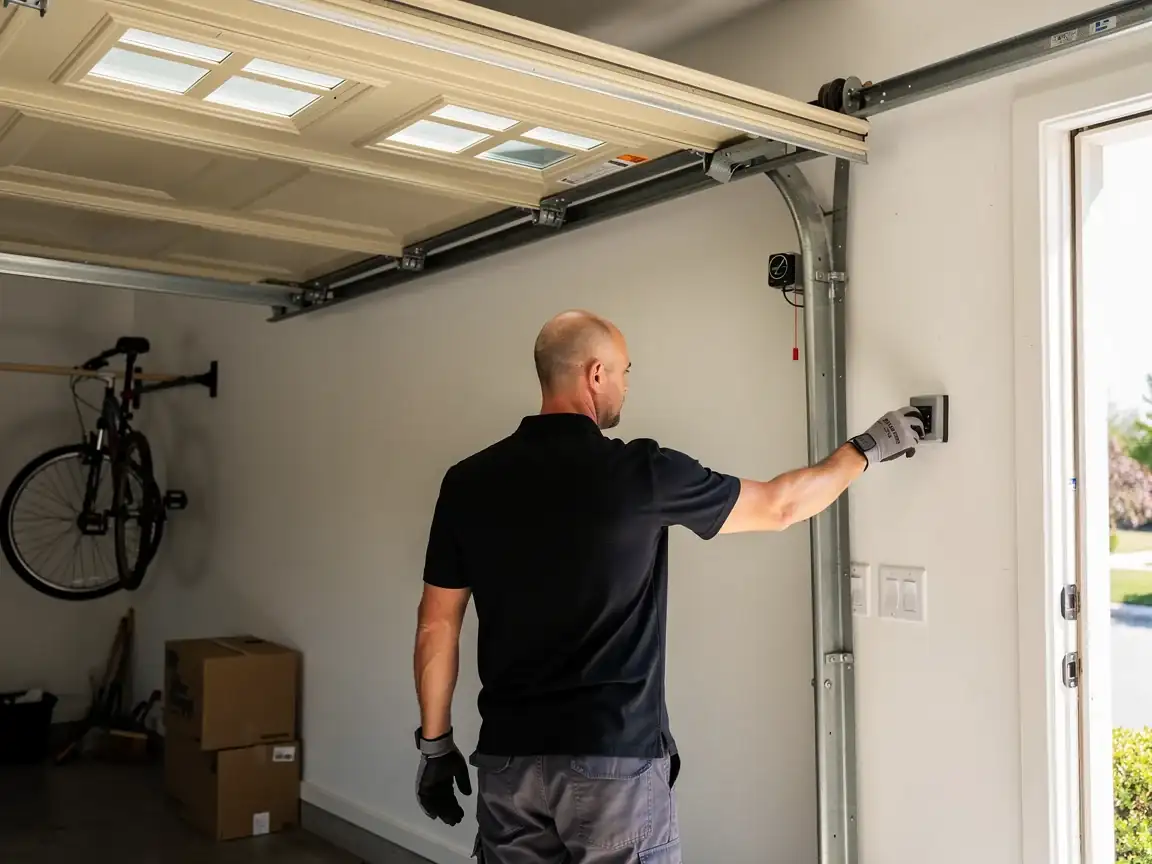
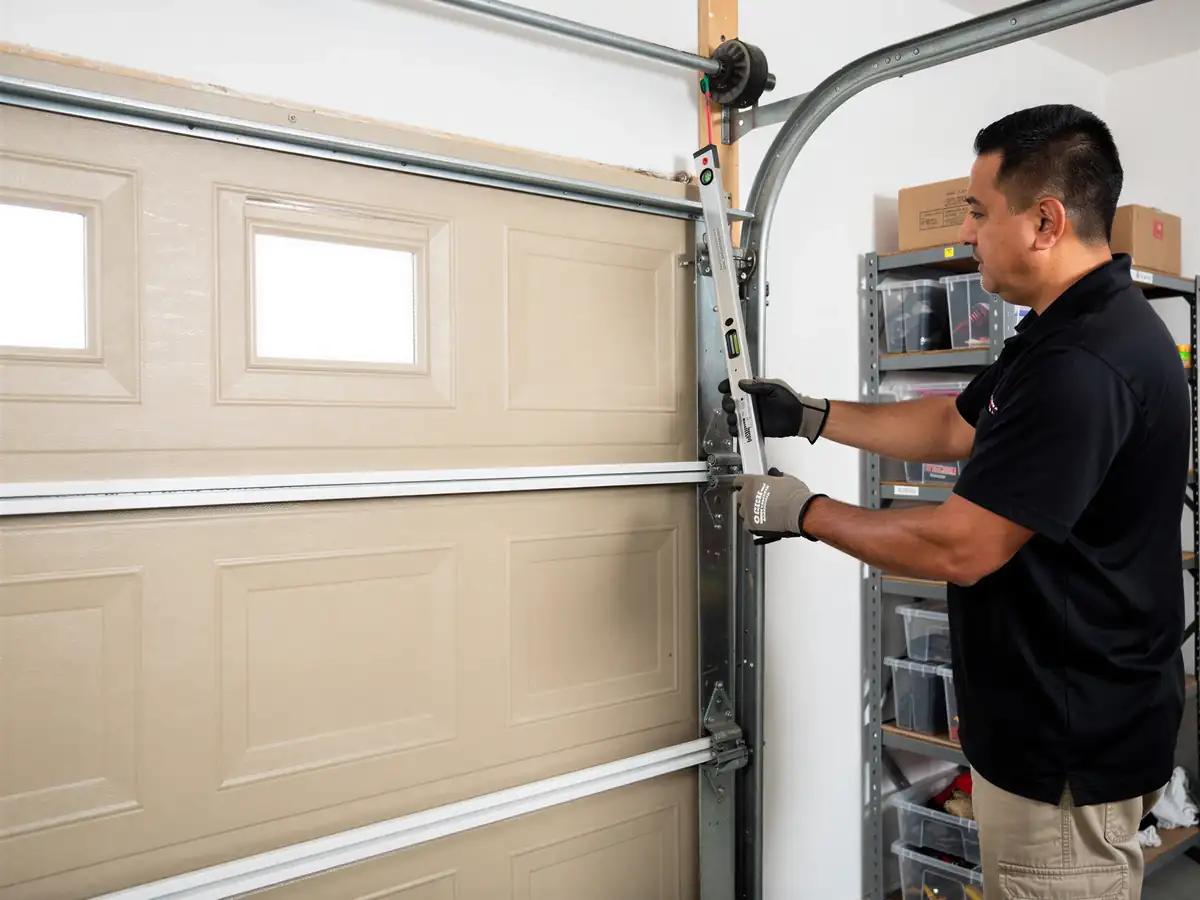
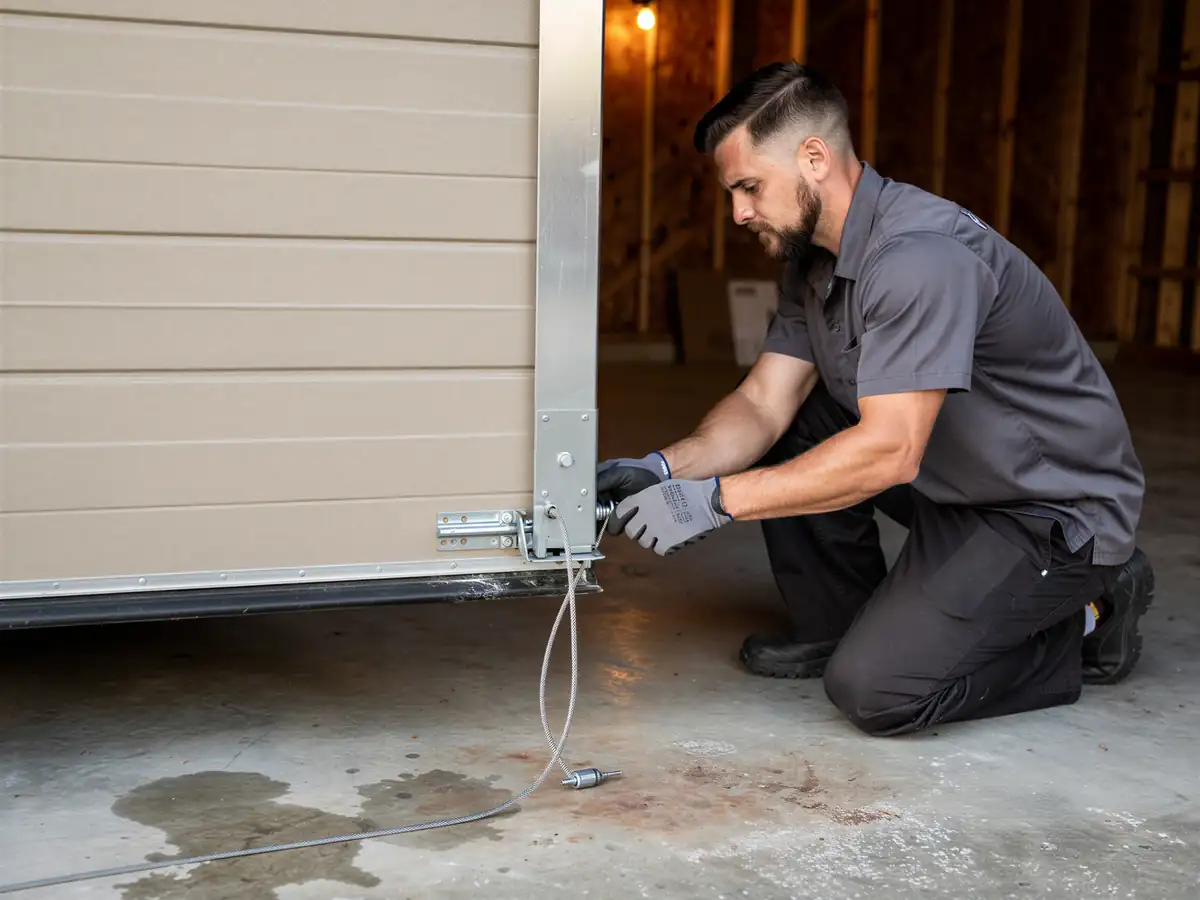
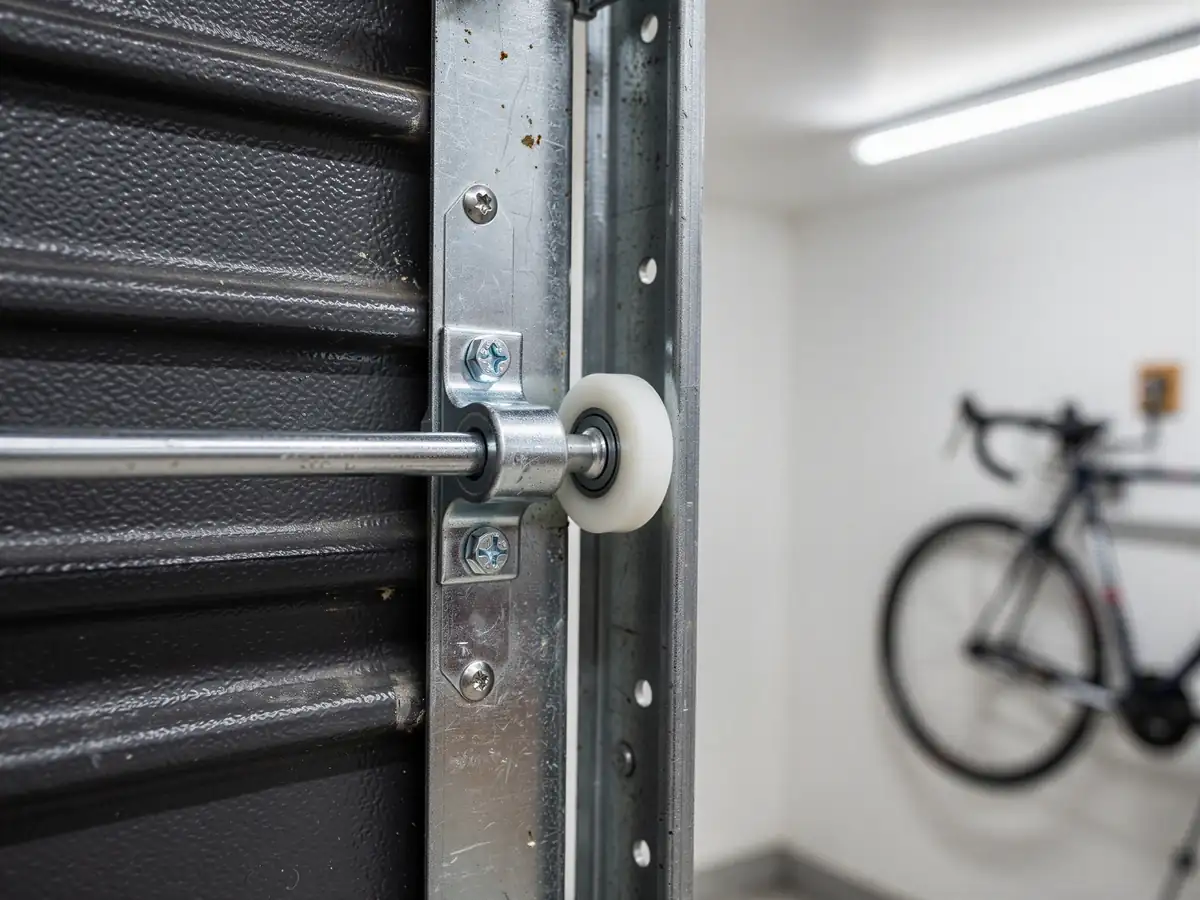
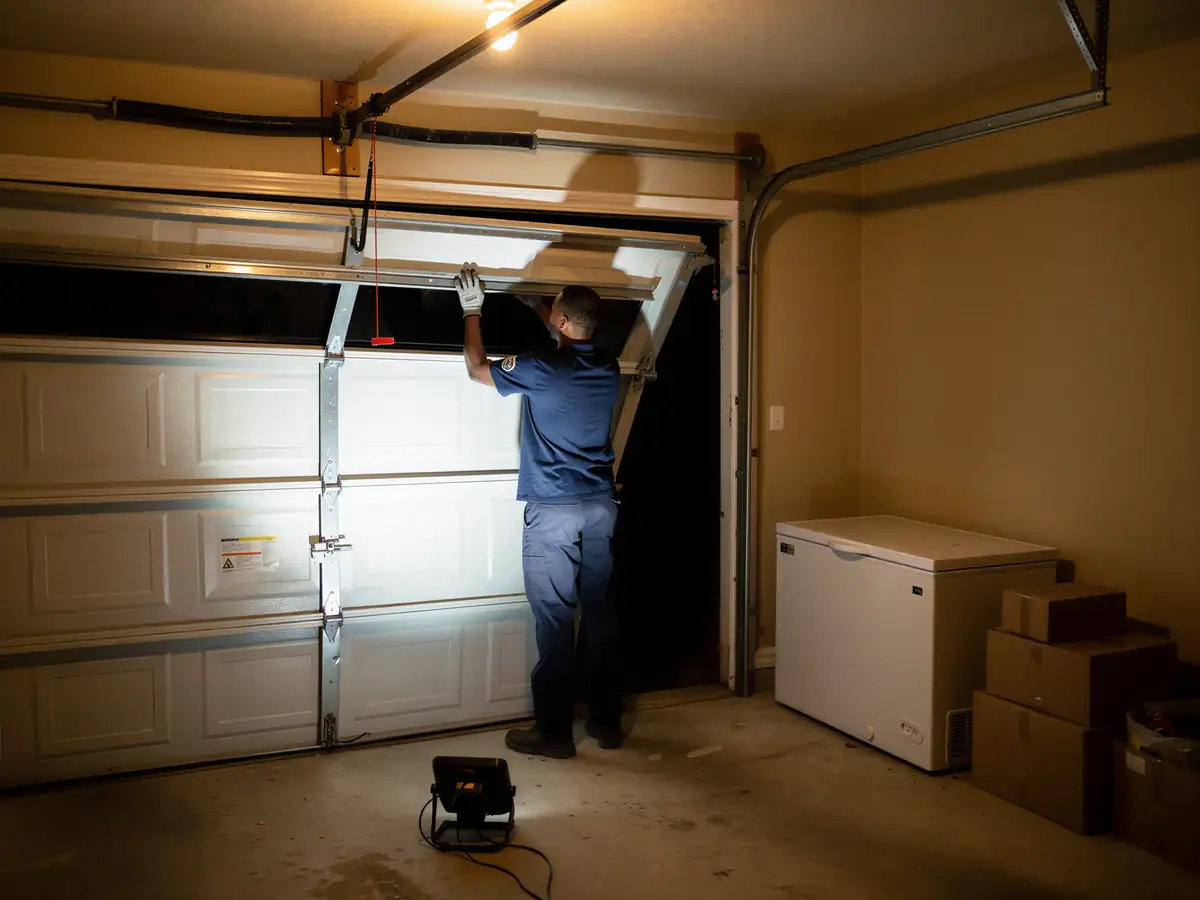
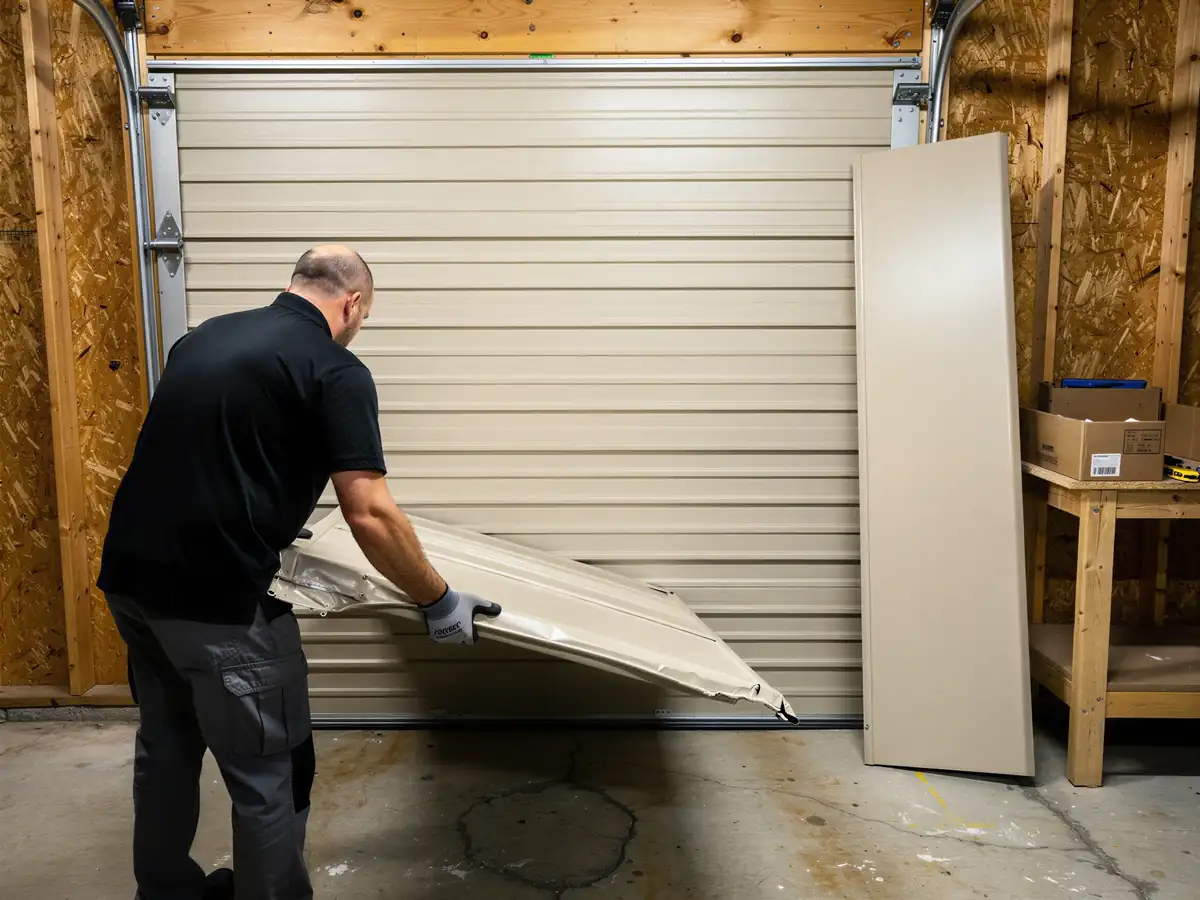
Pulling the damaged panel means disconnecting it from the hinges and rollers on either side, which on an older door often means hardware that's been painted over or rusted in place more than once. We free the fasteners, slide the new panel into the track, rehang the hinges, and check that the door still travels square on both sides before reconnecting the opener. On doors from Winnetka's older housing stock we spend extra time here, because a section swapped in without checking panel-to-panel alignment can throw off the whole door's balance against the spring.
We don't carry custom wood or carriage-style panel stock on the truck. If your door is one of those, the part gets ordered first and the install happens once it's in hand, not same visit.
How It Shows Up
Usually it starts small: a dent from a mirror clip or a backed-up car that doesn't pop back out, or a crease along a bottom panel where road salt and freeze-thaw cycles have worked at the seam over a winter. On older doors, you might also notice daylight at the edge of a panel that wasn't there before, which means the section itself has warped slightly rather than just denting.
If you're seeing rust bubbling up through paint on a panel face, that's usually further along than it looks, the steel underneath is already thinning. Catching it before the panel buckles under the spring load is cheaper than replacing it after.