Why This Fails Locally
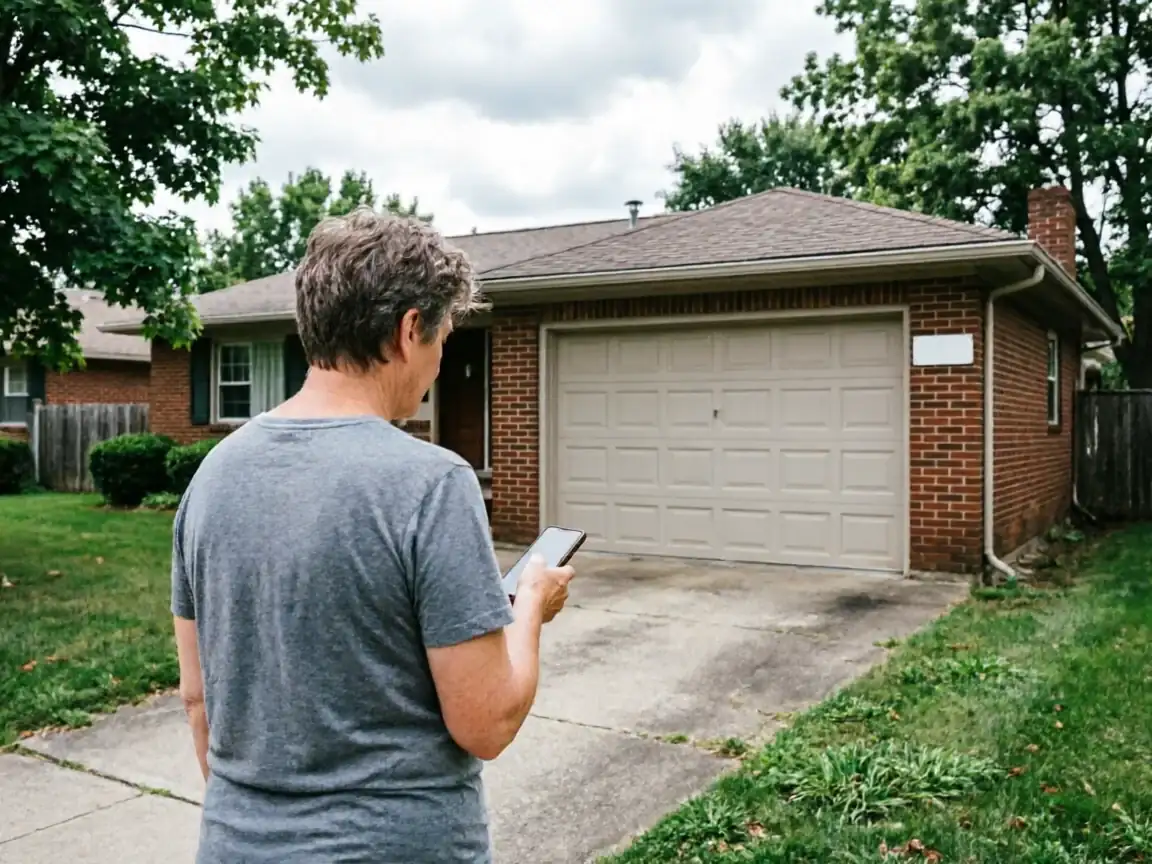
Most of the garage doors we get called out for in Lake Zurich sit on hardware installed when the house was built
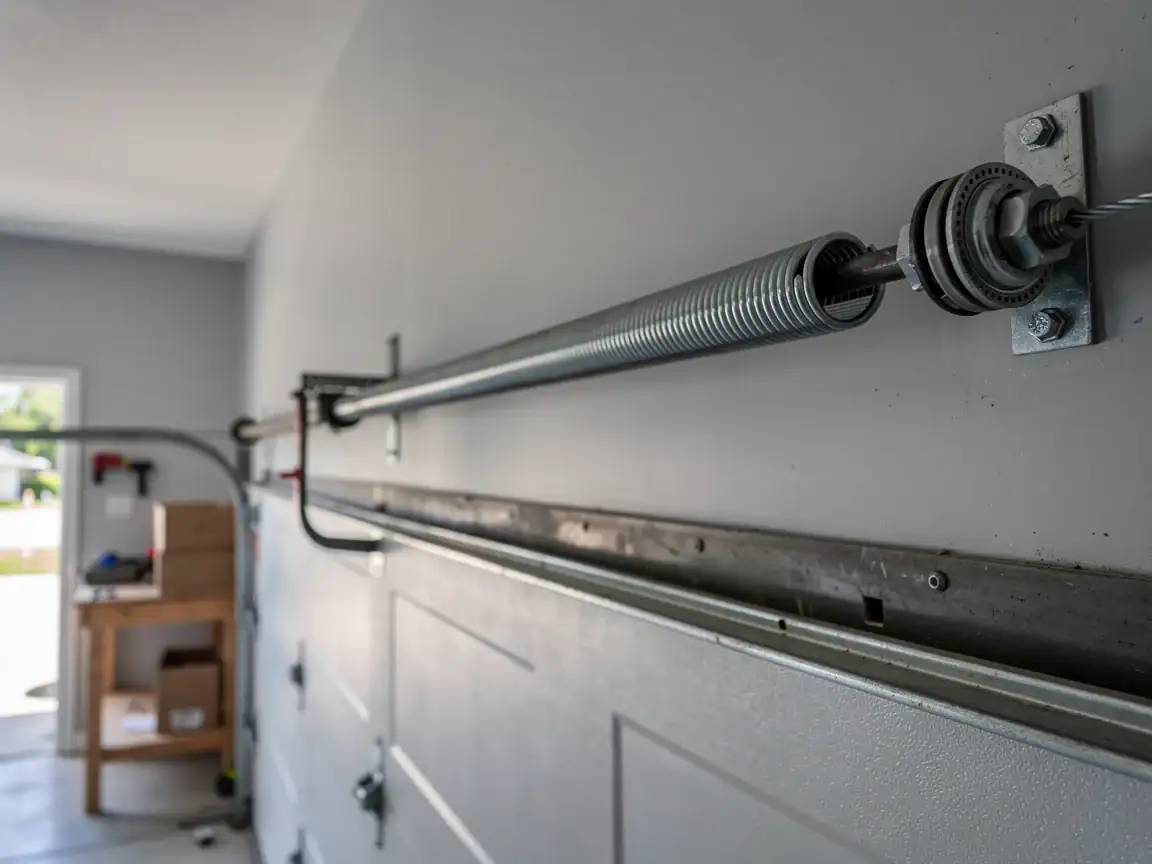
And a lot of this area went up between 1938 and 2009 with the median landing around 1985. That means a huge share of doors in town are now 35 to 45 years old, which is well past the rated cycle count for a torsion spring and close to the end of life for the opener's drive gear and capacitor. A door that's lasted this long hasn't been getting easier on itself - it's been getting harder to open, noisier on the way up, and slower to respond to the remote, and owners tend to notice the sound before they notice the risk.
- 45 years
The cold is the other half of it
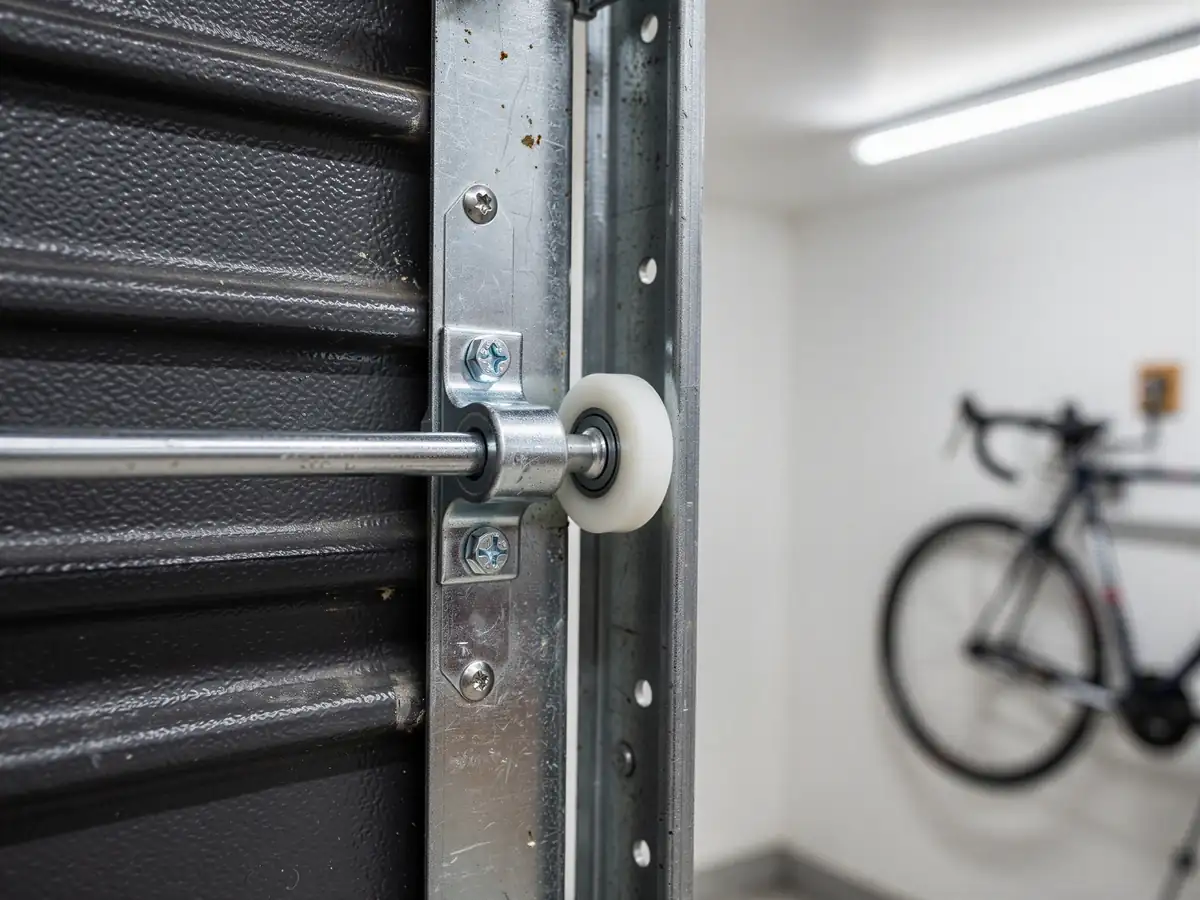
This is a cold-moderate climate band, and steel springs lose some flex in a cold garage, so a spring that's already fatigued from three decades of cycles is more likely to let go on a January morning than in July. Grease inside track rollers and hinges also stiffens up in low temperatures, which adds load to a motor that was never oversized to begin with. None of this is unique to one house - it's the pattern across a town built mostly in one era, aging into the same failure window at close to the same time.
Booking a Visit
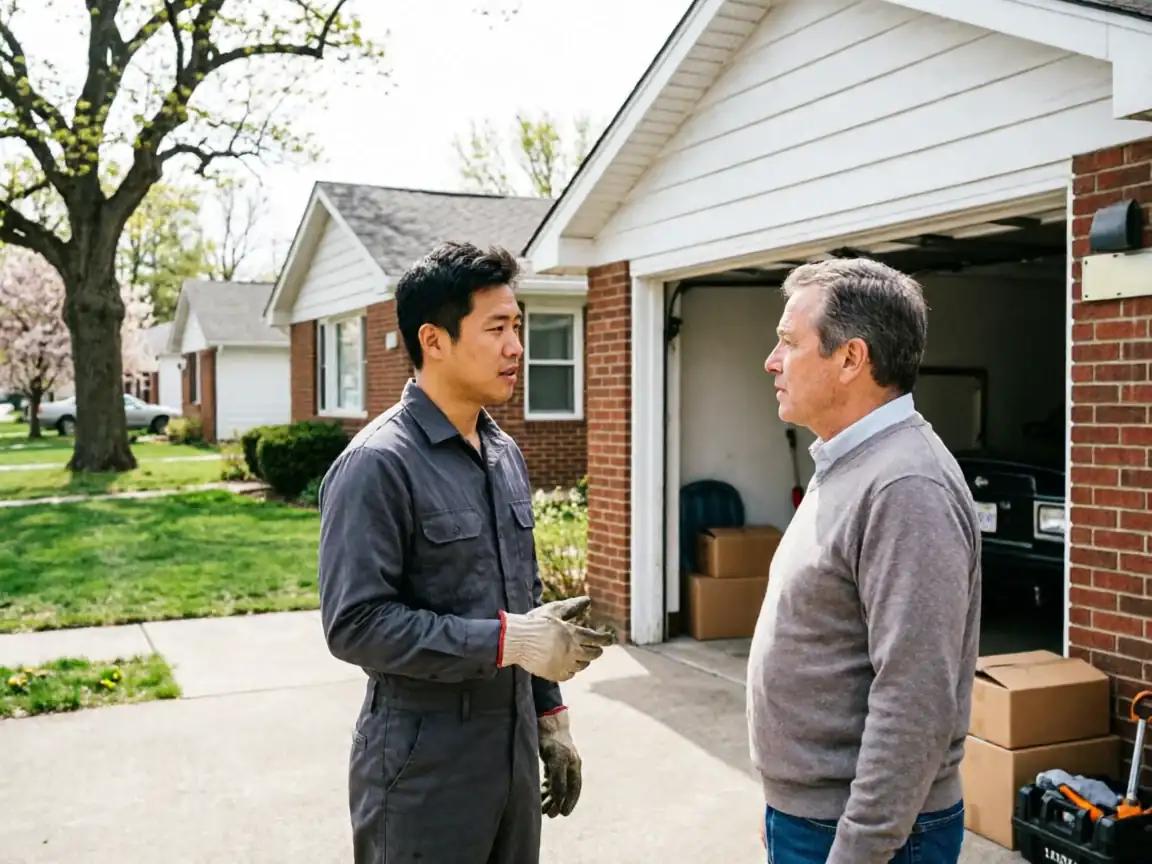
When you call, we want to know the age of the house if you have it, whether the door is one piece or sectional, and whether the noise or sticking started suddenly or has been getting worse for weeks. A door that worked fine yesterday and won't move today is usually a spring or a broken cable. A door that's been getting slower and louder over months is more often the opener aging out, or track hardware that's loosened from years of use.
We ask about the house's build era because a door installed when Lake Zurich's housing stock was going up in the 1980s and 90s often has original torsion hardware that doesn't match what's stocked on the truck today - knowing that in advance saves a second trip. If parts need to be special-ordered, we'll tell you that on the call, not after we've opened the panel.
Can You Do This Yourself
Some of this is fair to handle yourself: tightening a loose track bracket, lubricating rollers and hinges, clearing debris from the track, or replacing worn weatherstripping along the bottom panel. None of that needs a technician.
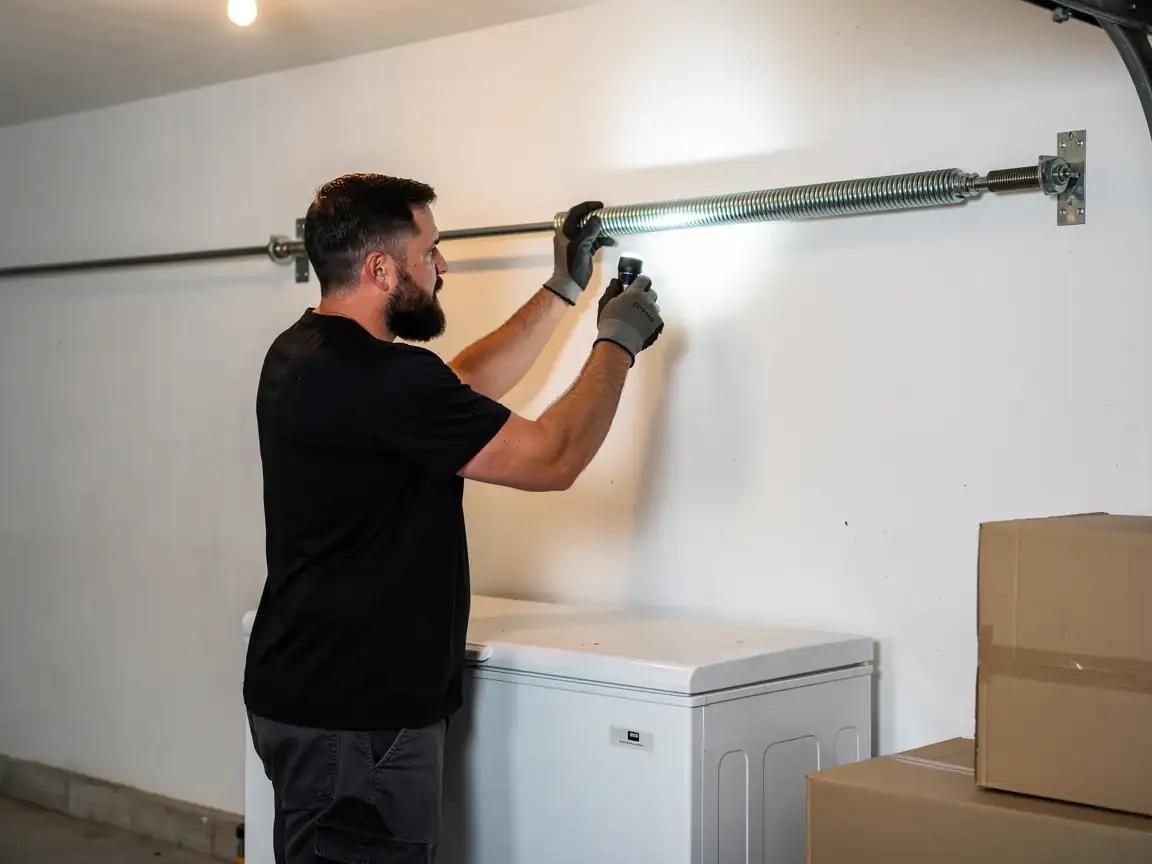
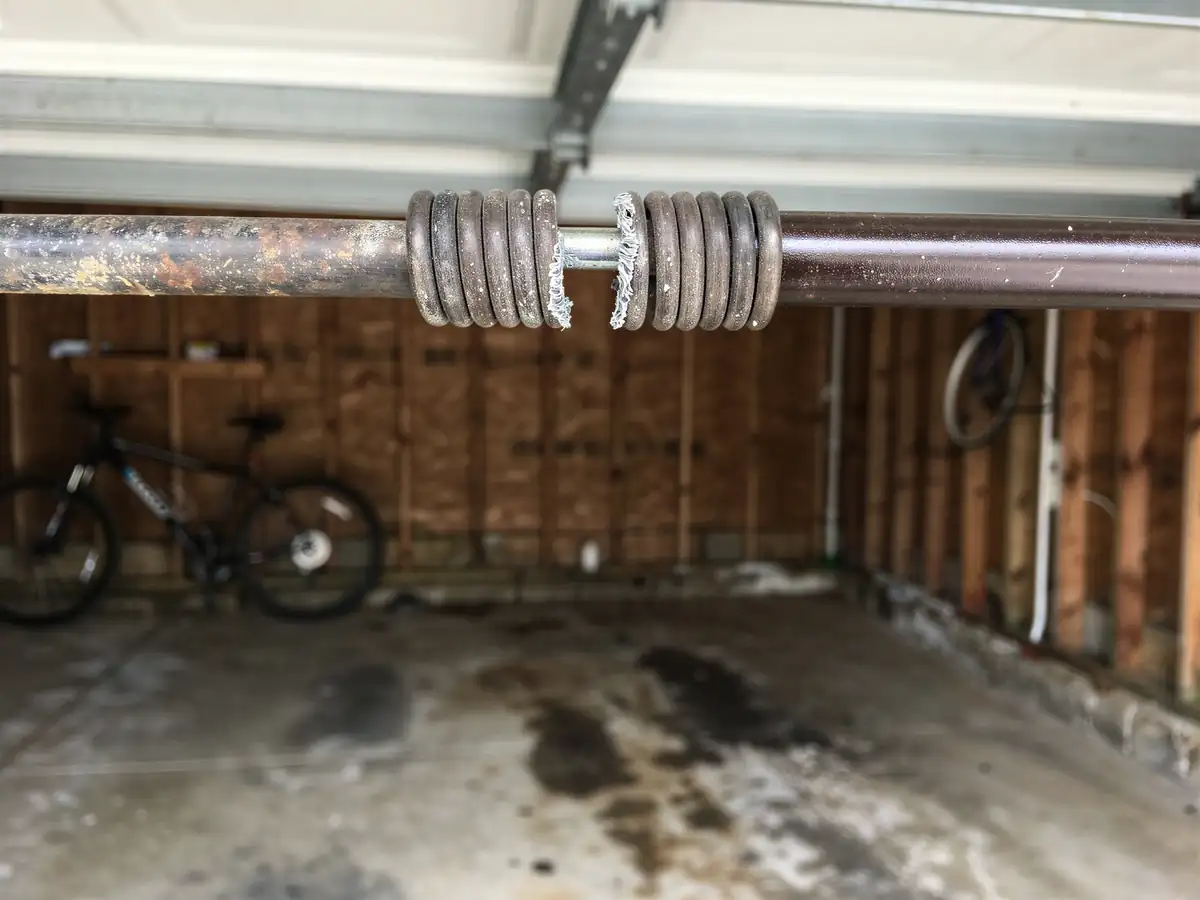
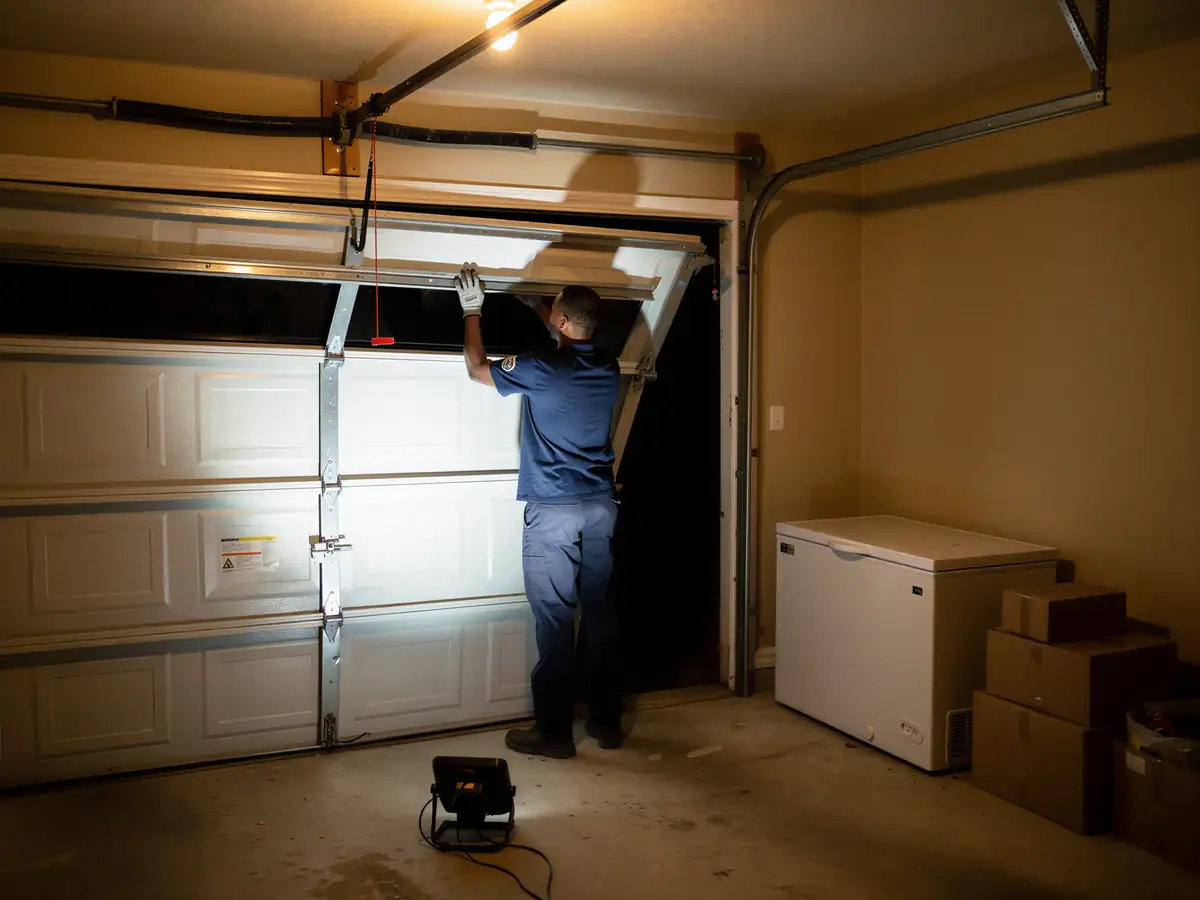
A torsion spring is not on that list. It's under enough tension to cause serious injury if it lets go while you're working near it, and on a door old enough to match Lake Zurich's 1980s-era housing stock, the spring has usually seen more cycles than it was rated for, which makes it more likely to fail mid-adjustment rather than in a predictable way. Cable replacement and opener gear work carry the same risk - they look simple until the tension releases. If a repair involves anything holding the door up against gravity, that's the line where we'd tell you to call instead of reaching for a wrench.
How It Shows Up
On a house from this era, the failure rarely starts with the door refusing to open
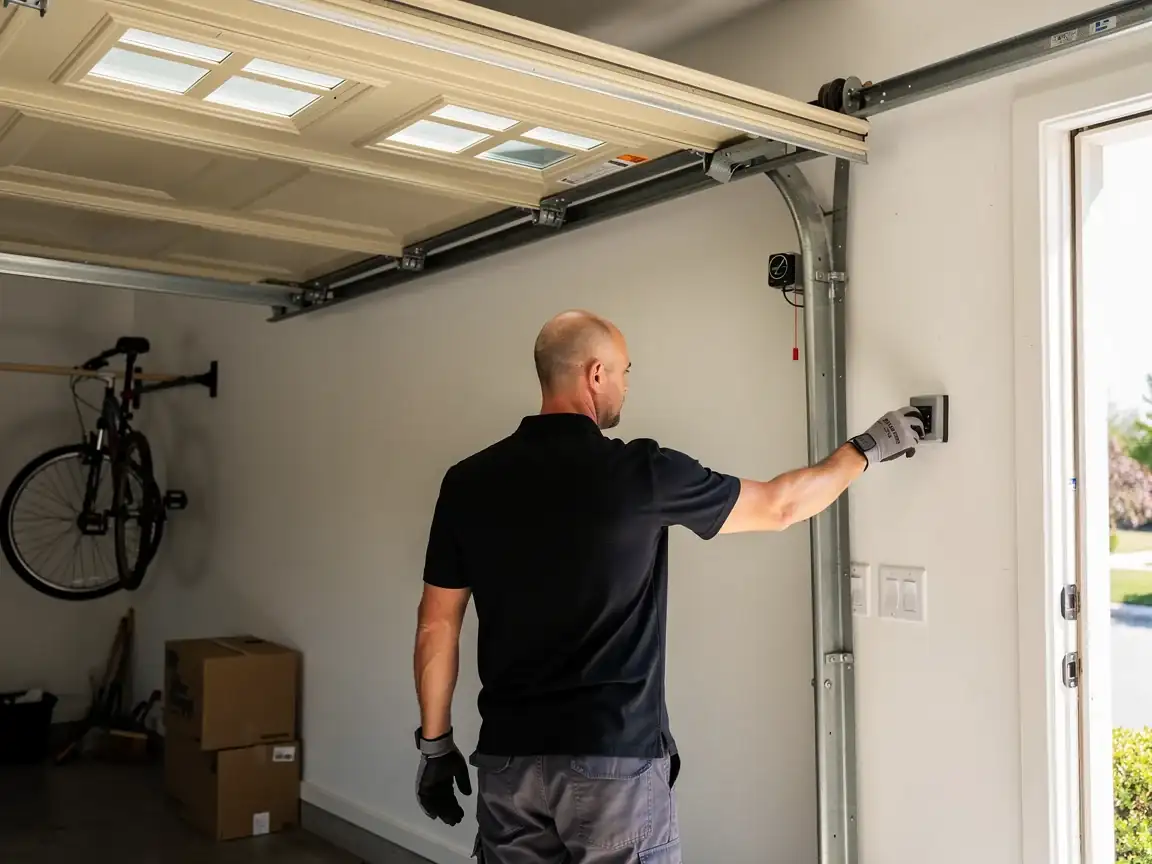
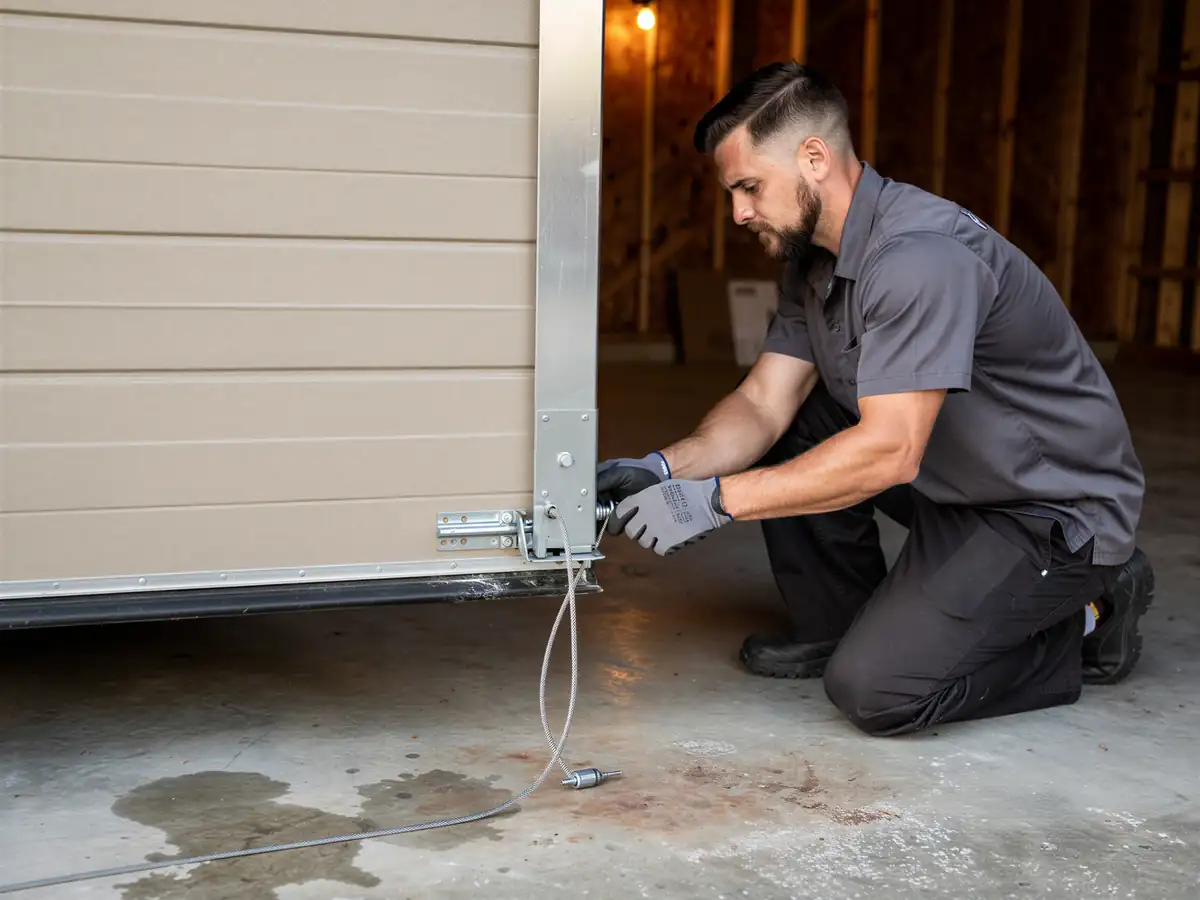
It starts smaller - a grinding sound from the opener as the gear wears, a visible gap where the spring has stretched unevenly, a door that drifts crooked on one side because a cable has started to fray. In a cold-moderate climate, these small signs tend to turn into full failures during the first hard cold snap of the season, when stiff grease and a cold spring meet a motor that's already working harder than it should.
We can't fix a door that's been ignored past the point of safe repair
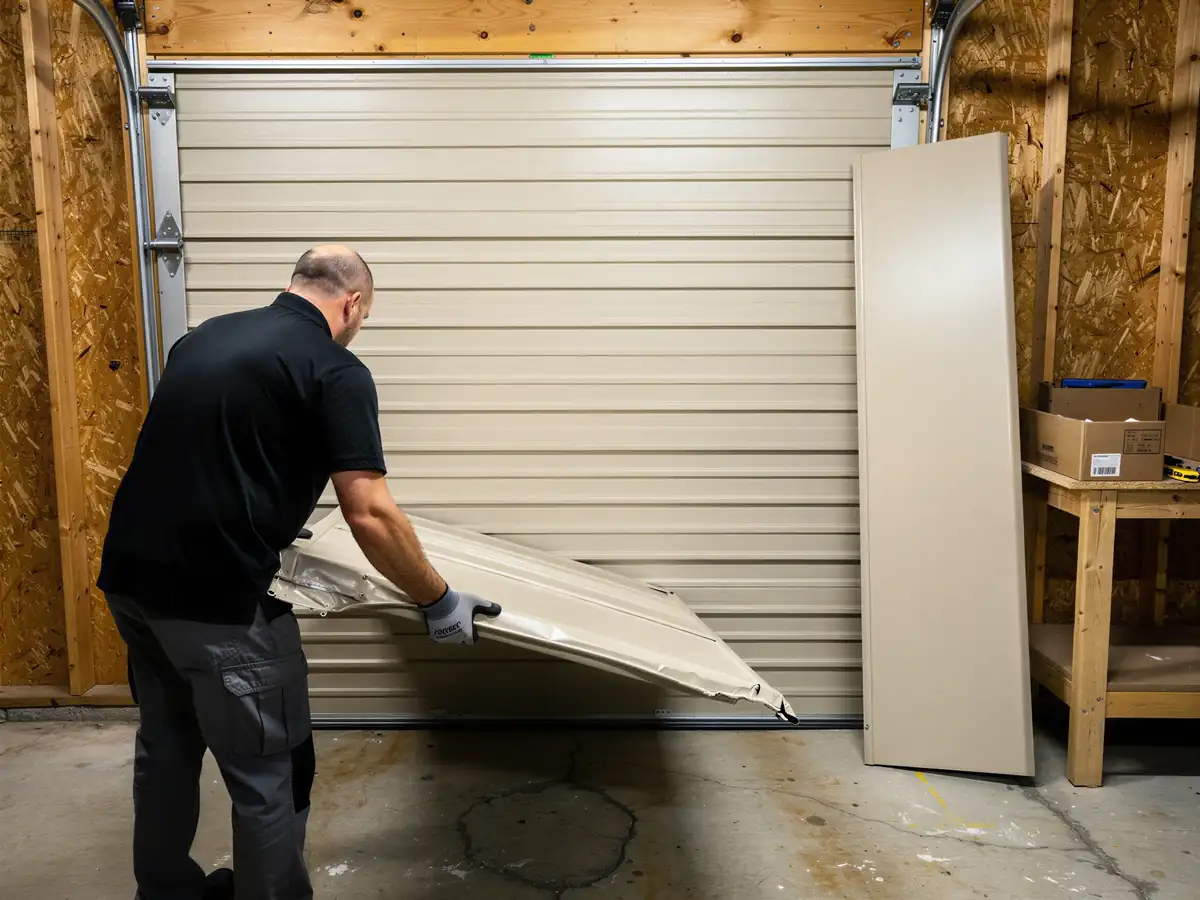
Sometimes the honest answer on a 1980s-built door with multiple failing parts is that replacement costs less over time than chasing each component as it goes. But for most calls, catching the noise or the drift early means a spring or opener repair instead of a full teardown.