Serving Lake Zurich, IL & nearby
(847) 874-0872
Lake Zurich, IL

New Garage Door Installation for Winnetka's Older Housing Stock

Winnetka's housing dates to 1938, decades older than most of our service area. See what that means for a new garage door install, from Lake Zurich Garage Door Pros.

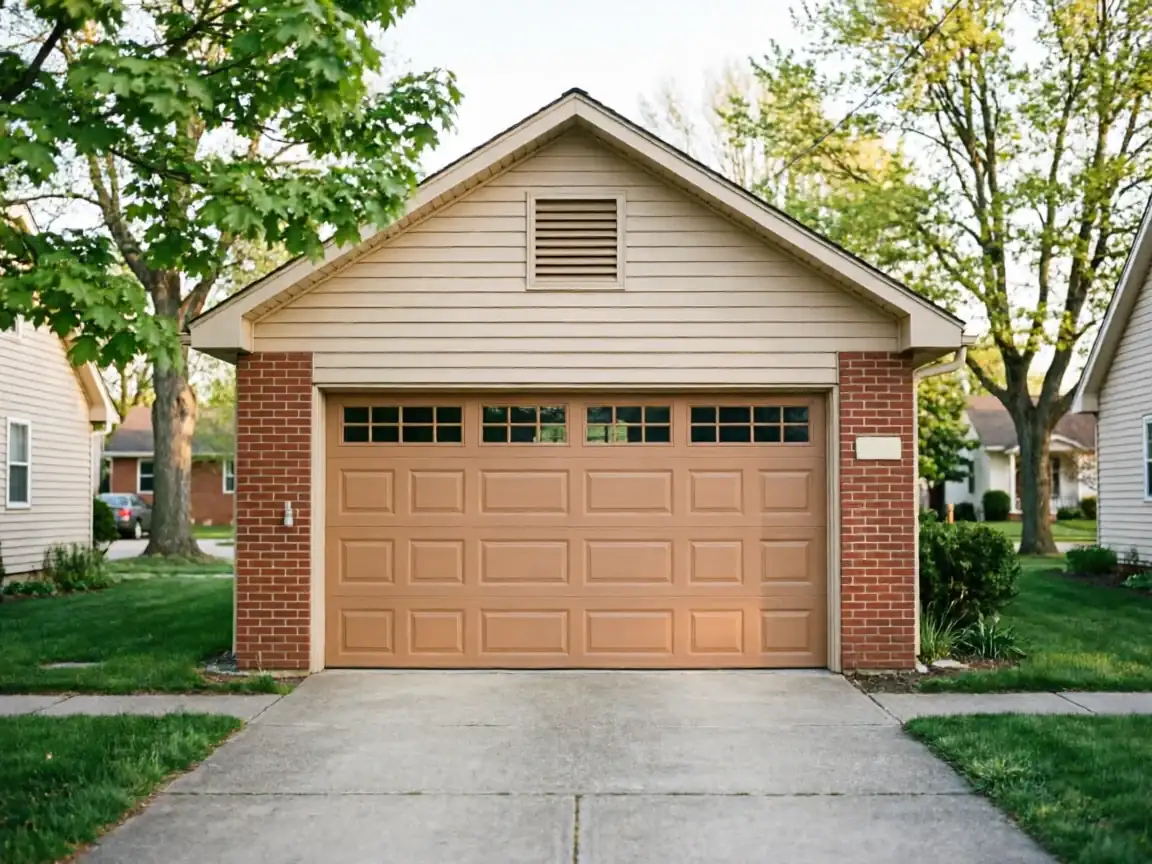
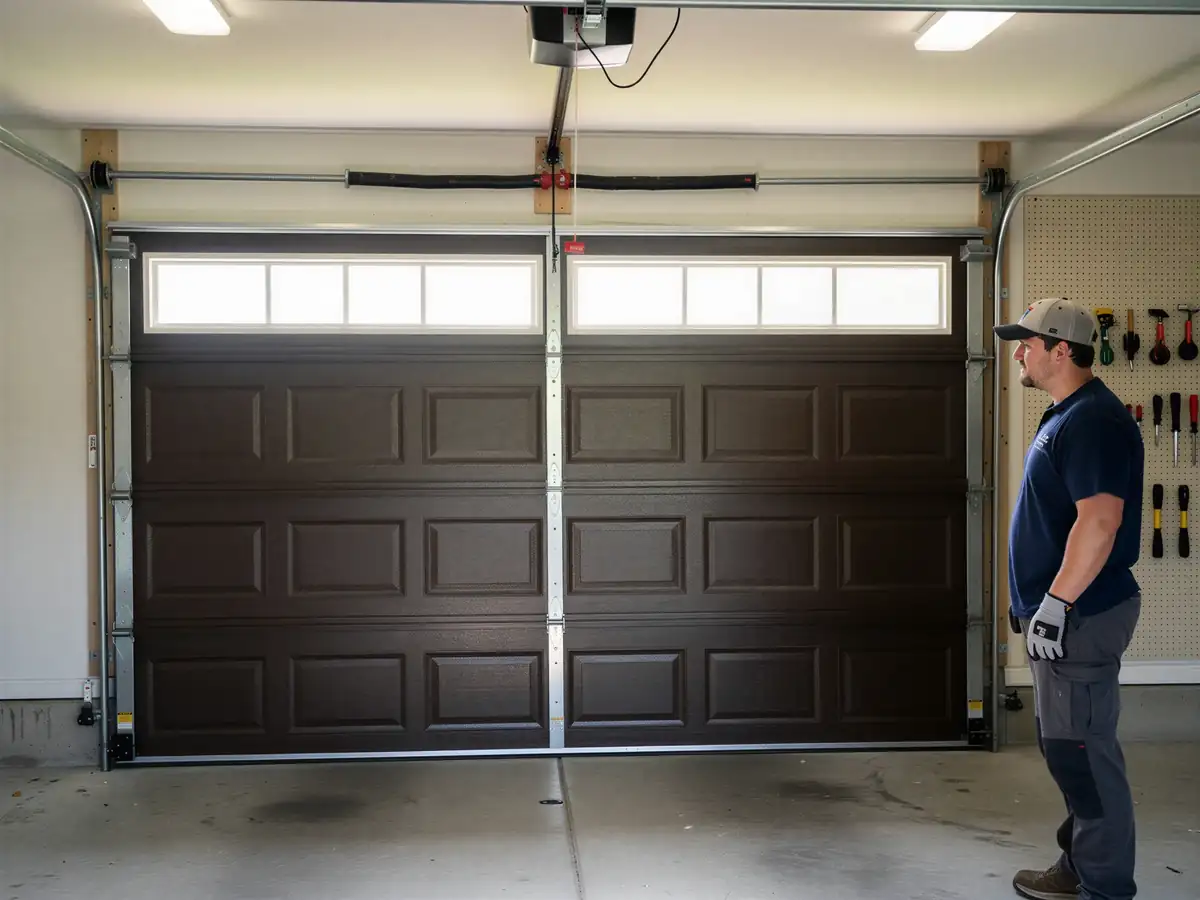
A technician stands next to a closed brown garage door with windows.
Lake Zurich, IL
8 services
8 service areas
Diagnosis first, then the fix

What You Pay

We don't post a flat price for a Winnetka install because the number swings hard on what's behind the opening. Winnetka's housing stock centers on 1938, nearly fifty years older than the 1985 median across the rest of the service area we cover from Lake Zurich. That gap matters at the estimate stage: older framing often needs a header reinforced or a track reset before a new door goes in, and that's labor beyond the door itself. The median household income here, $250,001, is roughly twice the $121,583 median across our wider service area, which is why custom wood-look steel doors show up more often on these jobs than the builder-grade steel that's typical elsewhere on our route. We'll price the door and the site work as two line items so you know what's original-house correction and what's the door itself. If your opening is square and your wiring is already run, the job is simpler and the quote reflects that. We won't guess a number here without seeing the opening - ask for a visit through the Lake Zurich install page and we'll walk the actual numbers with you.

How Long It Takes

Every job here starts with a 19-mile tow from Lake Zurich, so a return trip for a missed part costs real time, not just inconvenience. That's the main reason we measure twice before we load the truck - a custom-width door ordered against a bad measurement means another full trip out and a delay while the right unit comes in. On a straightforward swap with a standard-width opening, the install itself runs about as long as any other town on our list. What's different in Winnetka is the chance the opening isn't standard. Houses from this era were framed by hand to whatever width made sense at the time, not to a lumber-yard spec, so we confirm rough opening dimensions before we commit a delivery date, not after. If the frame needs squaring, we tell you that on the first visit so the schedule accounts for it rather than surprising you mid-install.

Why This Fails Locally

A door built for a 1938 opening wasn't built for the hardware we install today. Original openings in this part of the county often run narrower and shorter than modern door sizes, with headers that weren't sized to carry a heavier insulated panel or a jackshaft opener bracket. Add the climate - this area sits in a cold, moderate band, meaning real freeze-thaw cycling every winter - and old wood jambs that have shifted over eight decades don't hold a new track square without shimming. We see doors fail here not because the door itself was bad, but because it was hung plumb to a frame that's since racked a quarter inch out of true. That's a installation problem hiding as a product problem. The fix isn't a better door, it's squaring the opening first, which is extra work most online door-size calculators don't account for and most national installers don't budget for on a quote built off a phone call. This is the detail that makes an older house install a different job than a newer one, not just a smaller or bigger door.

Can You Do This Yourself

Ordering a door online and hanging it yourself is possible if your opening is standard and square - but in a town where the housing stock runs this old, that's the exception, not the rule. We'll say plainly: if your frame is out of square by more than a small amount, a DIY install will bind, bow, or pull the track loose within a season, and you'll have paid for the door twice. We also won't talk you into letting us true up framing that's a carpentry job, not a garage door job - at some point that's a contractor's scope, and we'll tell you when we hit that line rather than bill for work outside what we do. If you're comfortable with a square opening and standard hardware, the savings are real. If you're not sure your opening is square, that's a five-minute check we can do before you buy anything, and it's worth doing before the door shows up.

What the Repair Takes

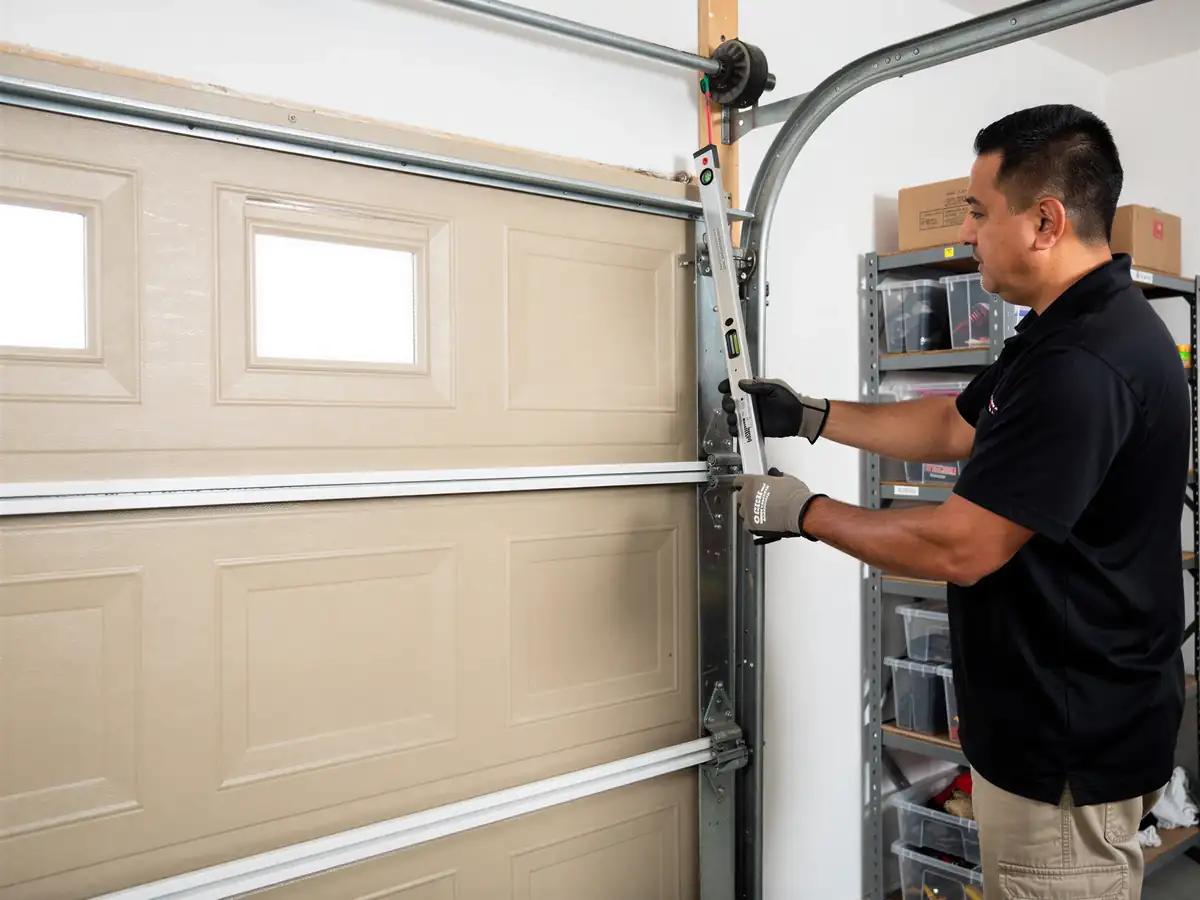
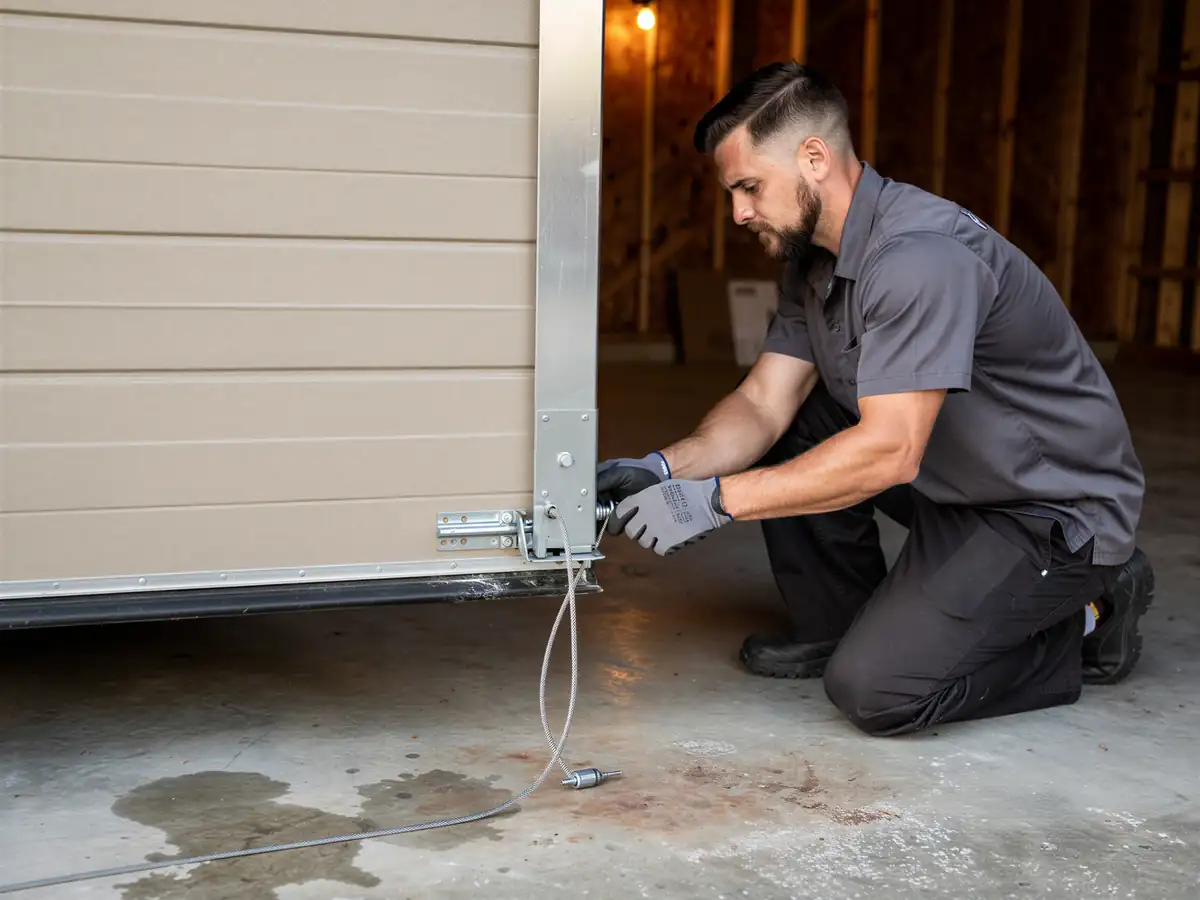
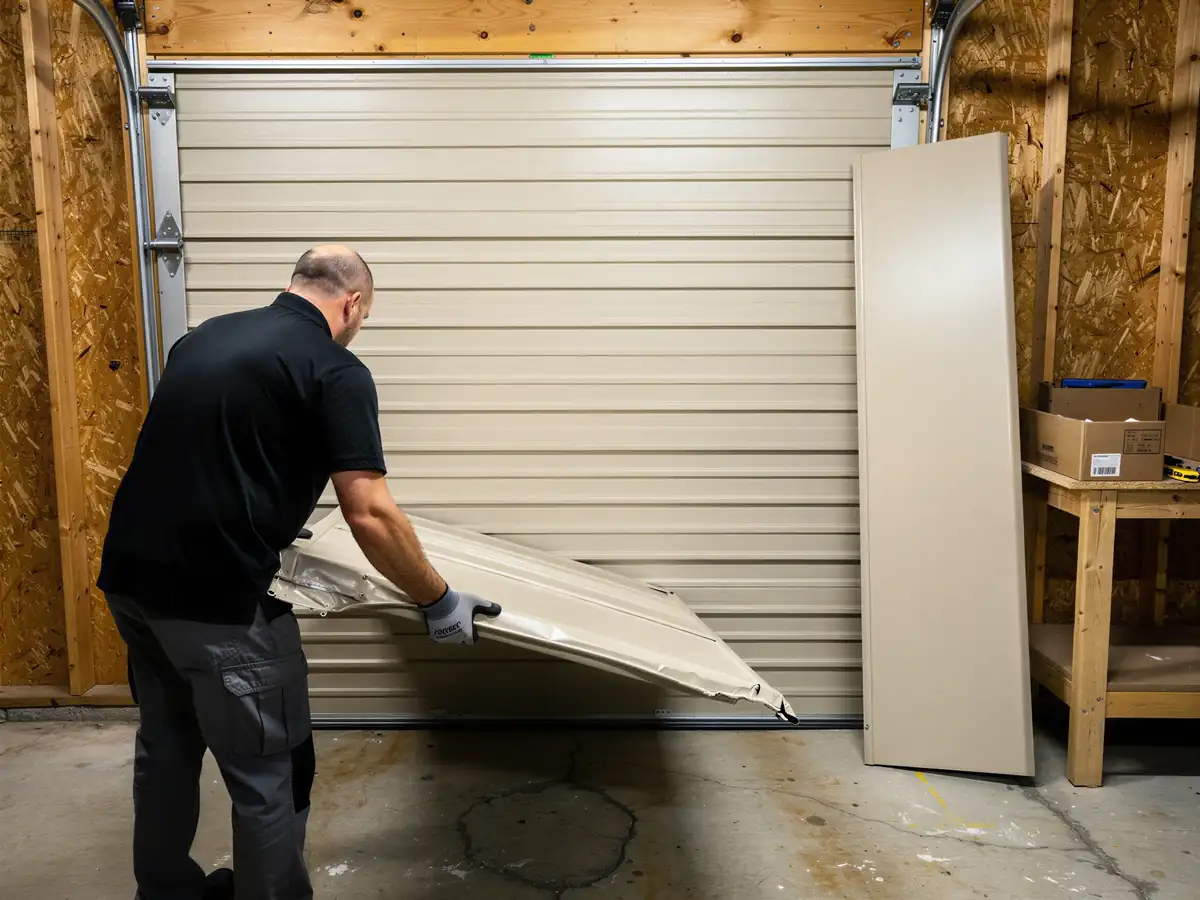
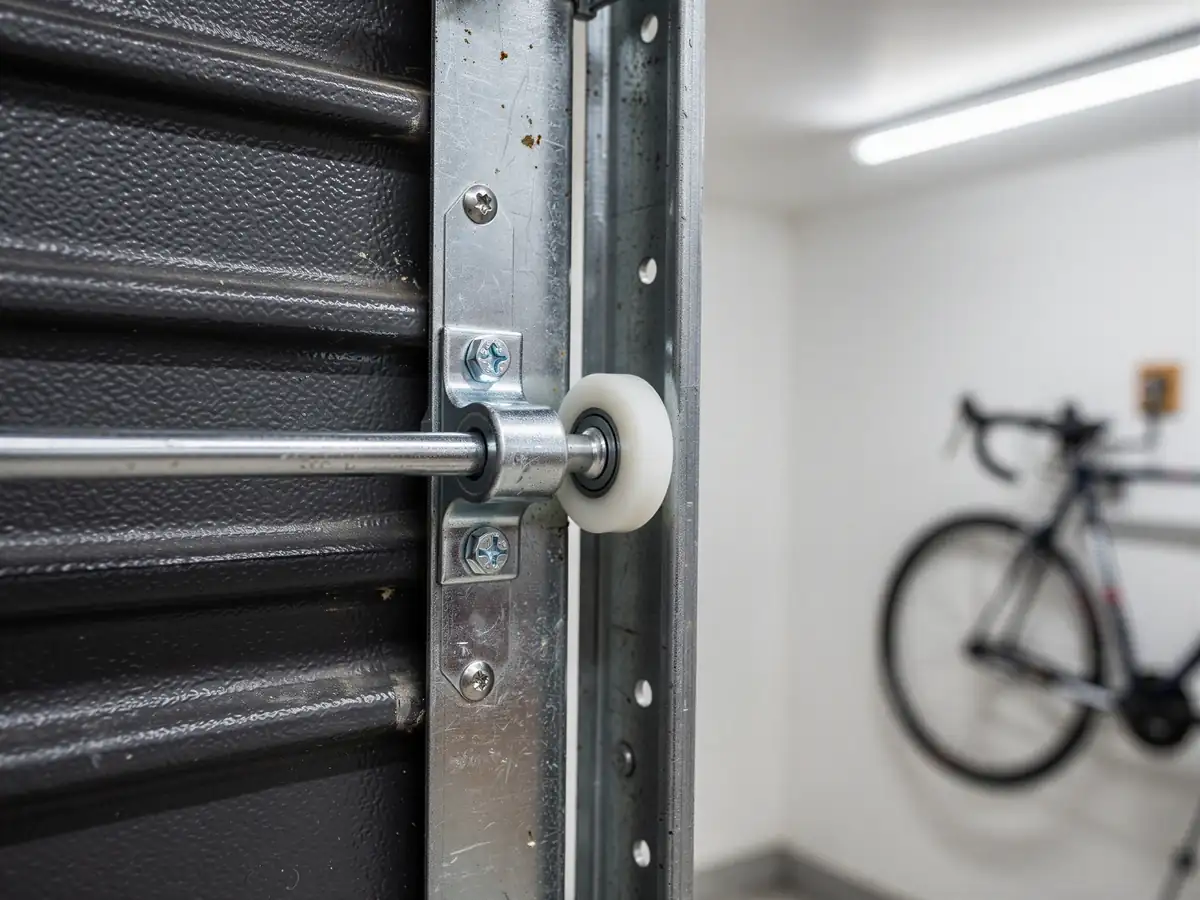
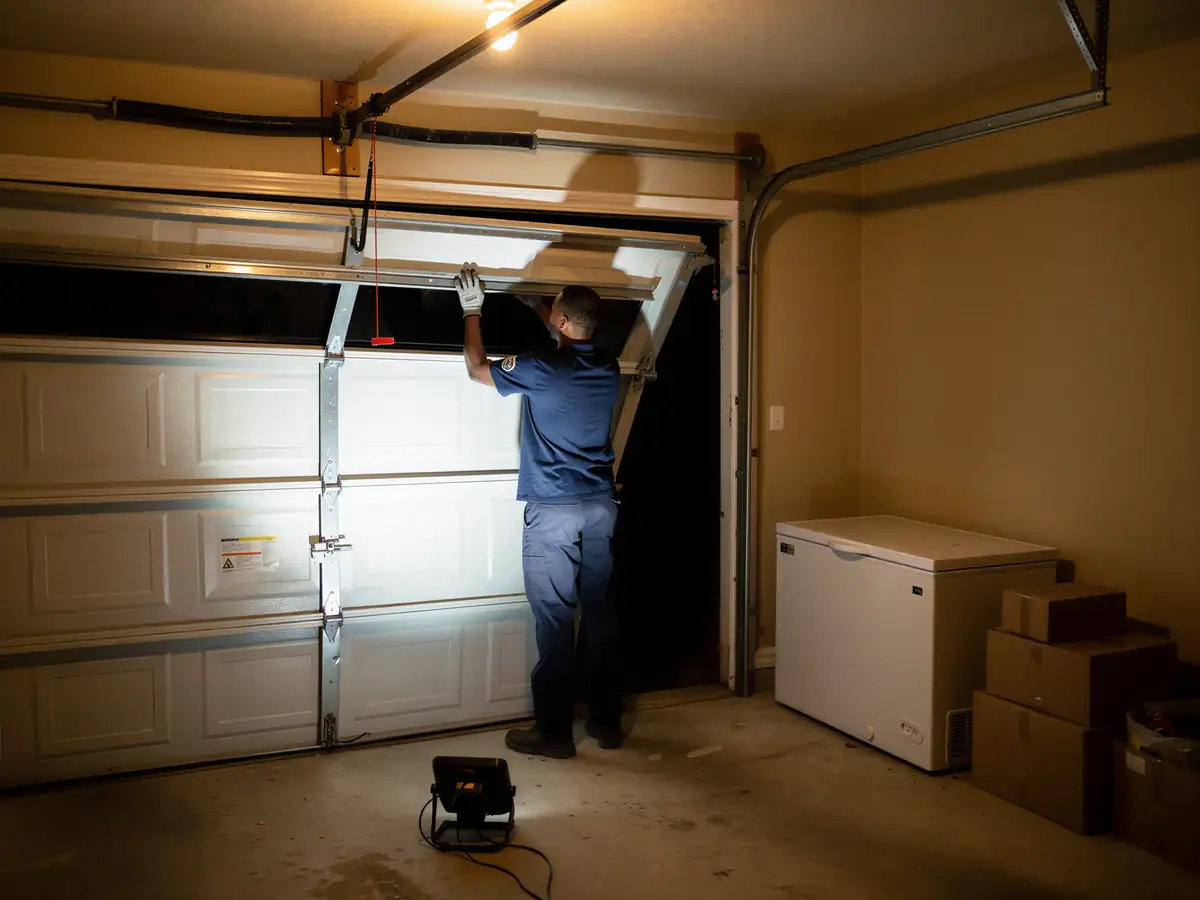
On a straight install, we pull the old door, check the track and jamb for square, set new vertical tracks, hang the new panels, and tension the spring system to the door's actual weight - not a generic setting. In a house from this era, we almost always spend extra time on the jamb before the door goes up: shimming a bowed stud, resetting a header bracket, or swapping a stripped lag bolt that's been load-bearing since before torsion springs were common. None of that shows up on a parts list, but skipping it is how a new door starts sagging on one side within a year. We also check the opener mount separately from the door - a heavier insulated panel needs a motor rated to lift it, and swapping the door without checking the opener's lift capacity is a common shortcut that costs the homeowner a second service call later.

How It Shows Up

In houses from this era, the first sign isn't usually a dead opener - it's a door that drags on one side as it closes, or a gap at the bottom that wasn't there last year. Both point to a frame that's shifted slightly out of square over decades, pulling the track with it. You might also notice the door feels heavier to lift by hand than it used to; that's often the spring losing tension against an opening it was never quite matched to in the first place. None of these are emergencies on their own, but they're the signs that the next failure - a cable off its drum, a panel cracking at a hinge point - is coming. If your door is still the one that came with the house, see how we handle installs in your area before it fails on a cold morning rather than after.
How it works

From “it’s stuck” to “it’s fixed”

A person stands in a driveway looking at a phone with a house and garage in the background.

Tell us what’s wrong

Describe the symptom - won’t open, loud bang, opener runs but the door won’t move.

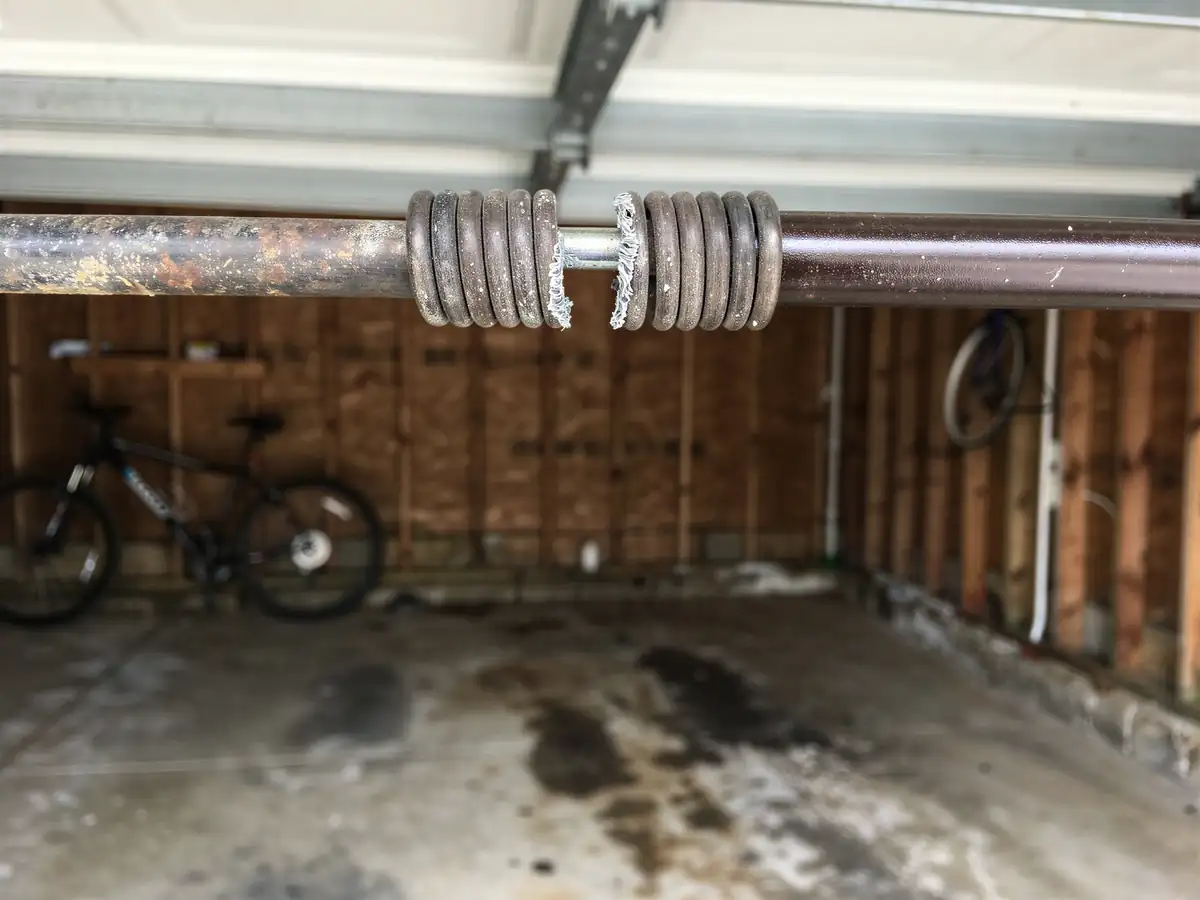
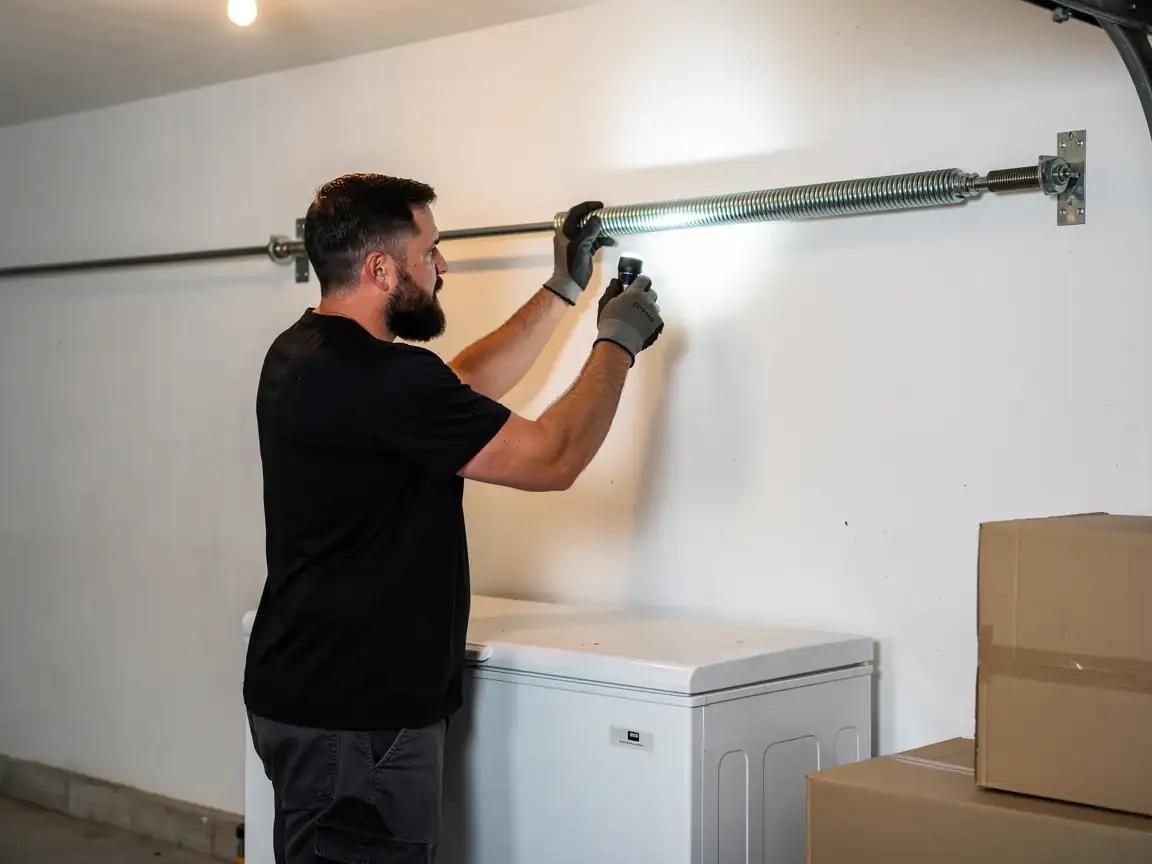
A technician inspects a garage door torsion spring with a flashlight.

On-site diagnosis

A technician tests the door under power and by hand and finds what actually failed.

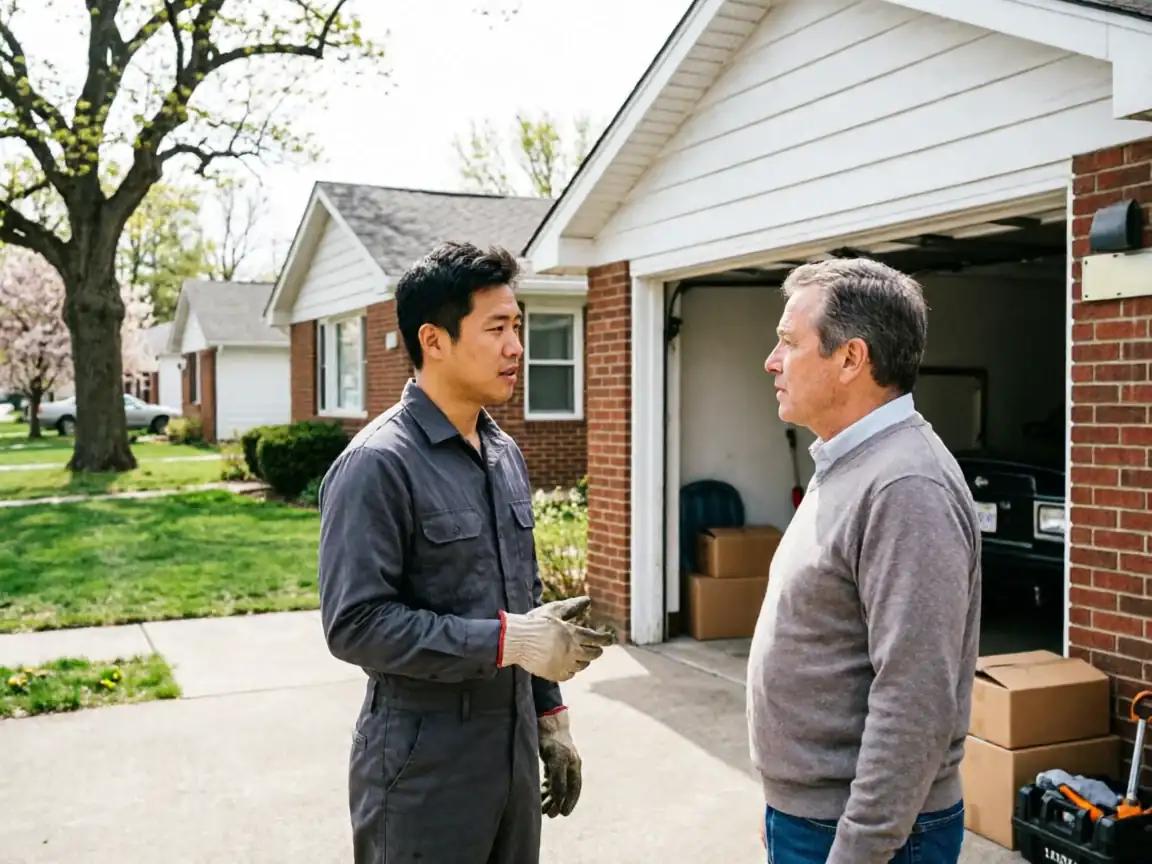
A technician in a gray jumpsuit talks to a man in a gray sweater in a driveway.

Clear, up-front plan

You get the fix that’s needed and what drives the cost - before any work starts.

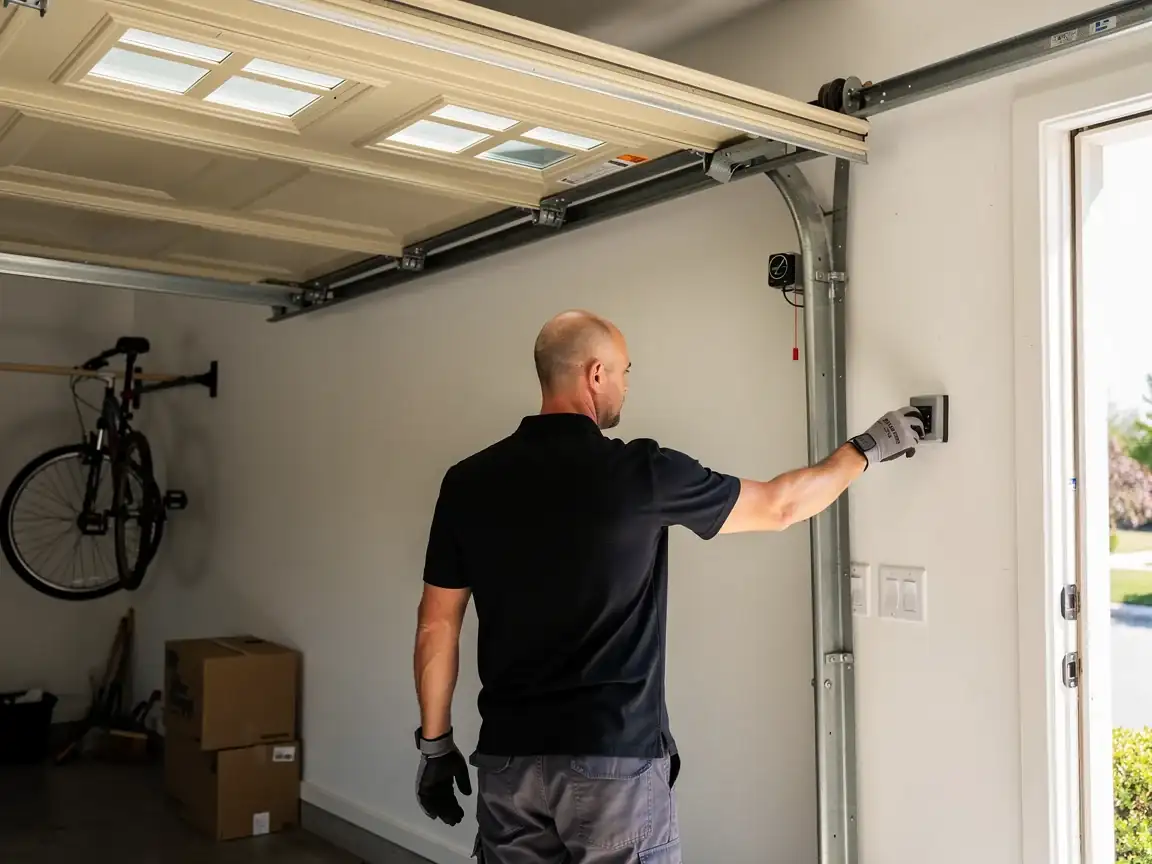
A technician in gloves presses a button on a garage wall.

Repaired & tested

The repair is done, the door is set true and tested, and the work area left clean.

Not sure which repair your door needs in Lake Zurich, IL? Describe what it’s doing - every job starts with a diagnosis.

How we work

What to expect

Diagnosis firstEvery visit starts by finding what actually failed - not a pre-written parts list.
The right part for the doorSprings and openers matched to the door’s weight and age, so the fix holds up.
Straight answersWhen a repair makes more sense than a replacement - or the reverse - you hear it plainly.
Clean, careful workTension released safely, hardware set true, the door tested under power before we leave.
19,993Residents in Lake Zurich
8Garage door services
8Neighborhoods & suburbs
ILServing Lake Zurich, IL
Questions

Frequently asked

Straight answers about garage door repair in Lake Zurich. Still unsure? Ask us directly.

Will a new garage door fit my original opening from the 1930s?

Often yes, but we confirm the rough opening width and height before ordering - homes built in 1938 weren't framed to a standard size, so we measure on site rather than quote off a phone description. If the opening is narrower than today's standard widths, we order to match it rather than resize the frame unless you ask us to.

Do you have a local crew based in Winnetka?

No. We run out of Lake Zurich, about 19 miles away, and schedule Winnetka jobs on the route from there. That means we confirm measurements and parts before the visit so one trip covers the install rather than needing a second run for something missed.

Why does my opener need checking if I'm just replacing the door?

A heavier insulated door puts more load on the opener's motor and gears than the lighter original panel it's replacing. If the opener isn't rated for the new door's weight, it'll strain and wear out early. We check lift capacity against the new door's weight before we call the job finished.

Ready to get your garage door sorted?

Tell us what it’s doing and where you are in Lake Zurich - we’ll take it from there.

Request a QuoteCall