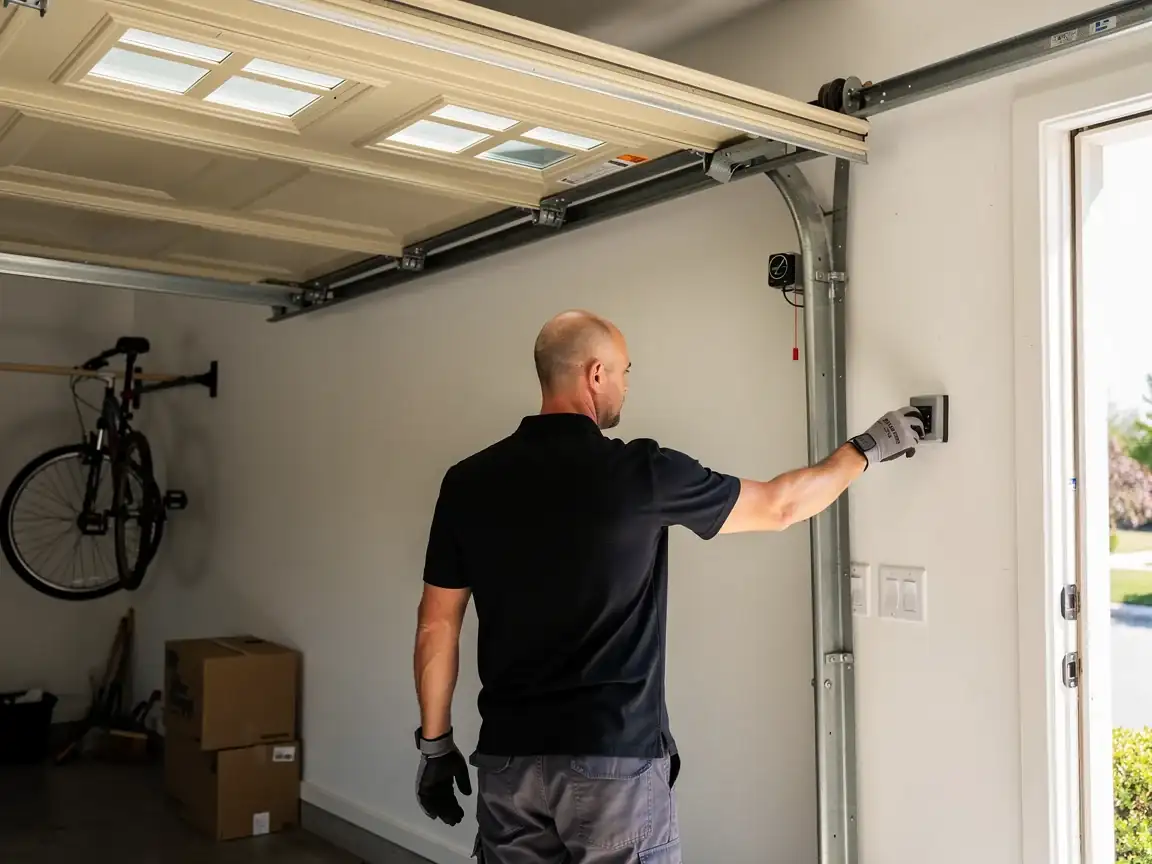
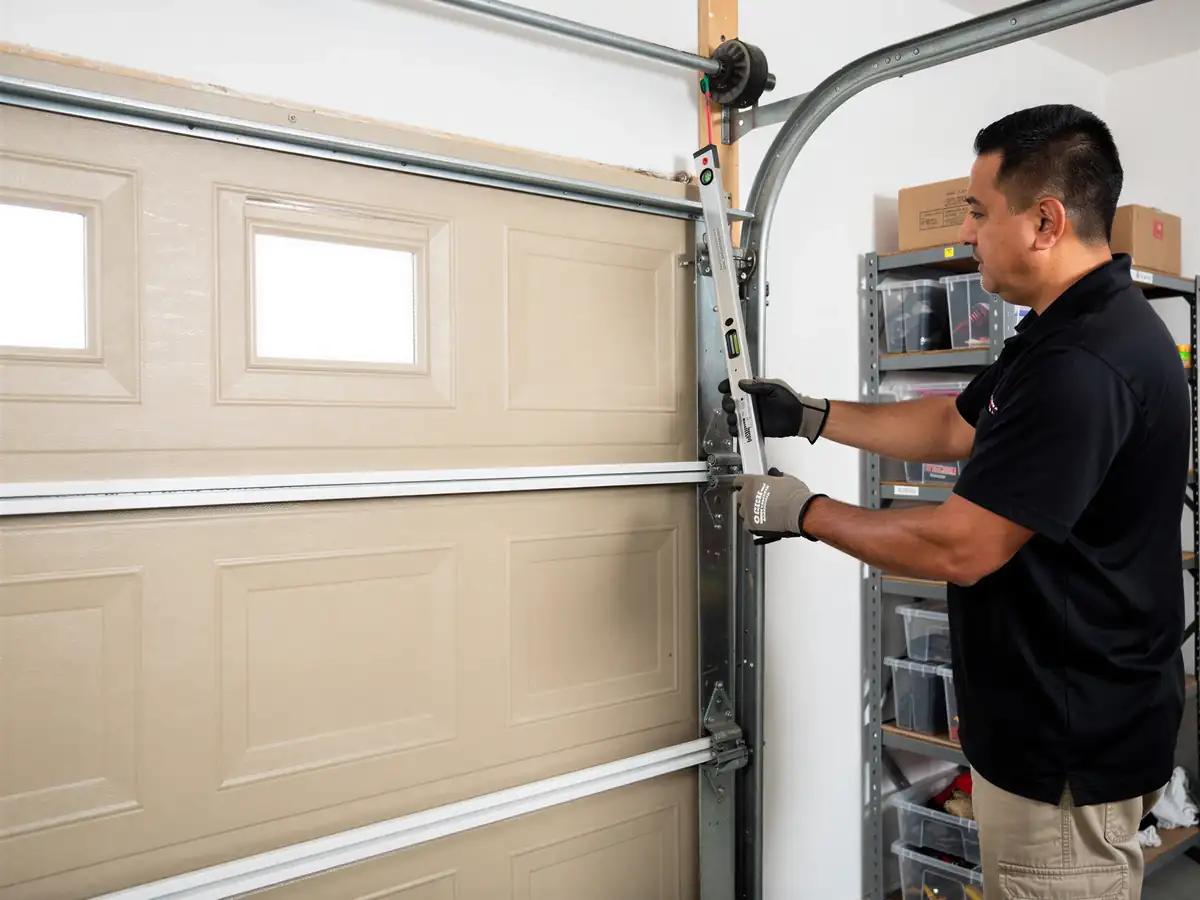
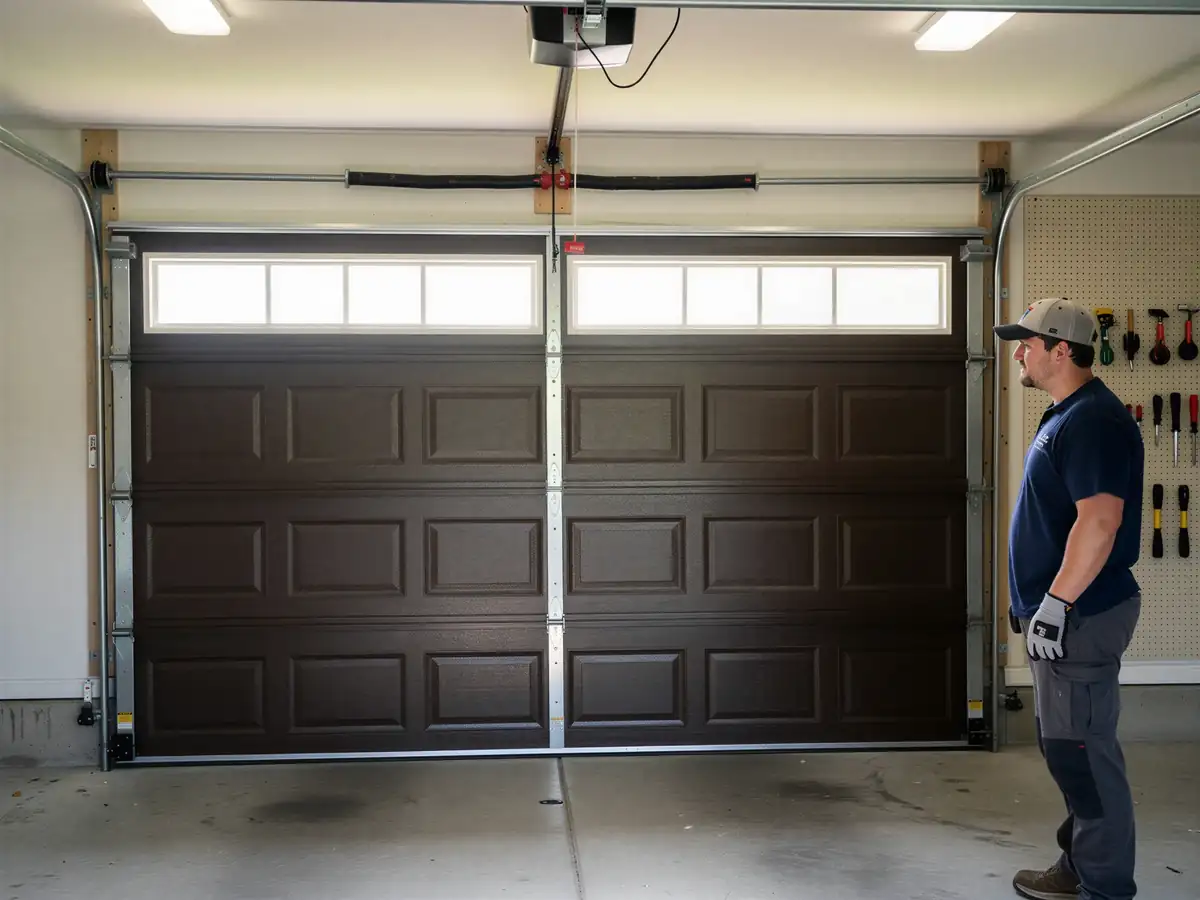
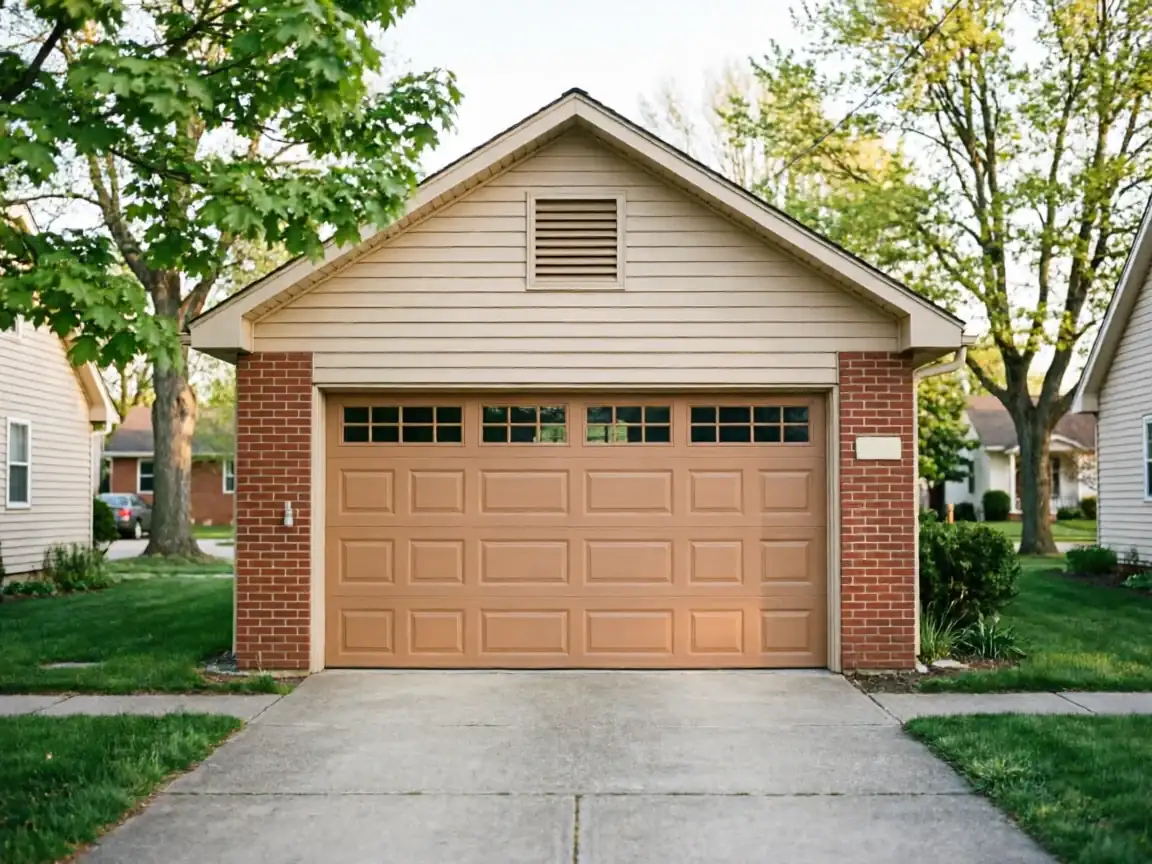
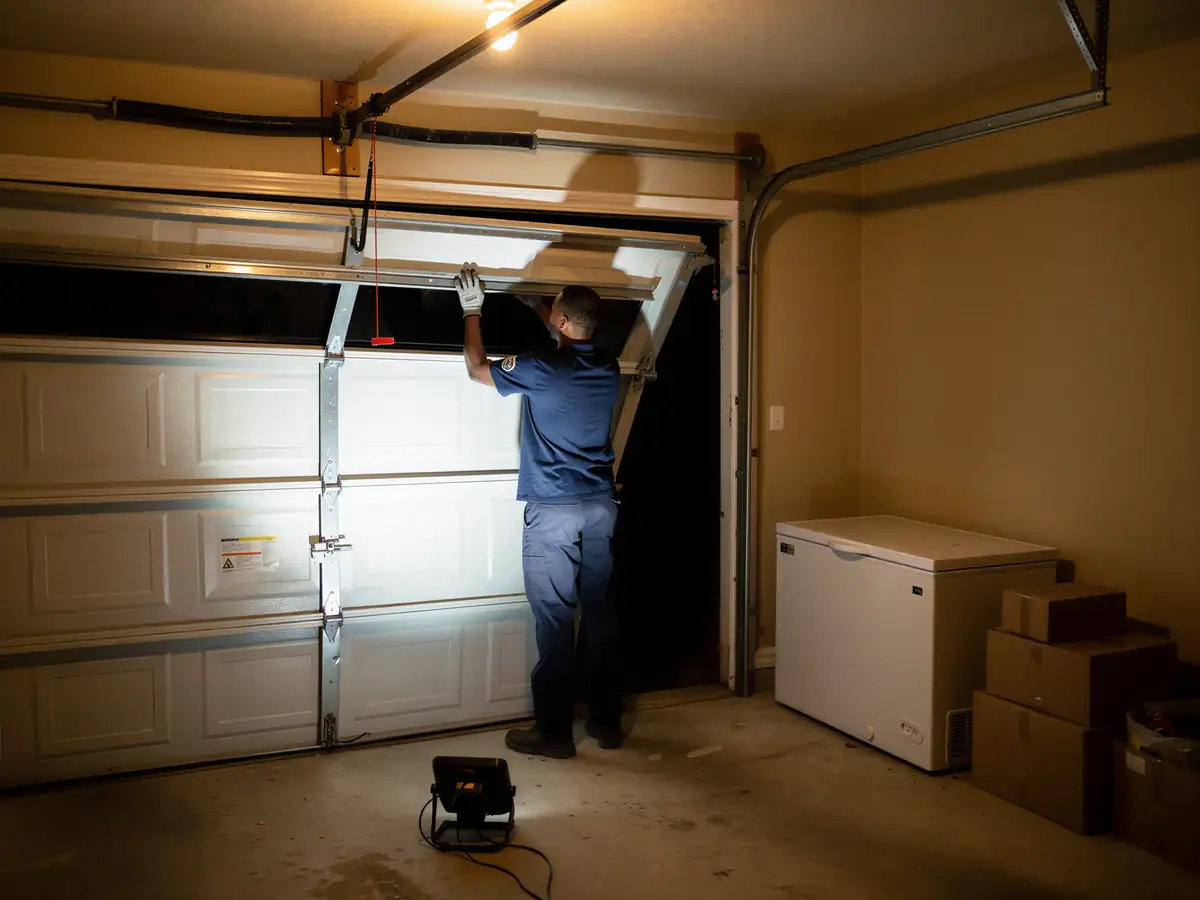
Lake Zurich sits in a cold moderate climate band, and that matters more for openers than most homeowners think. Ice storms and sustained freezes here don't just make the driveway slick - they knock out power at the exact moment the opener's motor is already working harder because cold has stiffened the rail grease and the belt or chain. Most houses in this part of the service area were built between 1938 and 2009, with a typical build year of 1985, which puts a lot of openers squarely in the chain-drive era, before battery backup was standard equipment. Across the 65 named areas that make up this housing stock, the bulk of construction is 1980s and 90s, so the opener in a lot of garages is either original or a direct replacement of the original unit. When a winter storm trips a breaker or drops a line, that older opener has no battery to fall back on. It just stops, mid-cycle sometimes, with the door half up or half down and no power to finish the job. That combination - older hardware, cold stress, and a grid that goes down in exactly the weather that makes you need the garage most - is the specific problem this town's housing creates.
Doing Nothing For Now
If your power cuts are rare and short, waiting is a reasonable call. Not every opener needs a battery backup unit, and we're not going to tell you to replace a working motor because a storm might come. But here's the honest limit: we don't do whole-house generator wiring, and we don't run permanent backup circuits to the garage. That's an electrician's job, not ours. What we can tell you is that a unit built or installed when the median home here went up - around 1985 - was never designed with a battery compartment at all. If yours is from that era and you've had more than one outage leave the door stuck, doing nothing stops being a safety plan and starts being a bet. The bet is fine until the night the door's stuck open with no power and a hard freeze outside. At that point the choice isn't maintenance, it's an emergency call, and those cost more and happen on your schedule, not ours.
The Problem
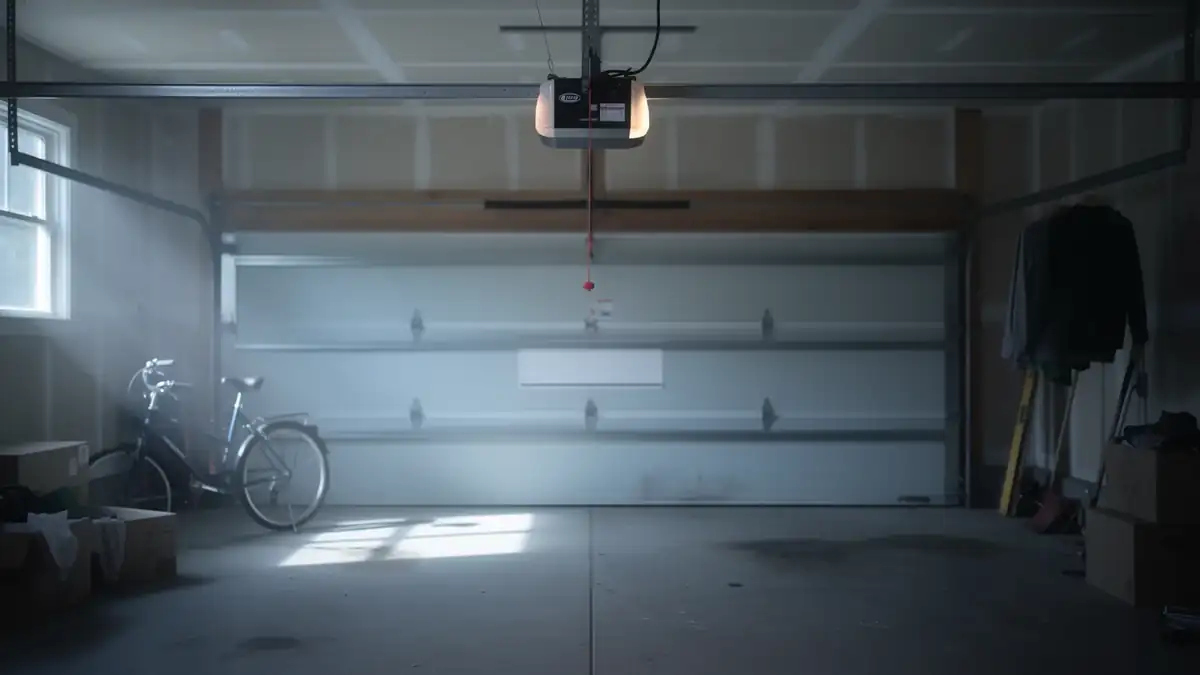
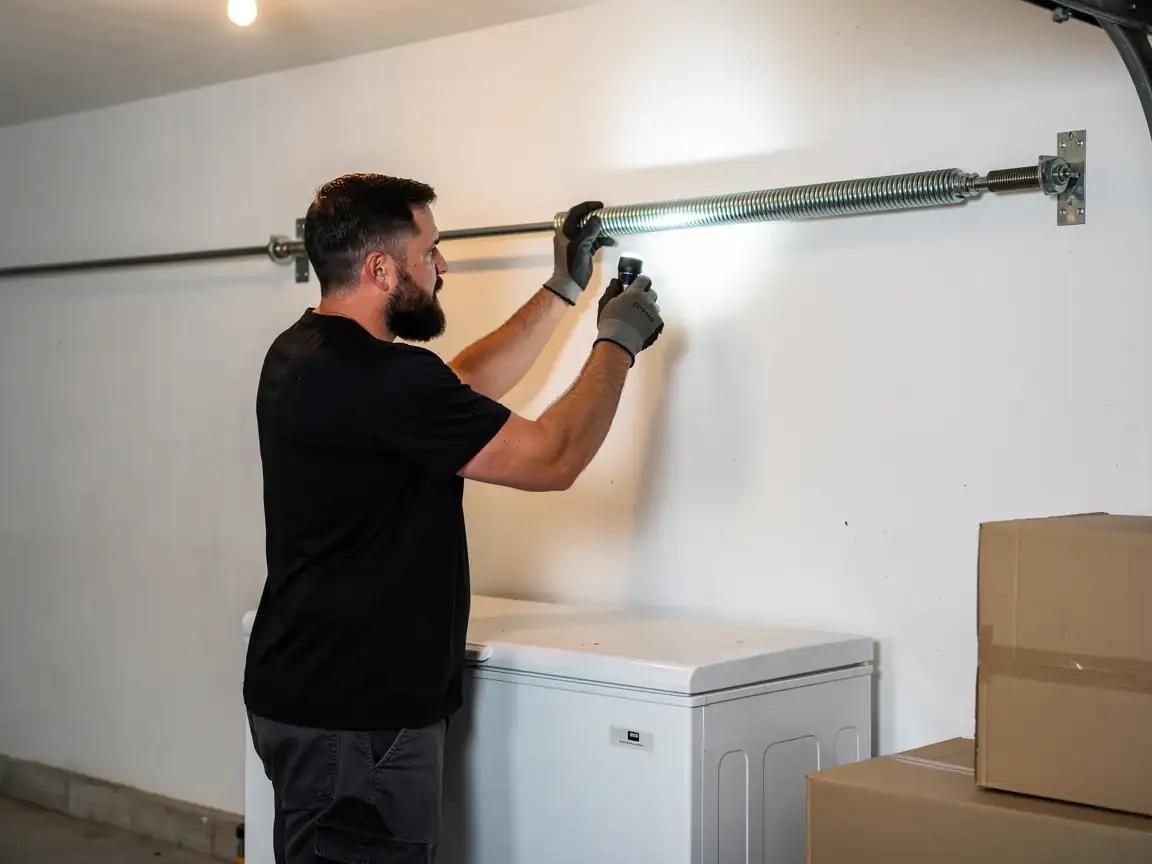
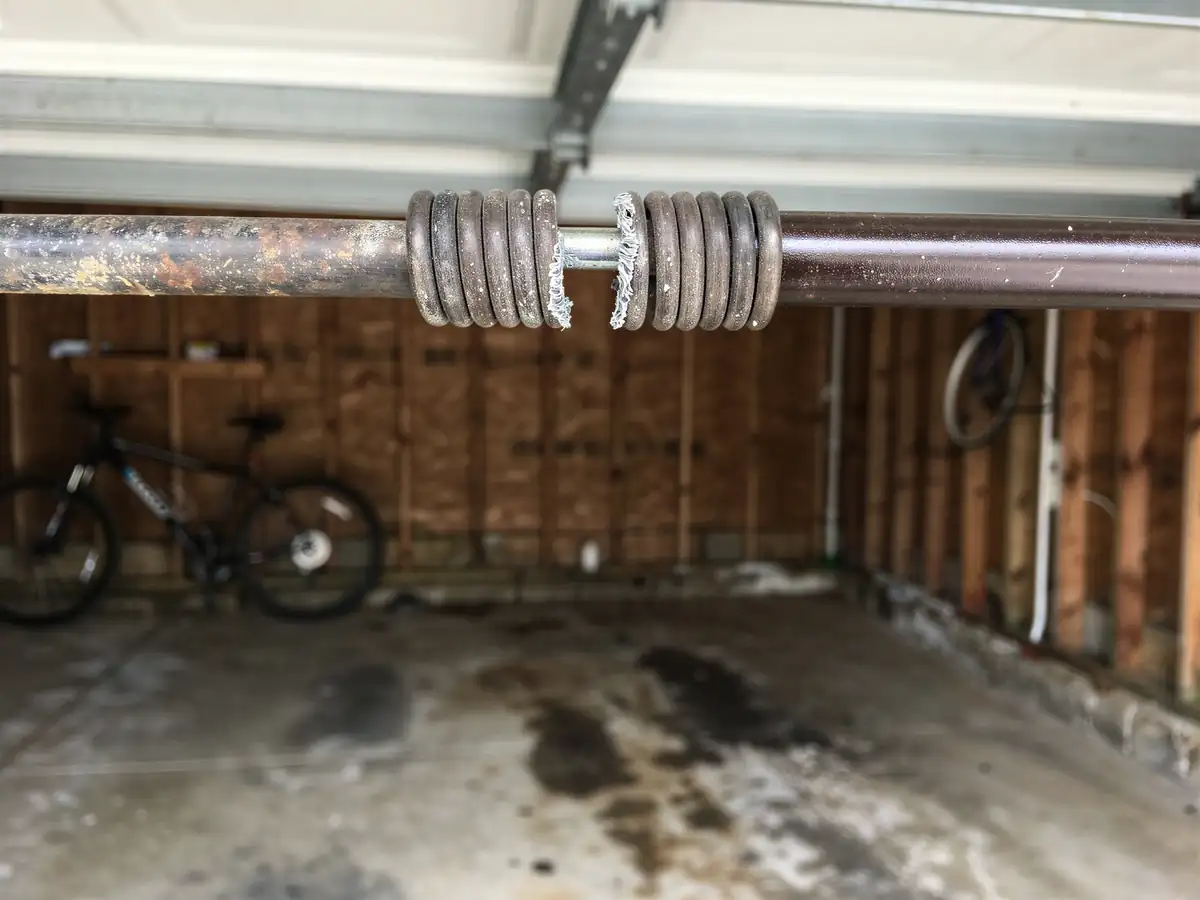
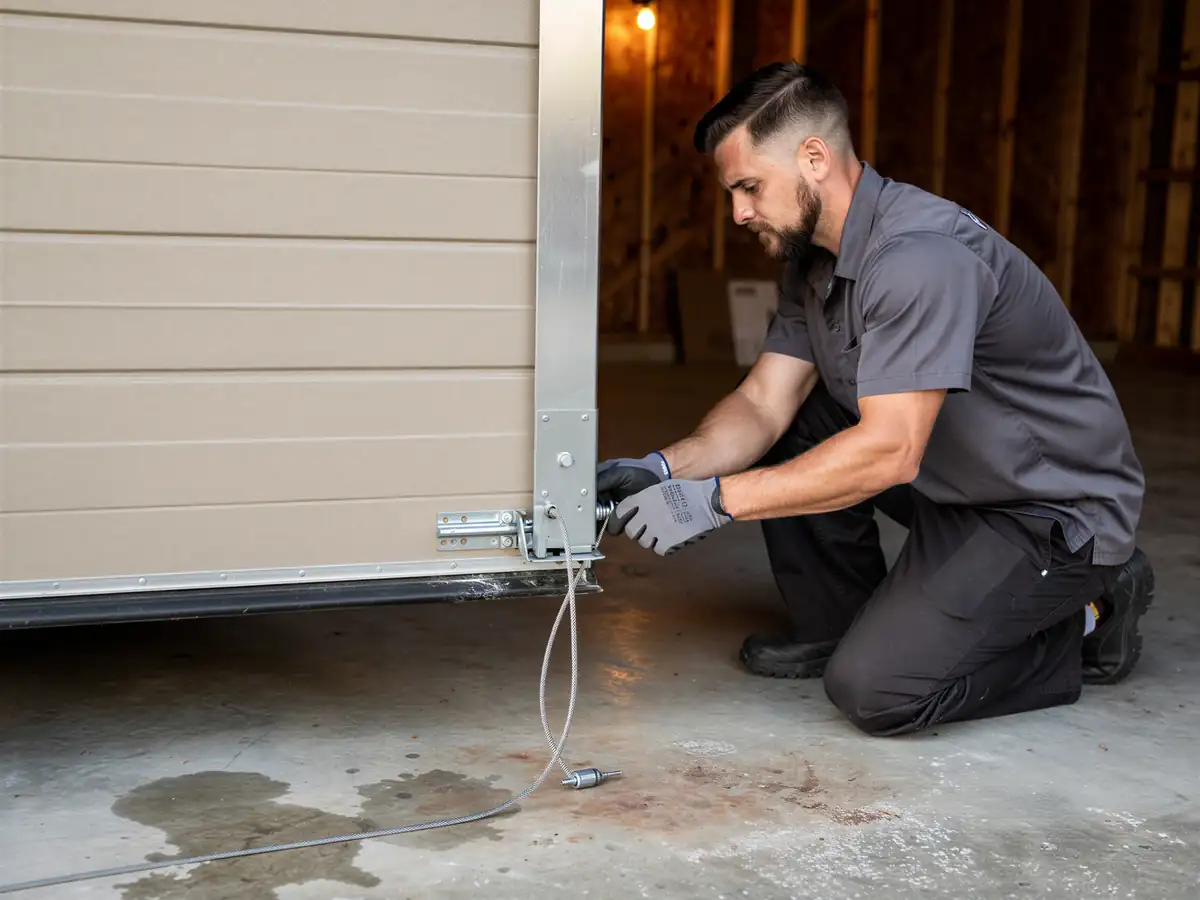
Here's what actually happens during a power cut with an older opener. The motor loses power mid-travel. The door stays wherever it was - closed, open, or caught in between. To move it, you pull the manual release cord, which disconnects the carriage from the drive and lets you lift the door by hand. That sounds simple until you're the homeowner in a house built in the 1980s or 90s trying to find a release cord that hasn't been touched since the house was built. On original hardware from that era, the pulley can be stiff, the cord brittle, or the spring tension so far off from age that the door is heavier than it should be to lift by hand. Cold makes all of this worse: stiff springs, frozen track, and a door that fights you right when you need it to move fast. None of that is a town-specific mystery - it's what 1980s-90s build-era hardware does under this area's winter load, every single season.
When to Get Help
Call if the manual release won't disengage, if the door won't move by hand even after release, or if the opener has already failed during two or more outages this season - that's a pattern, not bad luck. Call also if you're hearing the motor hum without the door moving; that's often a capacitor or gear giving out under the combined stress of cold and repeated power interruption, not something that fixes itself. At a median household income of $121,583 across this area, most homeowners here can reasonably budget for a battery-backup opener replacement rather than keep patching a 30-plus-year-old chain-drive unit. That's not a sales pitch - it's just the math once a unit this old starts failing during the exact weather it's most needed. If the opener is newer and just tripped a breaker, that's a five-minute fix. If it's original to a house built decades ago, it's worth having someone look at the whole unit, not just the symptom.
Why does my opener die every time the power goes out, even briefly?
If your opener doesn't have a battery backup, any power interruption stops it mid-cycle, full stop. Most openers from the 1980s and 90s building era common in this area were never built with a backup battery, so even a short outage leaves the door stuck until power returns or you release it by hand.
Is it worth replacing an old opener just for power cut protection?
Depends on the opener's age and condition. If it's original to a house from the 1980s or 90s and already showing other wear, a battery-backup replacement solves two problems at once. If it's newer and otherwise fine, you may not need to replace the whole unit just for backup power.
Can I just use the manual release every time the power goes out?
You can, but on older hardware the release cord and pulley can be stiff or brittle from age, and cold makes springs heavier to lift by hand. It works as a stopgap, not a long-term plan, especially if outages happen more than once or twice a winter.
Ready to get your garage door sorted?
Tell us what it’s doing and where you are in Lake Zurich - we’ll take it from there.