What the Weather Here Does to It
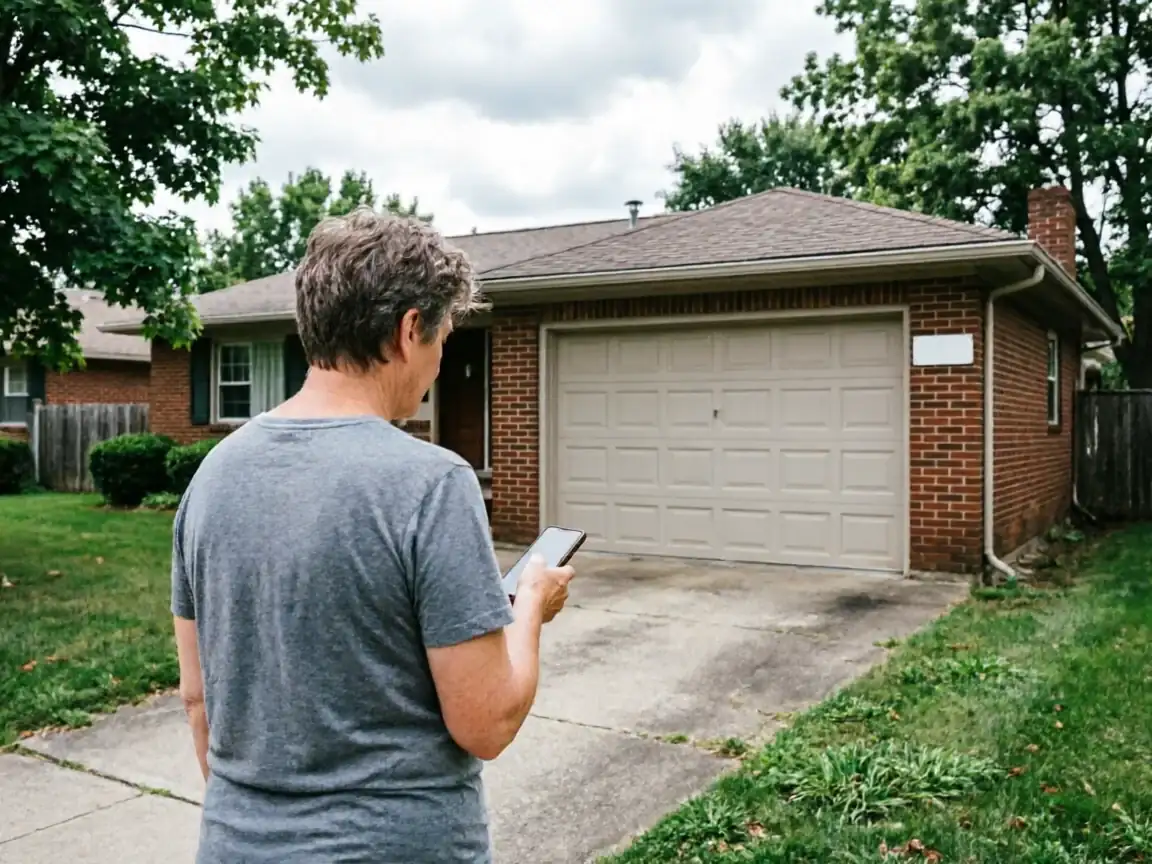
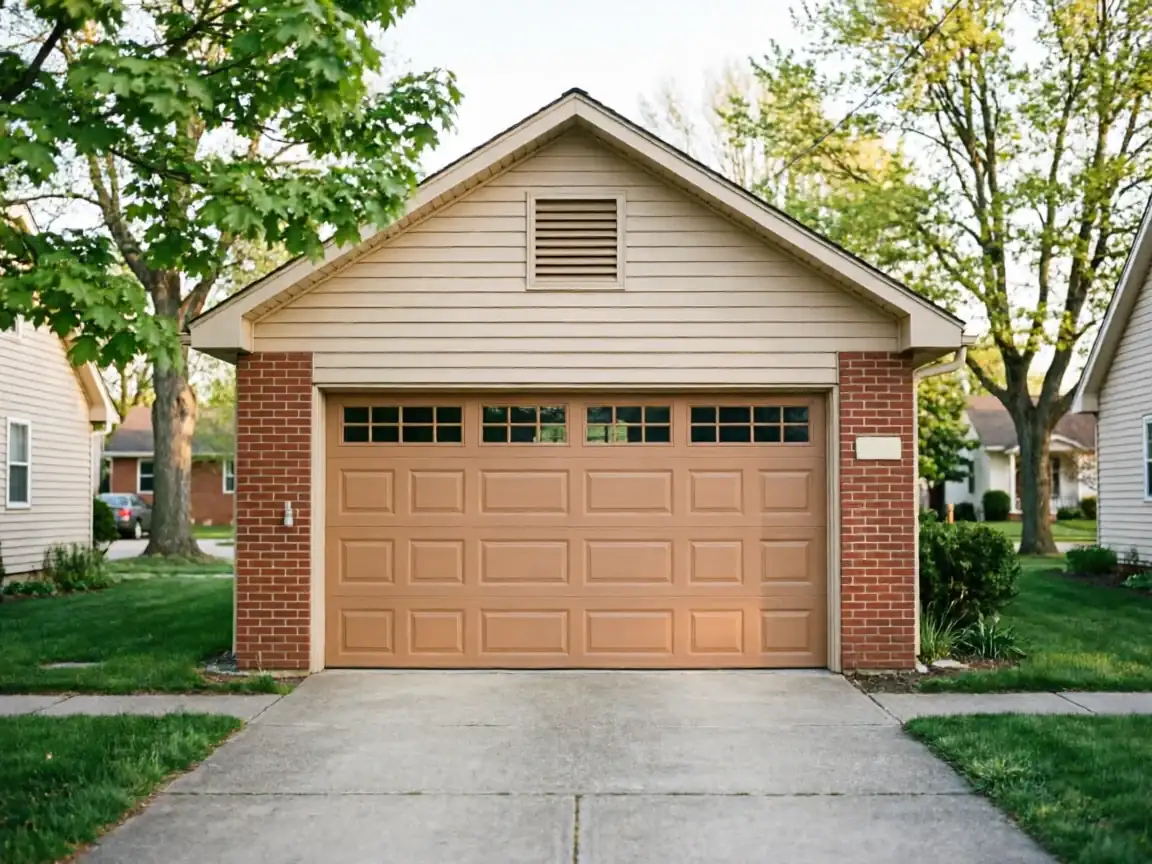
Most of the housing around Lake Zurich went up between 1980 and 1999
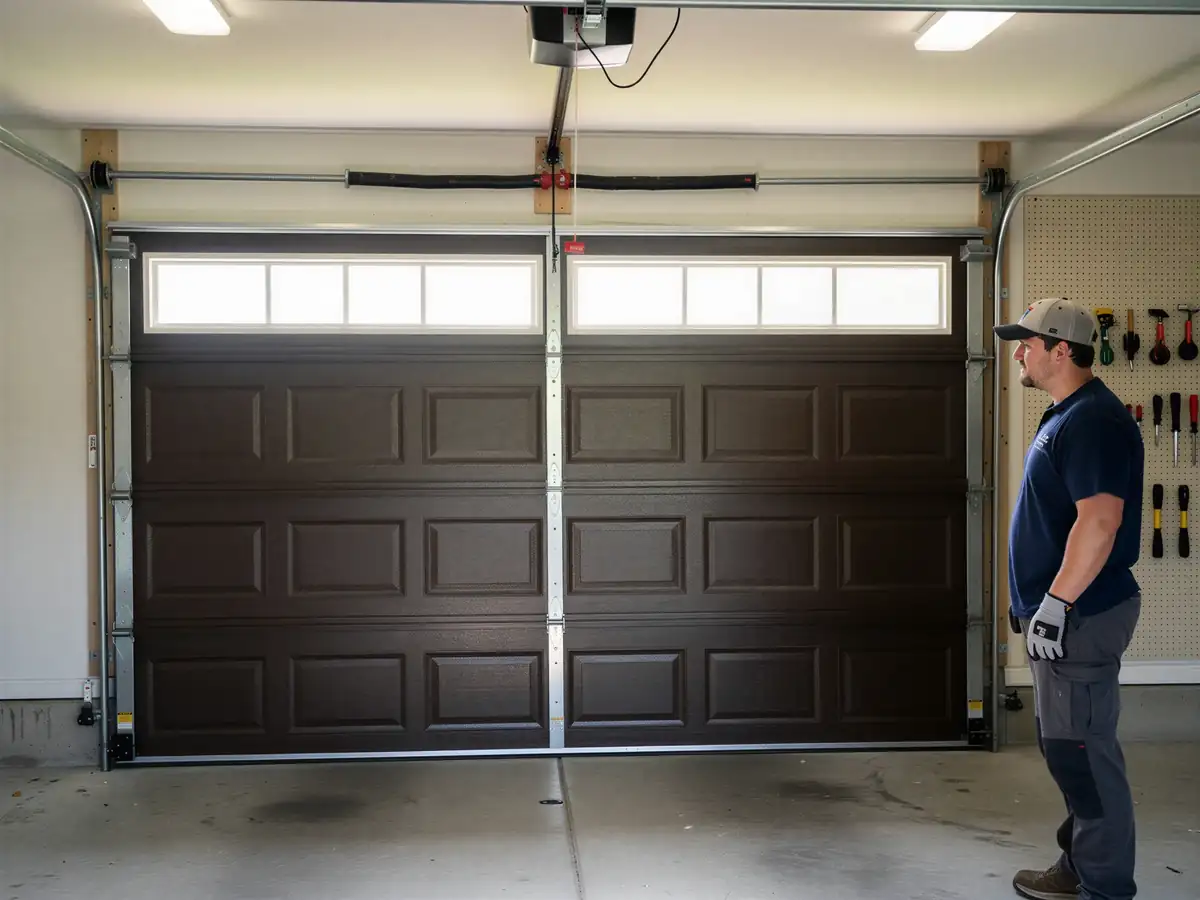
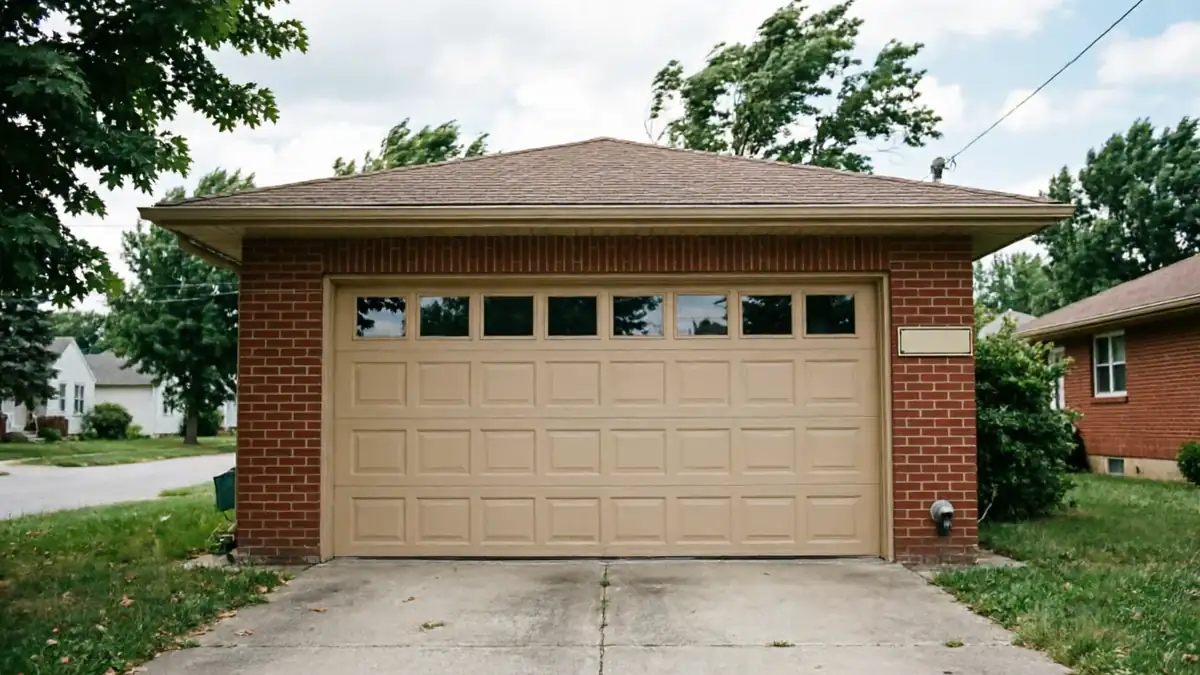
And that building wave came with attached two-car garages and single wide doors running 16 feet across instead of two separate 9-foot doors. A 16-foot door has almost twice the surface area of a single door, which means almost twice the wind load pushing on the same hardware - same track gauge, same number of hinges, same springs sized for a lighter panel in a lot of cases.
- 16 feet
The service area sits in a cold, moderate climate band, not a hurricane zone
So the doors here were never engineered the way a coastal wide door would be. Builders in this band assumed snow load and freeze-thaw cycling, not sustained gusts hitting a flat 16-foot surface. That's a reasonable bet most years. It stops being reasonable the one night wind comes through hard and the door is the widest, flattest thing on the house.
Steel contracts in cold weather too
A panel that flexes an eighth of an inch at 70 degrees flexes more at 10 below, and a door already stressed by wind load has less room to bend before something - a hinge, a roller bracket, a seam - gives.
Doing Nothing For Now
Not every wide door needs work right now. If your garage faces away from prevailing wind, if the door is newer than the 1980s stock common in this area, or if it already has a center strut bracing the panel, you can reasonably wait and just watch it.
Here's the honest limit of what I can tell you without seeing the door: I don't know your door's age, brand, or gauge from a web page, and I'm not going to pretend otherwise. A 1985 door and a 2009 door - both common vintages in this area's housing stock - behave very differently under the same gust. One of them likely already failed a strut inspection it never got.
If the door is original to a house built in the 1980s or 90s, which covers a lot of the stock in this area, that's the one I'd stop ignoring. Original hardware on a door that size was sized to the standards of its decade, not to whatever the wind happens to do on a given night. Waiting costs nothing until it costs a panel.
The Problem
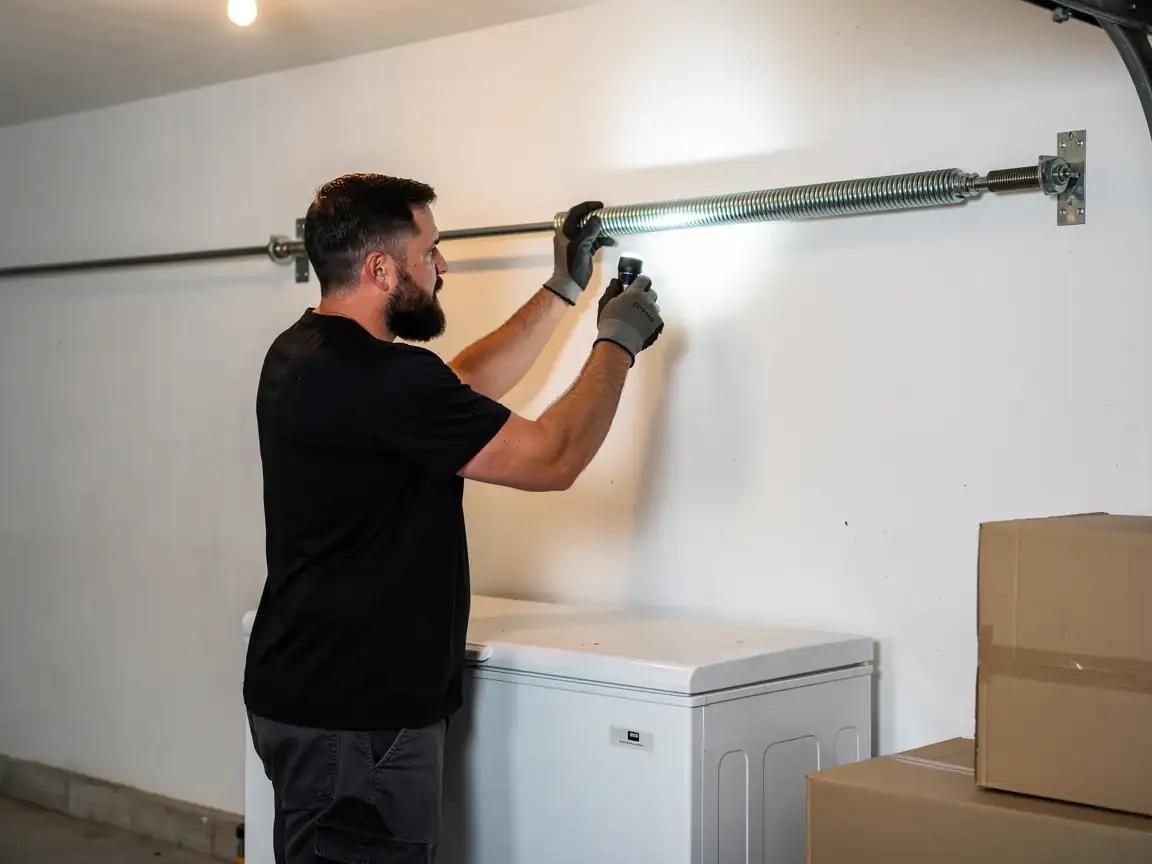
A wide door without a horizontal center strut flexes in the middle under wind load - you can watch it happen, a shallow bow pushing in and out as gusts hit. Keep that up over seasons and the stress finds the weakest point: a track bracket pulled slightly from the framing, a hinge hole elongated, a seam between panel sections starting to separate.
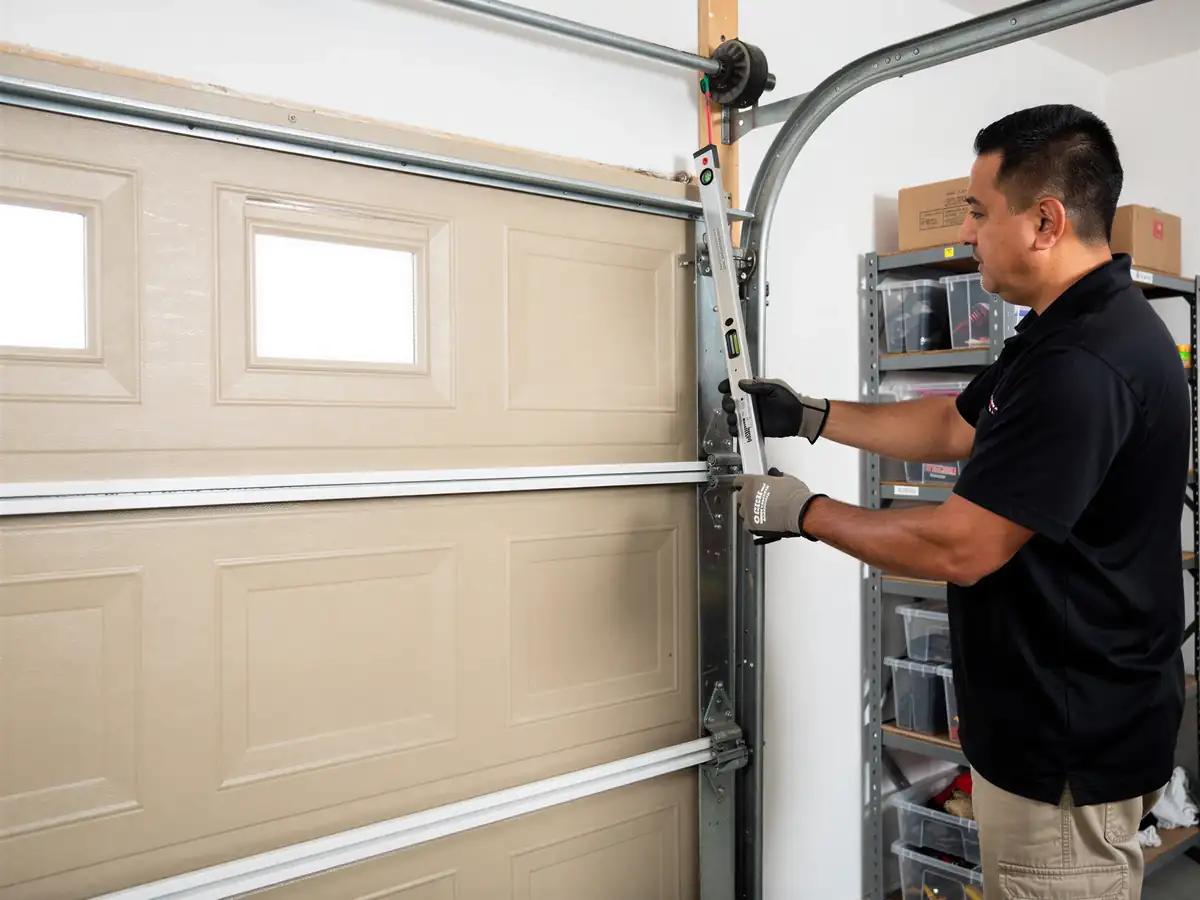
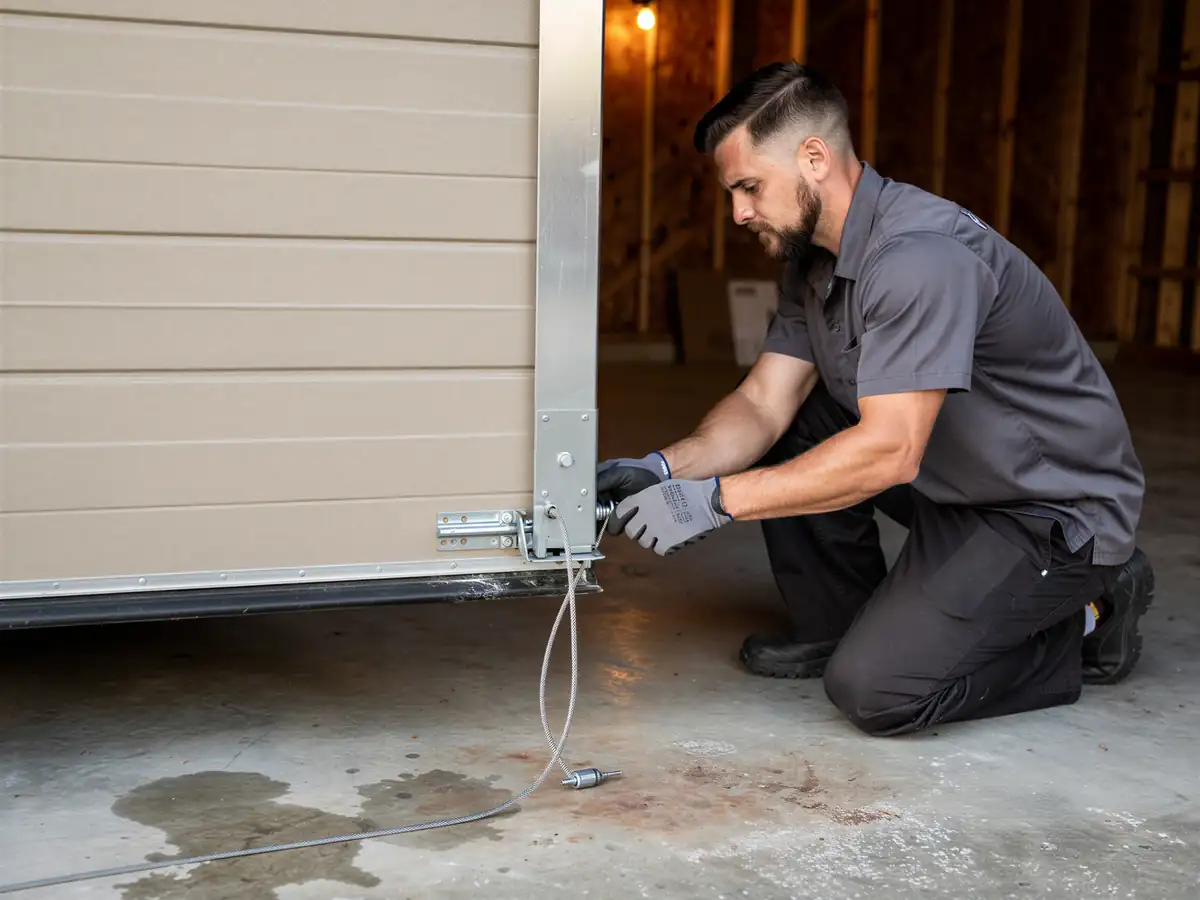
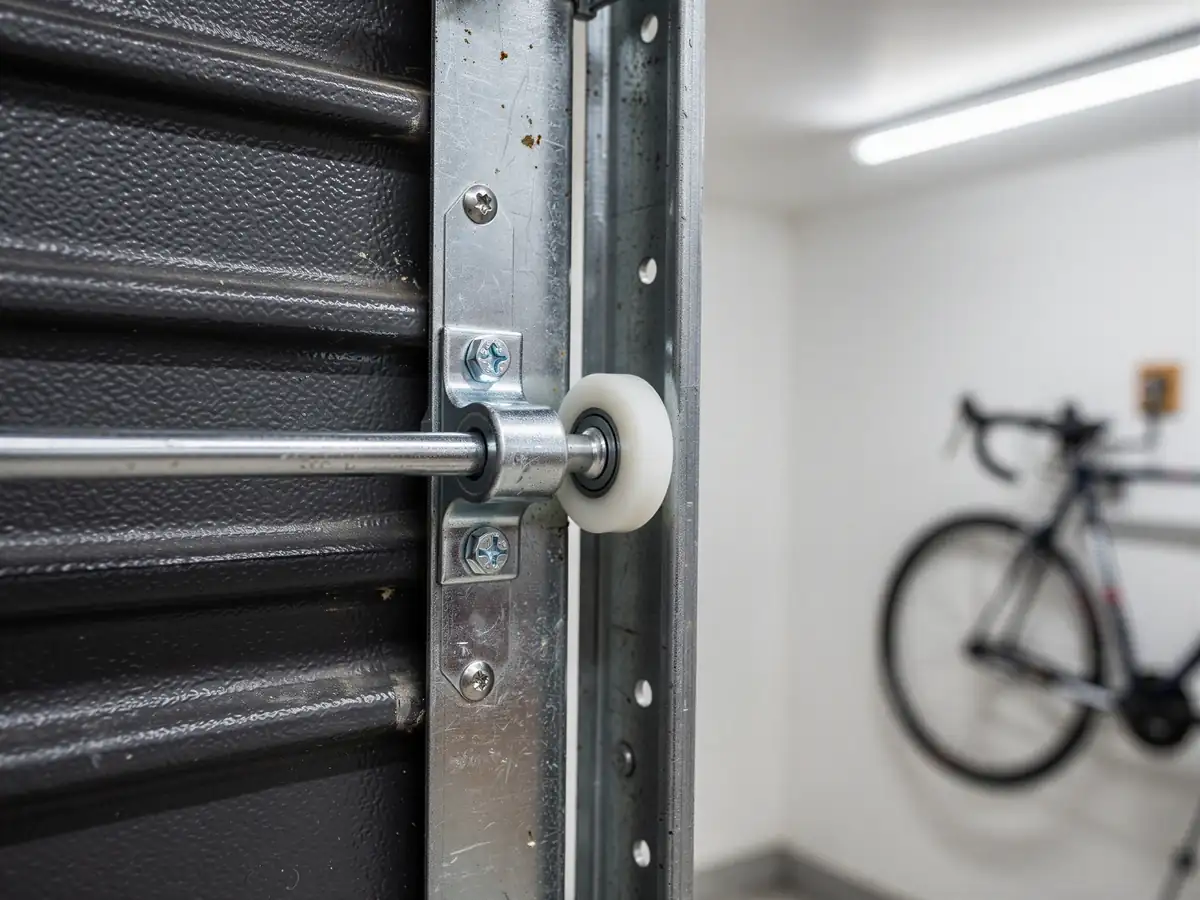
The failure doesn't usually look dramatic. It's a track that's a quarter inch out of plumb, a roller that's started binding, a bottom corner that doesn't seat flush anymore. Left alone, the next hard gust has more leverage than the last one, because the hardware holding the door square is already compromised.
Cold makes it worse, not better. Steel is less forgiving at low temperatures, and this area's winters put that cold stress on the door at the same time storm fronts bring the wind. The two load types don't take turns - they stack.
When to Get Help
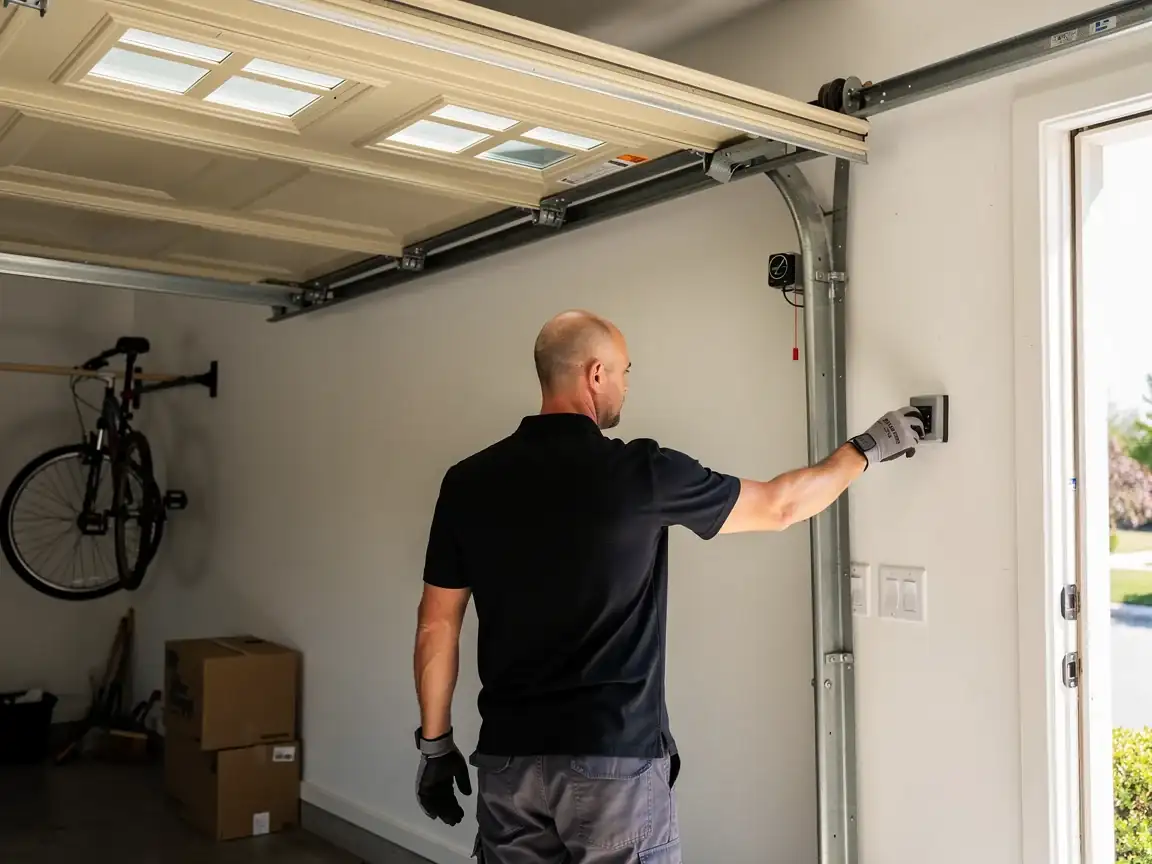
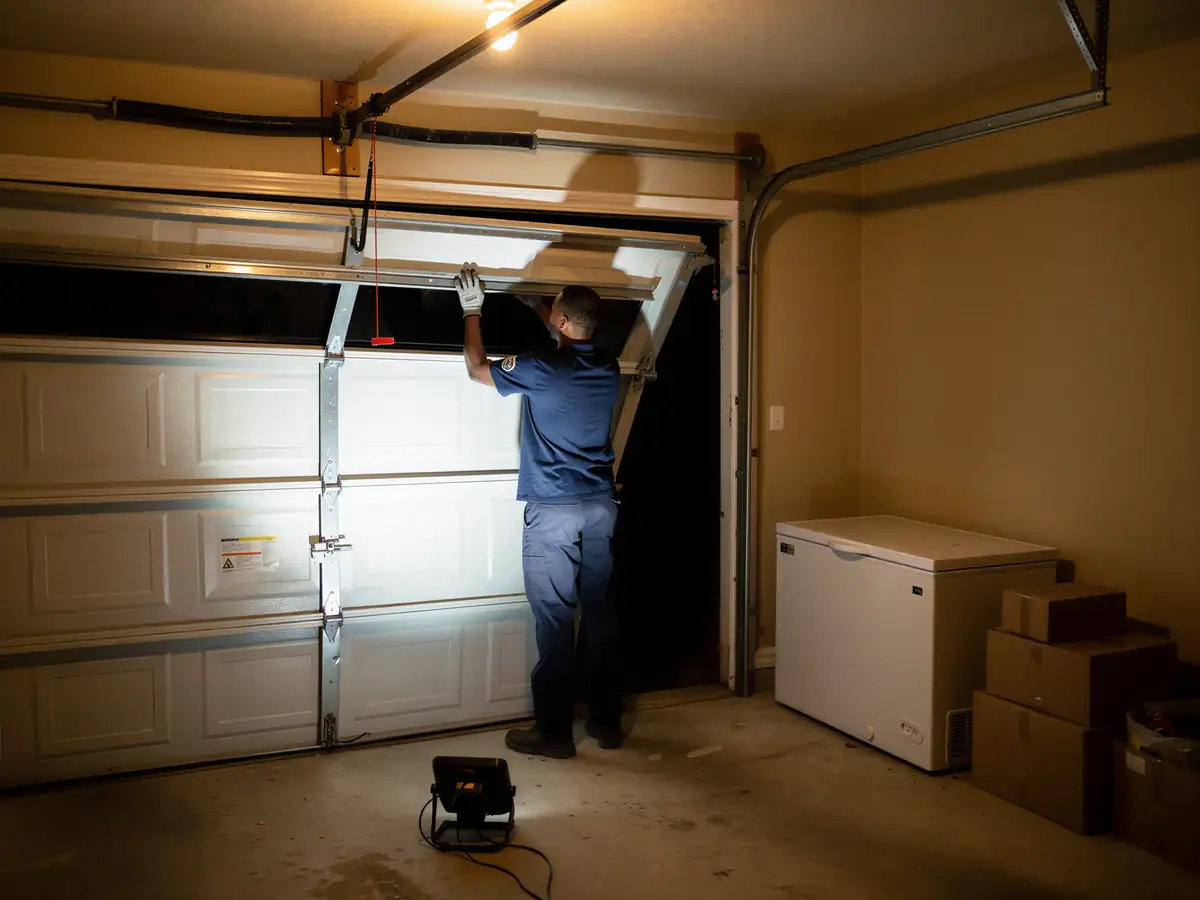
Call if you see daylight flexing visibly in the middle of the door during wind
If a track bracket has pulled away from the frame even slightly, or if the door binds or drags on one side after a windy night when it didn't before. Those are signs the hardware is losing its grip on a door this wide, and it gets worse on its own, never better.
A door built as part of this area's 1980s-90s housing wave
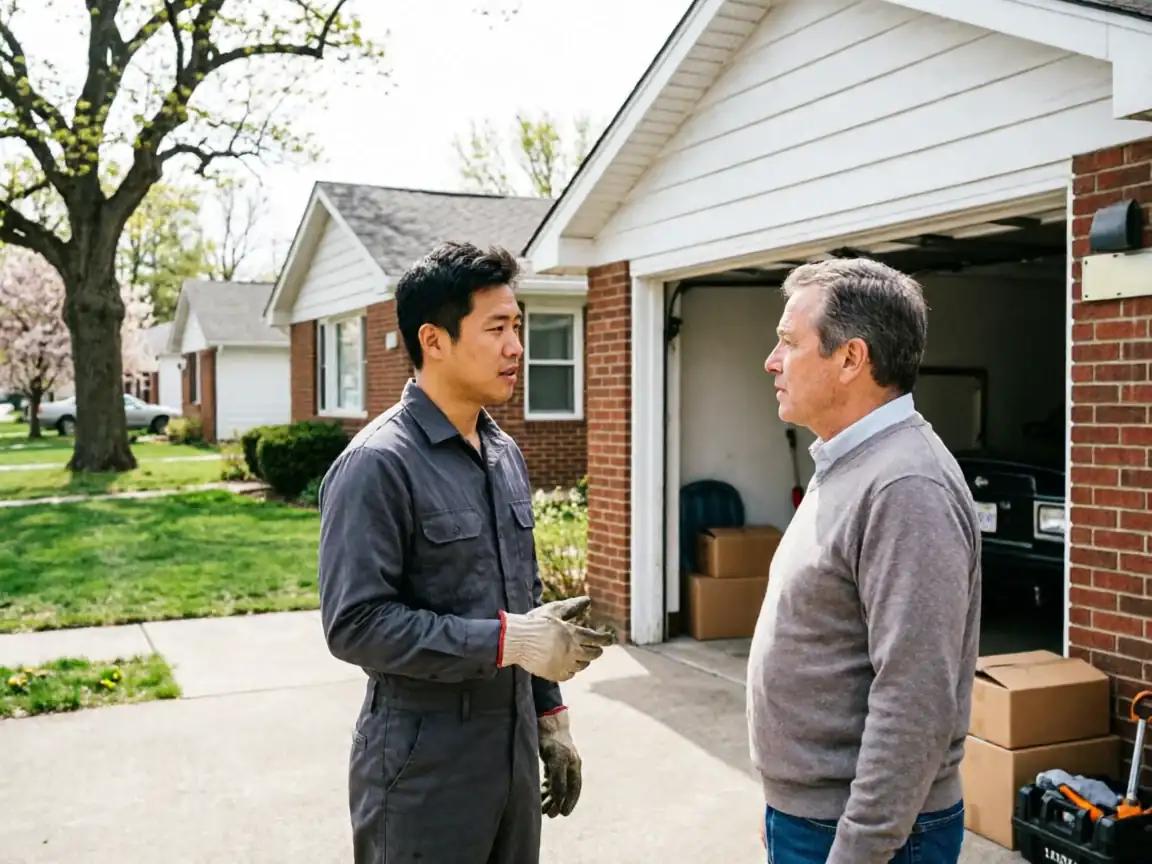
Running the standard double width, is the profile most worth a look before the next storm season rather than after. We work the area out to towns like Kildeer, Hawthorn Woods, and Long Grove, so if you're not sure whether your door's age or width puts it at risk, it's a quick thing to check in person rather than guess from a description.
We don't push replacement when a strut and a hardware tighten-up will hold
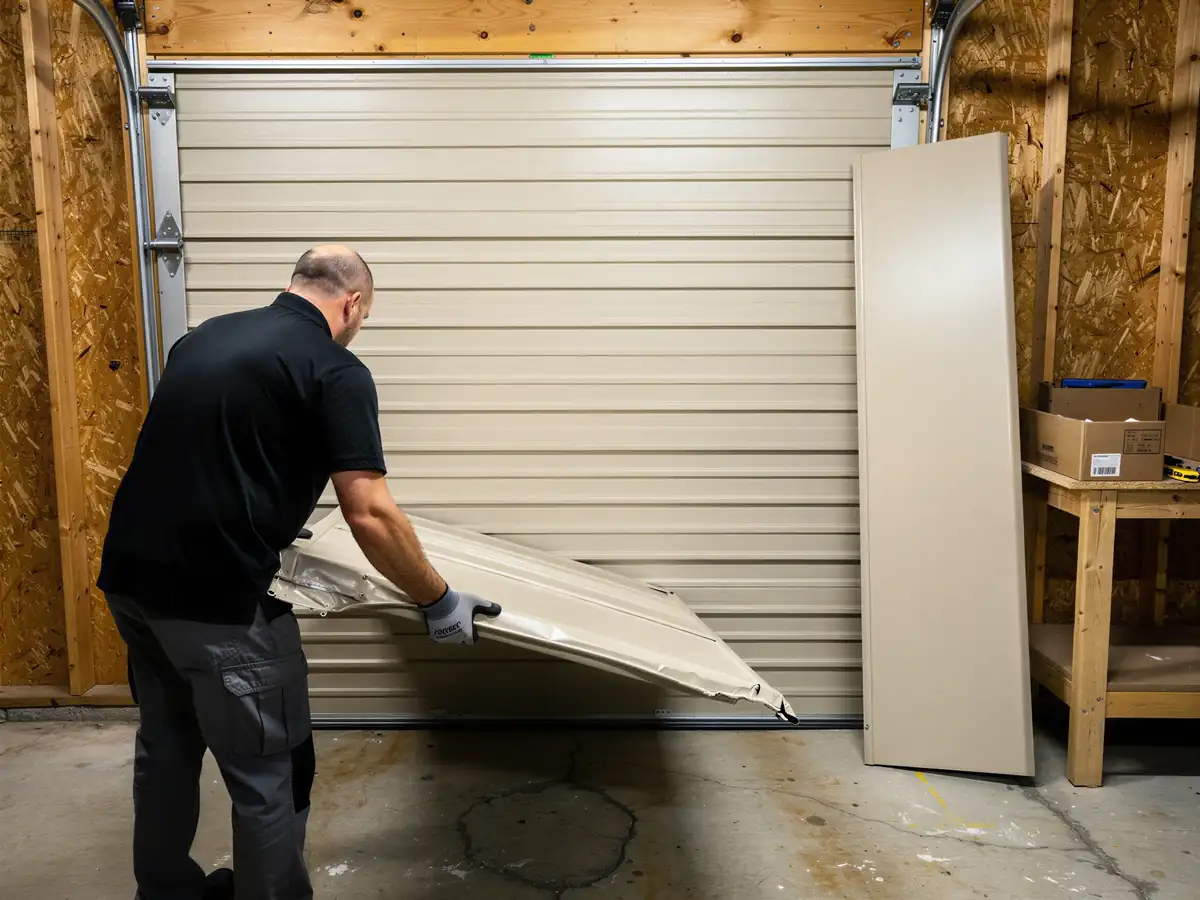
But if the panel's already bowed permanently or the track holes are stripped out, bracing it again is a patch, not a fix.