What the Weather Here Does to It
Lake Zurich sits in a cold-moderate climate band
Which means the door on your garage goes through a real freeze-thaw cycle every winter, not just a cold morning or two. Steel contracts in the cold, and the grease on an older torsion spring thickens right along with it. A spring that winds smoothly in July can bind and groan in January, and if it's already near the end of its cycle life, that extra resistance is what finally snaps it.
Most houses in Lake Zurich went up between 1938 and 2009
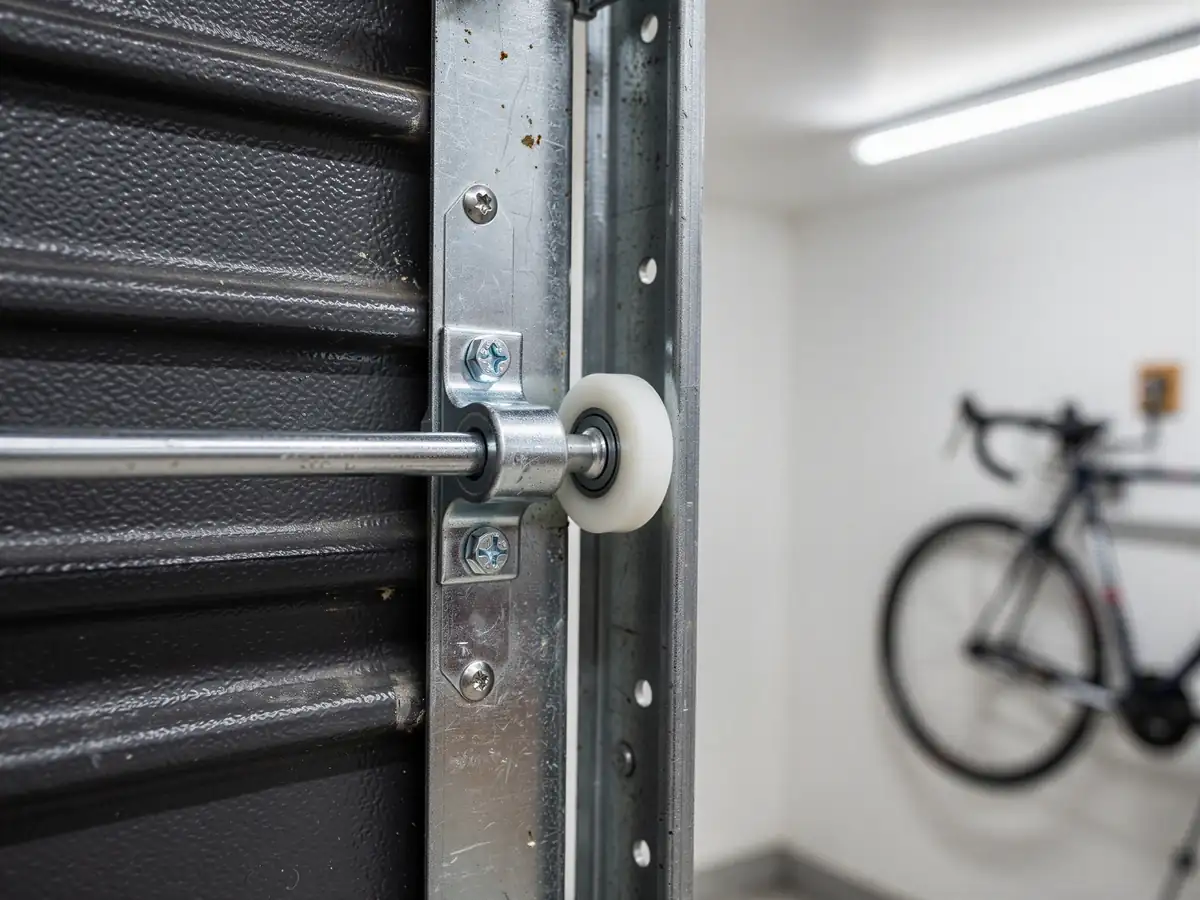
With the typical build year sitting around 1985, so a lot of what's hanging in these garages is original 1980s hardware: single-torsion springs, steel rollers with no nylon sleeve, and tracks bolted with lag screws that have had forty winters of expansion and contraction to work loose. None of that is unusual for a house this age. It's just what a tech expects to find before they even touch the door.
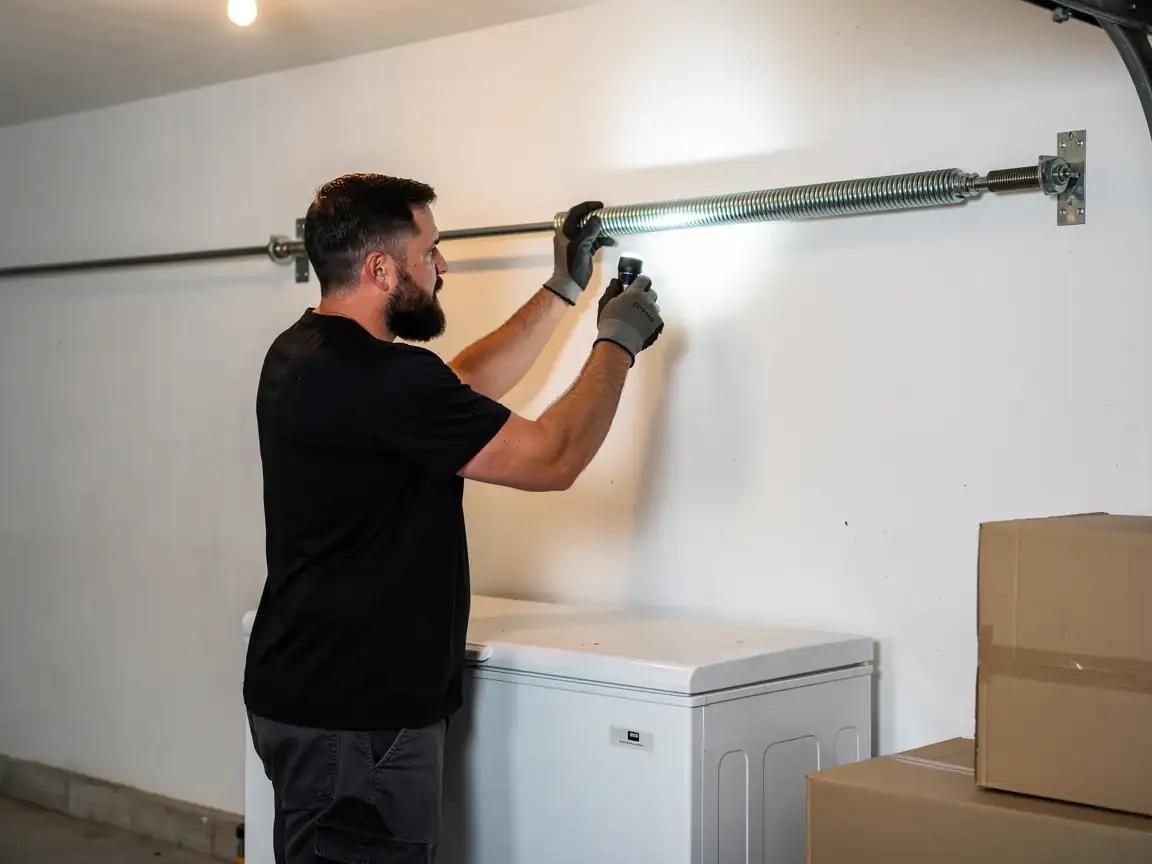
The first thing a technician does on a cold-weather call isn't open the door
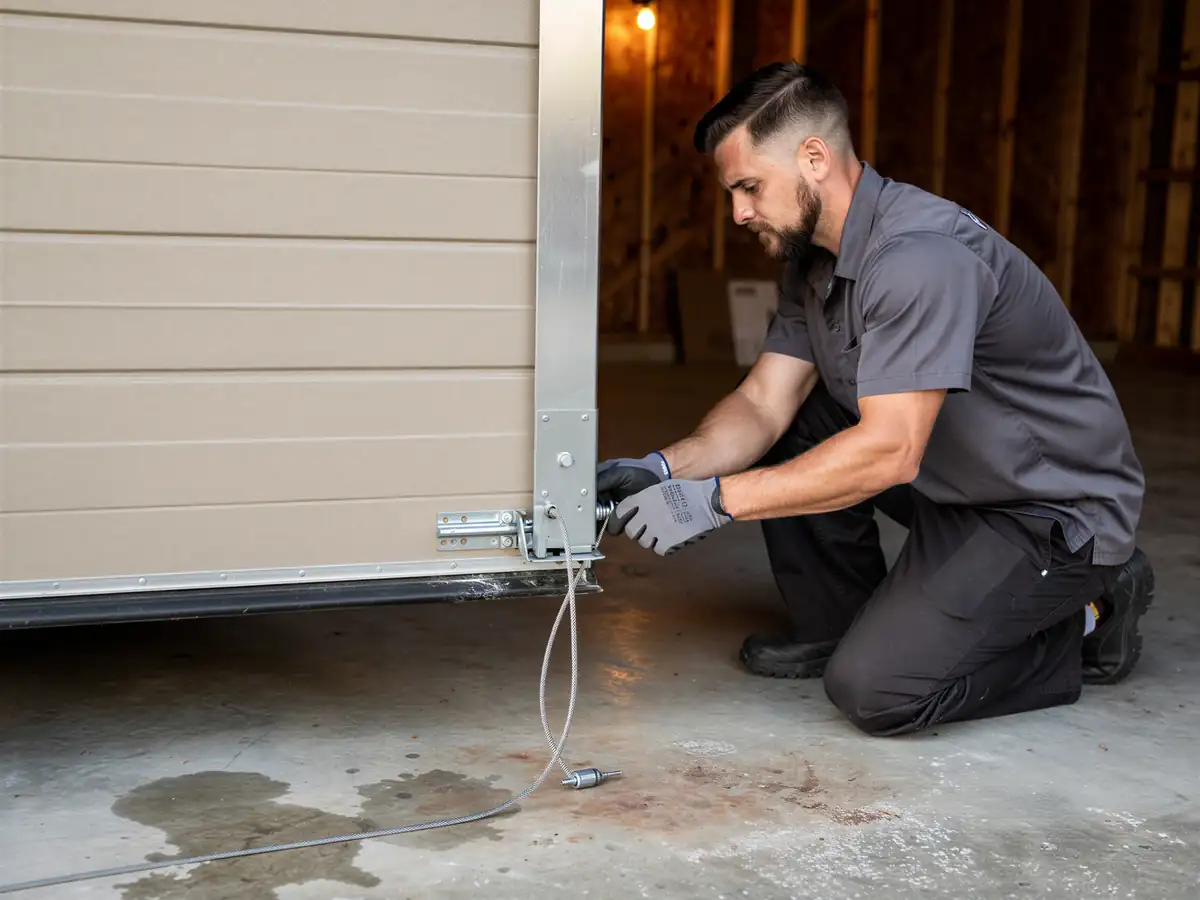
It's put a hand on the spring and the track bolts, because in this climate those are the two places that fail first.
Doing Nothing For Now
Not every noise is a job. If your door closes square, the opener reverses cleanly when it hits something, and the only complaint is a little rattle on the way up, that can usually wait. A loose roller or a dry hinge isn't an emergency, and calling a truck out for it in the middle of a cold snap just adds a trip charge to something a homeowner can often snug up themselves with a wrench.
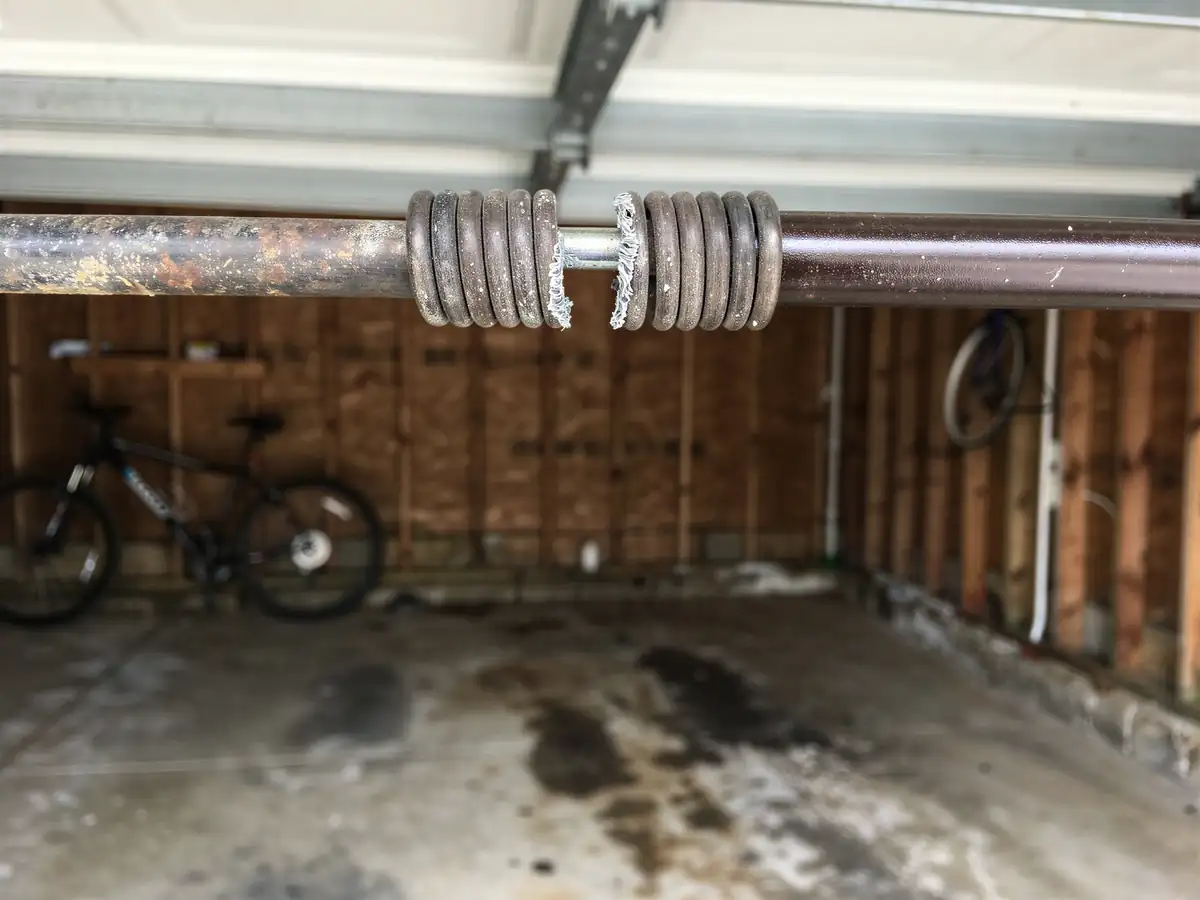
Where "wait and see" stops being reasonable is anything involving the spring or the cables. Those parts don't degrade gently. A torsion spring that's visibly stretched, or a cable with frayed strands near the drum, is holding tension that doesn't go away just because you decide to ignore it. In a house built in the 1980s-90s range, like most of the stock here, that spring has likely had three or four decades of cycles on it already, and cold makes the metal more brittle than it was during the summer. That's the one honest limitation worth naming here: a tech can tell you a spring is near the end, but nobody can tell you the exact day it'll go. Waiting on that specific part is a bet, not a maintenance plan.
The Problem
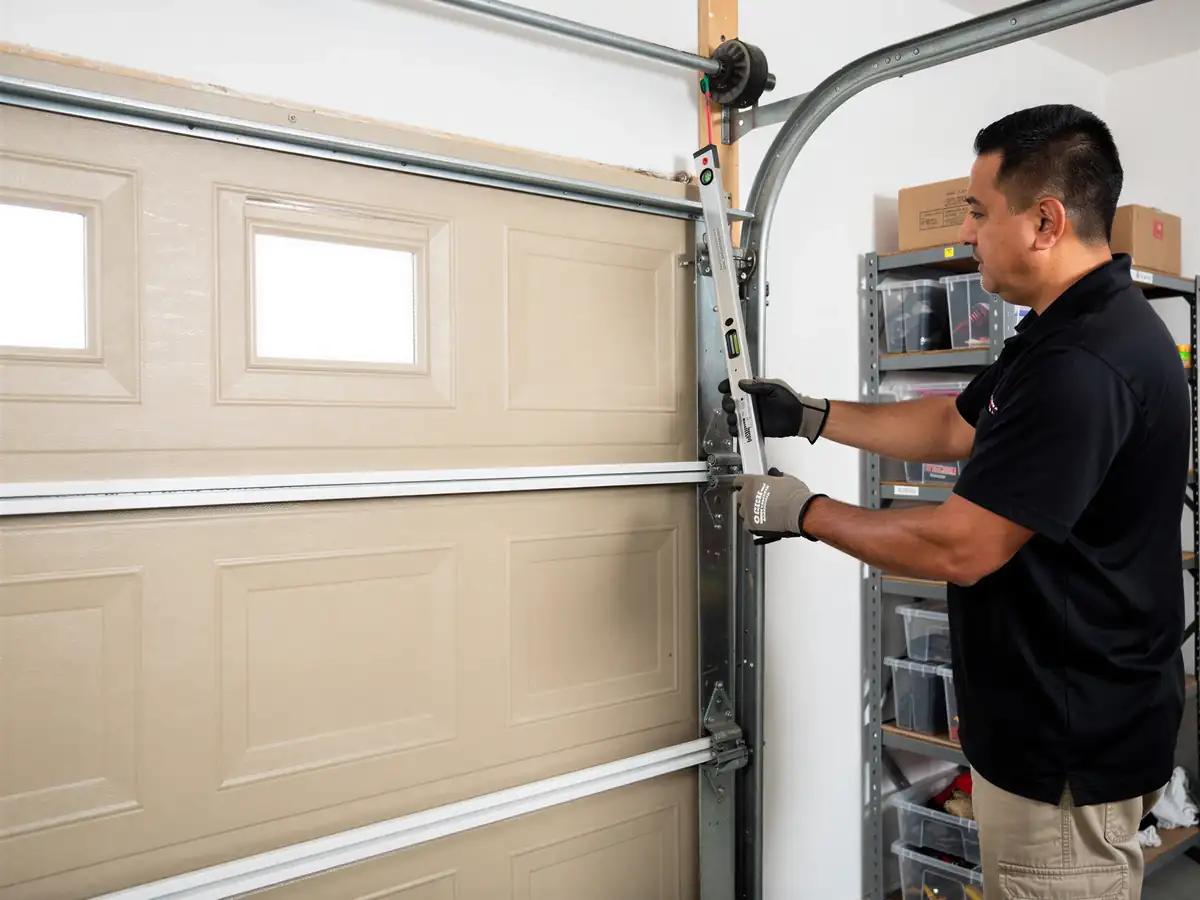
On a service call, the order matters. A technician checks the spring tension first, because an unbalanced door puts strain on everything downstream of it, including the opener. Next comes the track alignment, looking for the kind of play that forty-year-old lag bolts develop in houses from this era's housing stock. Rollers get a visual and a pull test. Cables get checked for fraying right at the drum, which is where they wear first.
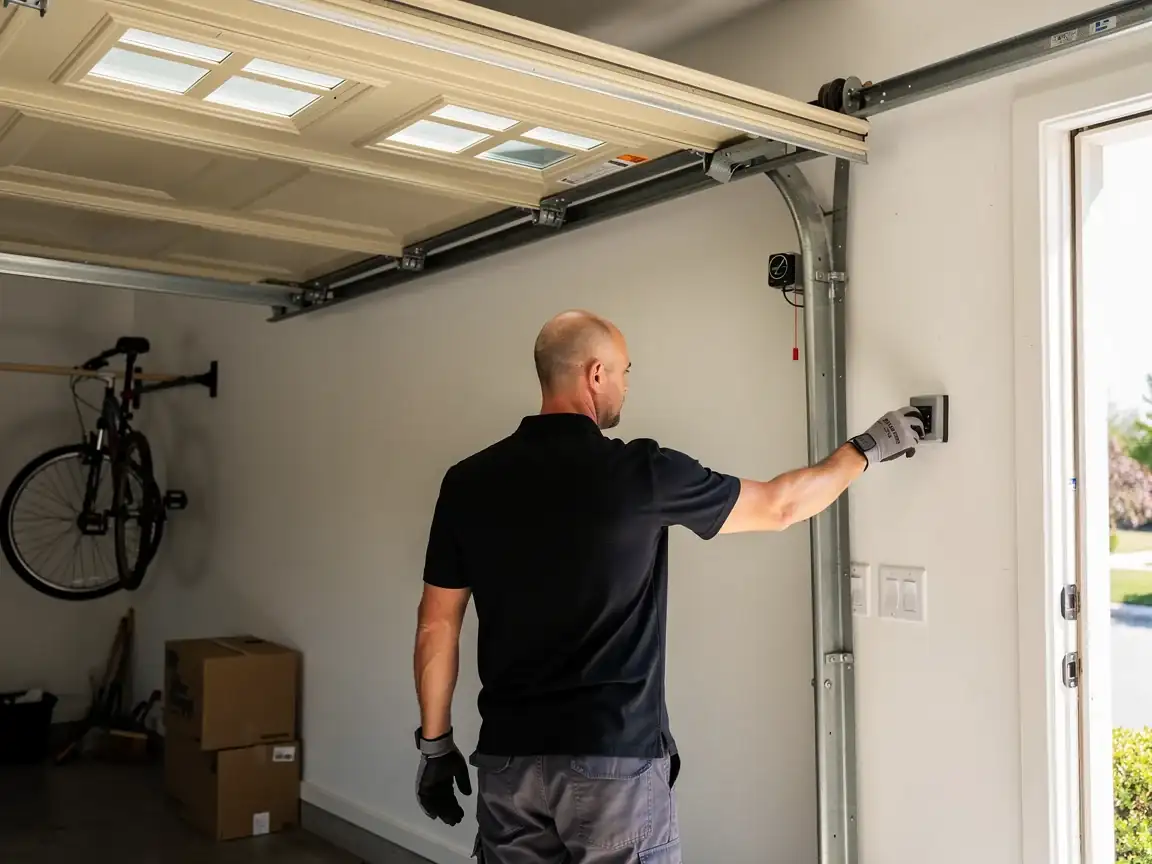
Then the opener. A lot of the 1980s-90s builds common in Lake Zurich still have openers from that same window, or a replacement installed decades ago that predates modern auto-reverse testing. A tech will run the force setting and the reverse sensor, because that's a safety item, not a convenience one, and it's the part most likely to have been skipped during a previous repair instead of a full inspection.
All of this is cheaper to fix in sequence than in isolation. A spring replaced without a track check just transfers the strain somewhere else, and a door that's out of balance will burn out a new opener faster than an old one that was at least matched to the hardware it was running.
When to Get Help
Call before the door stops working, not after, if you notice the garage door closing unevenly
One side dropping faster than the other, or the opener straining and reversing on its own without anything blocking it. Those are balance and spring symptoms, and in a cold-moderate climate like this one they tend to get worse fast once the temperature drops, not slower.
A household at this area's median income of $121,583 can usually weigh a repair against a straight replacement rather than patching a thirty-year-old system piece by piece, and for doors from the earlier end of the 1938-2009 build range, replacement often makes more sense than chasing parts for hardware nobody stocks anymore
- $121,583 median household income
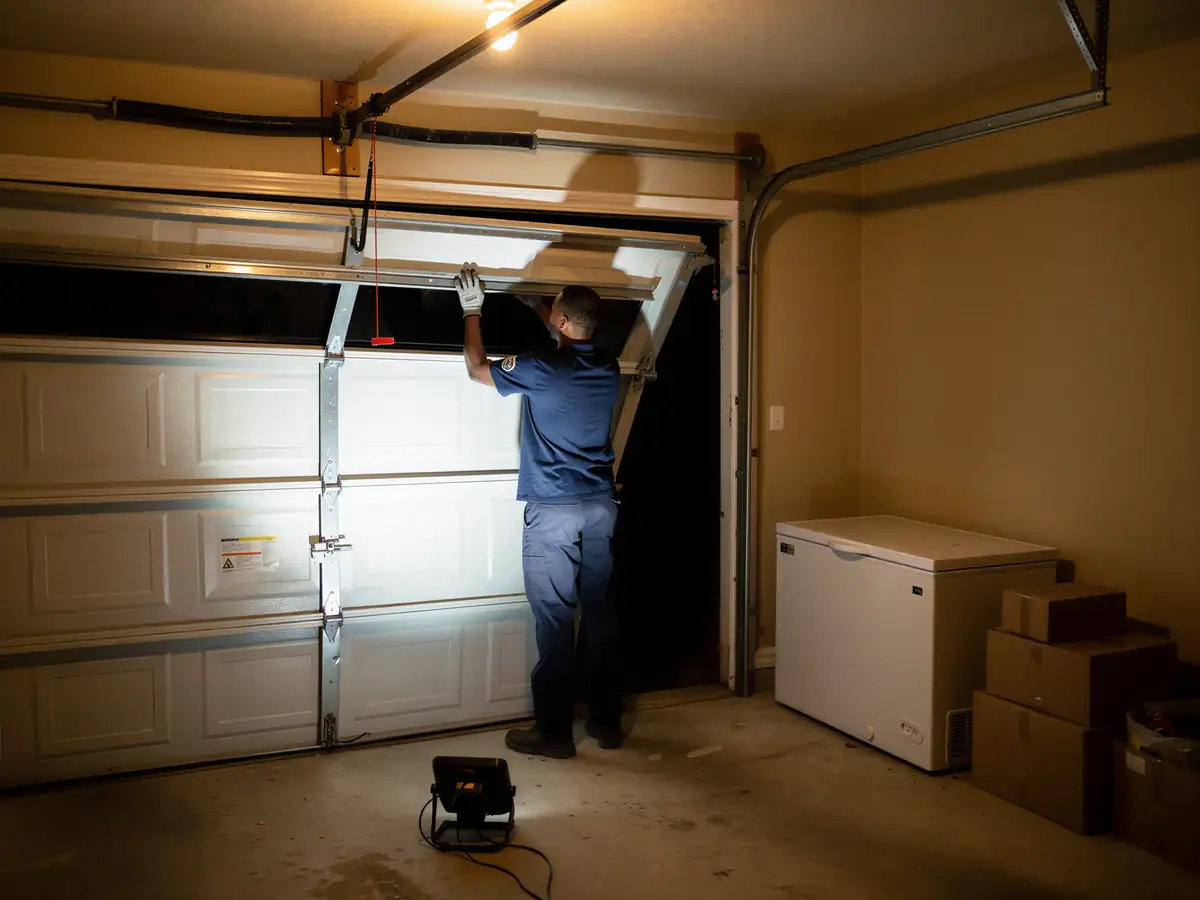
If the door won't move at all, don't force the opener or try to pry it manually
A spring under full tension is the single most dangerous part of a garage door, and that's true whether the house was built in 1950 or 2005.