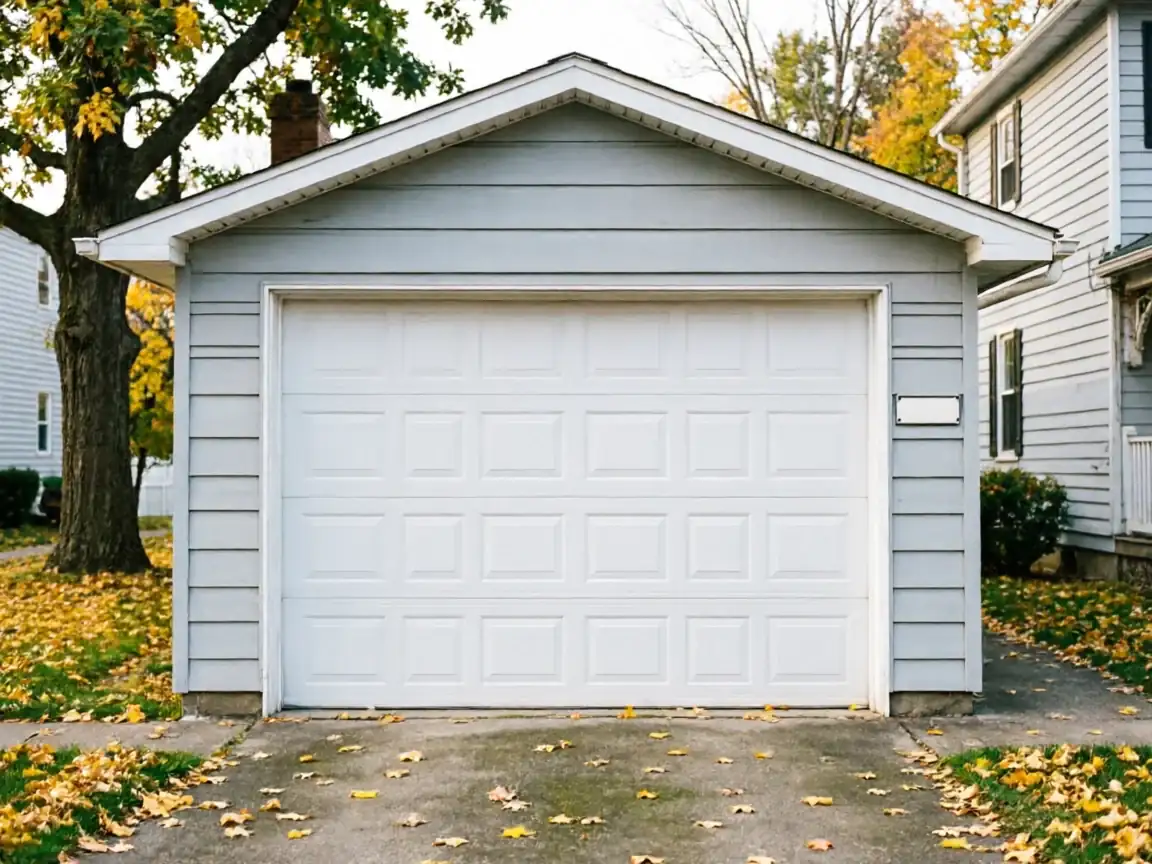
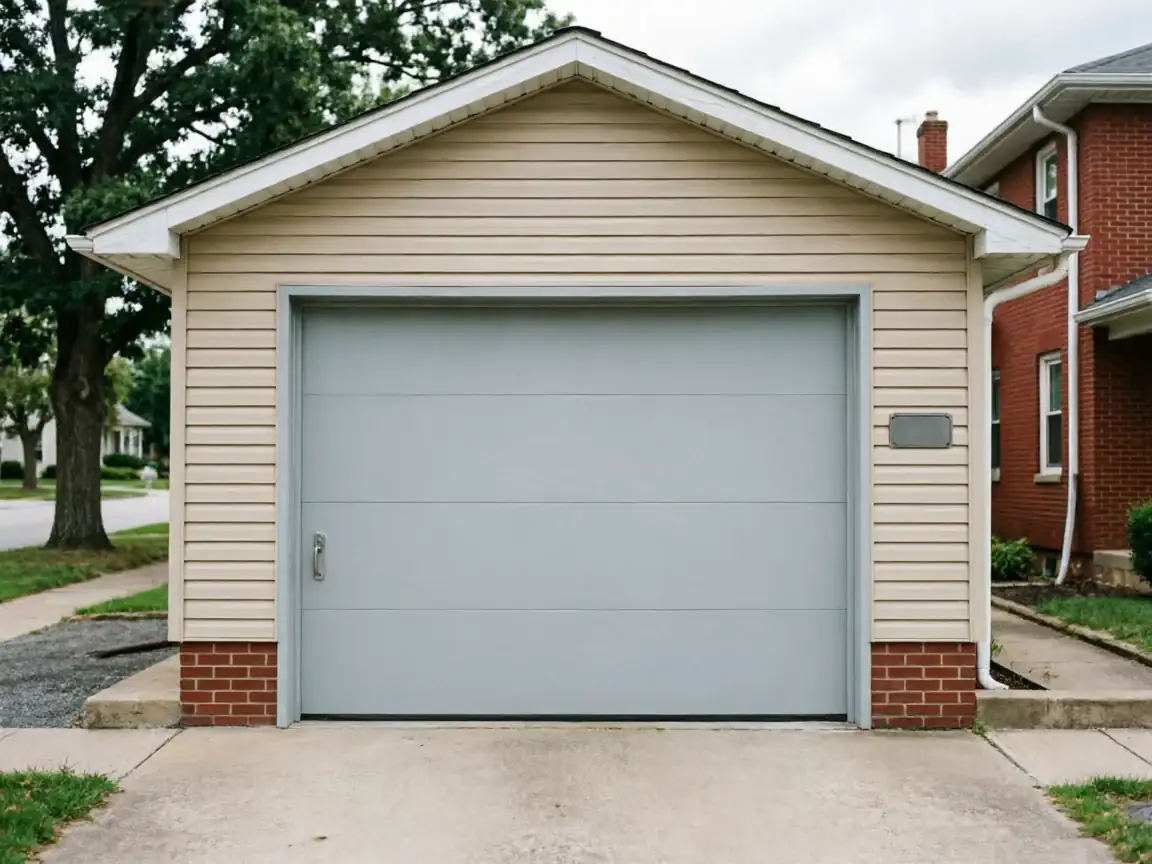
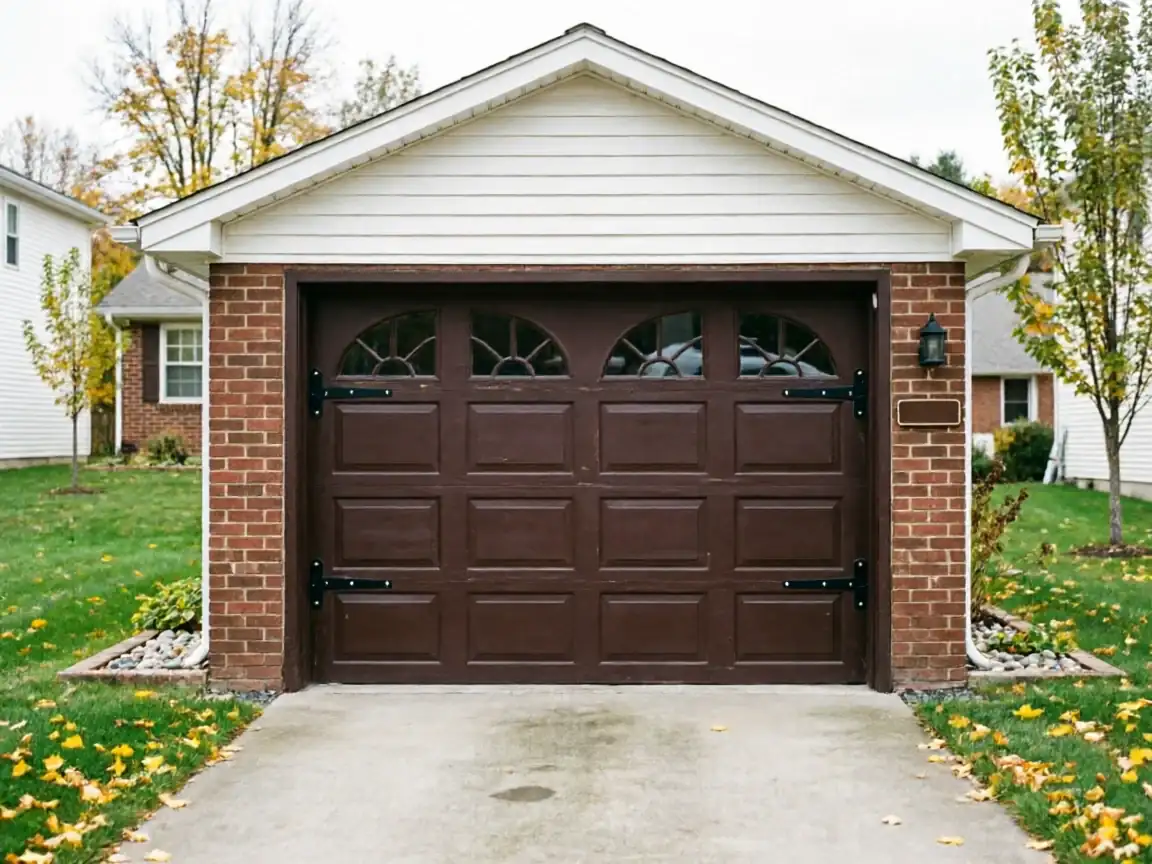
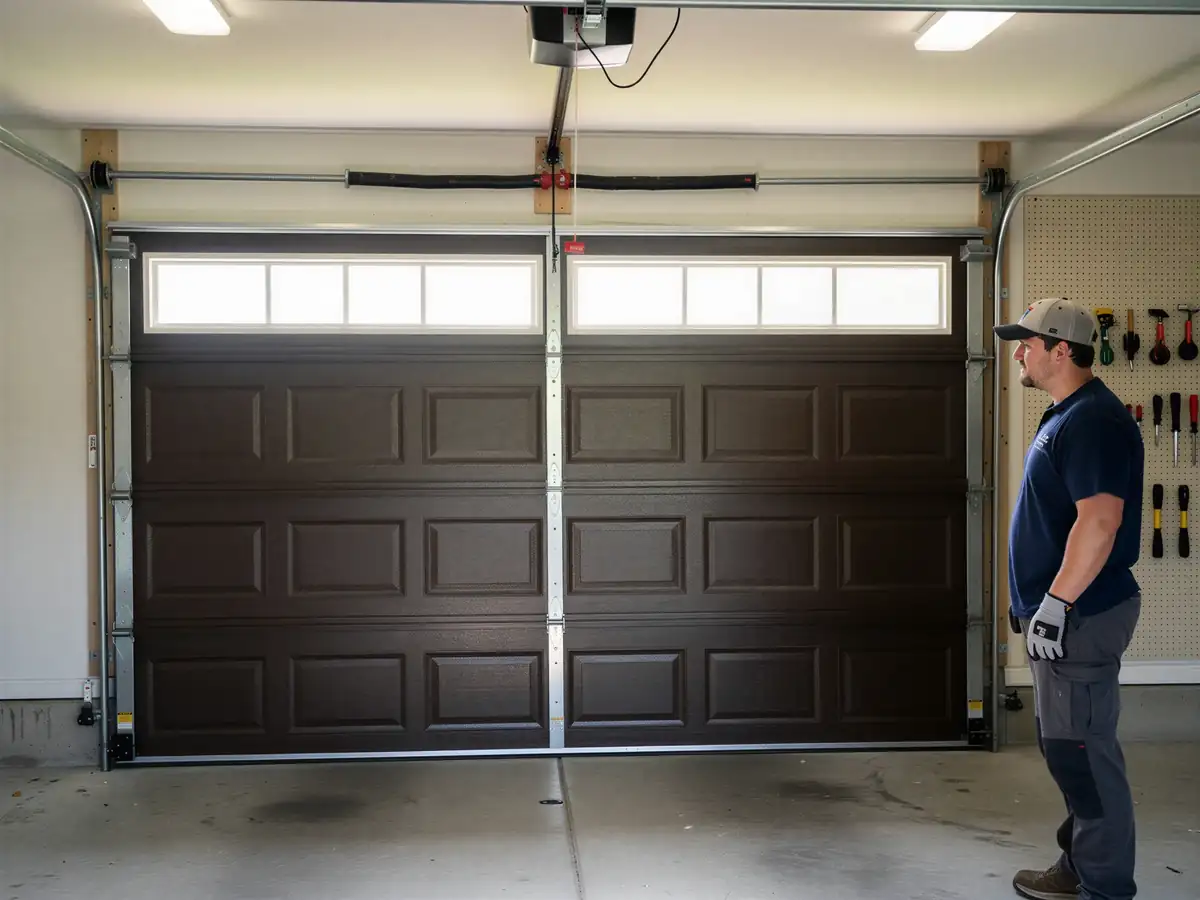
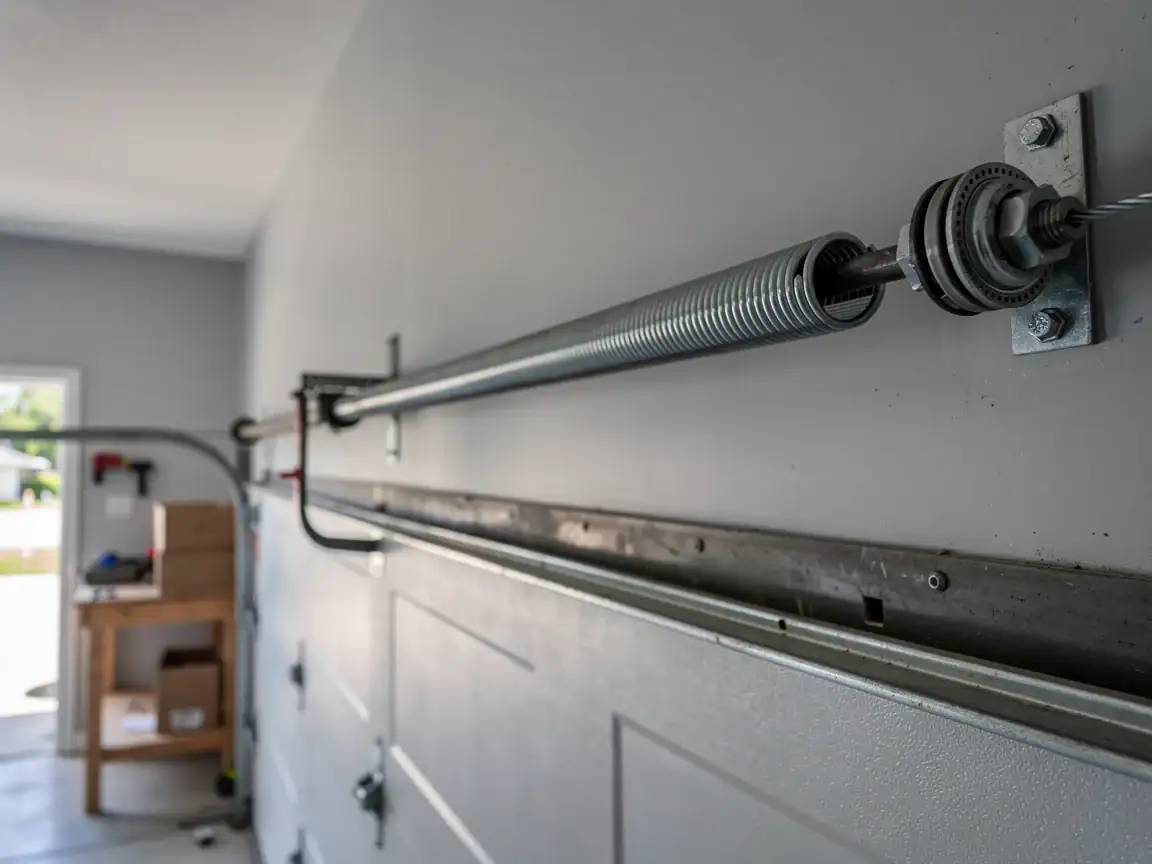
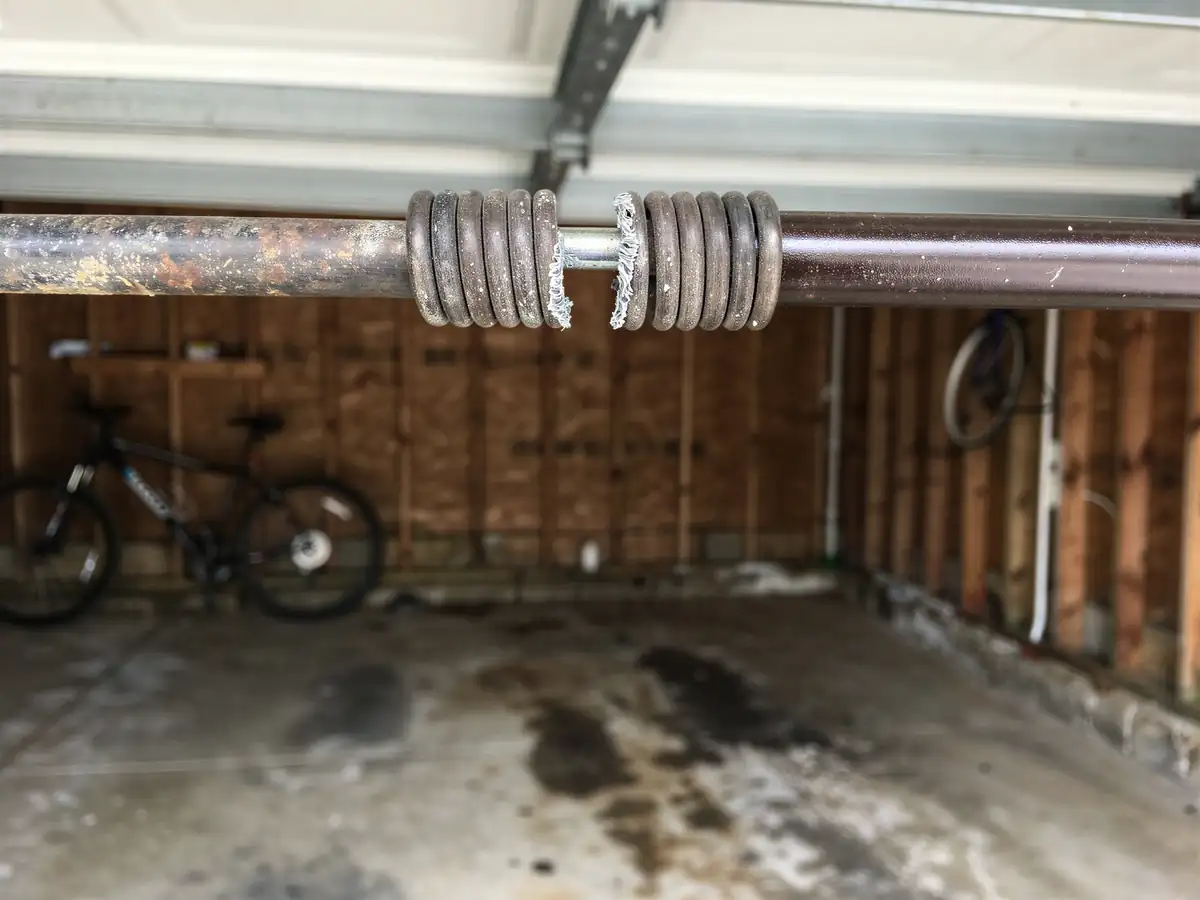
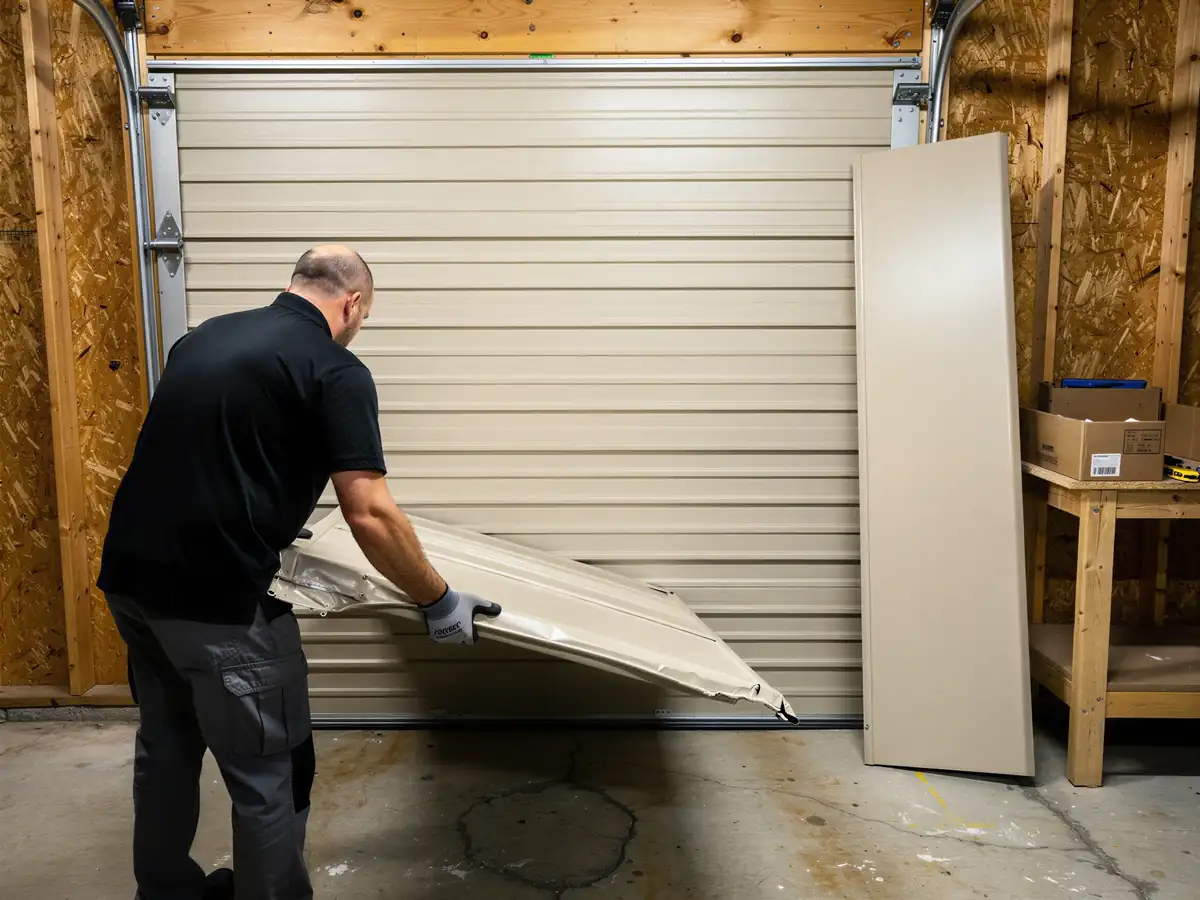
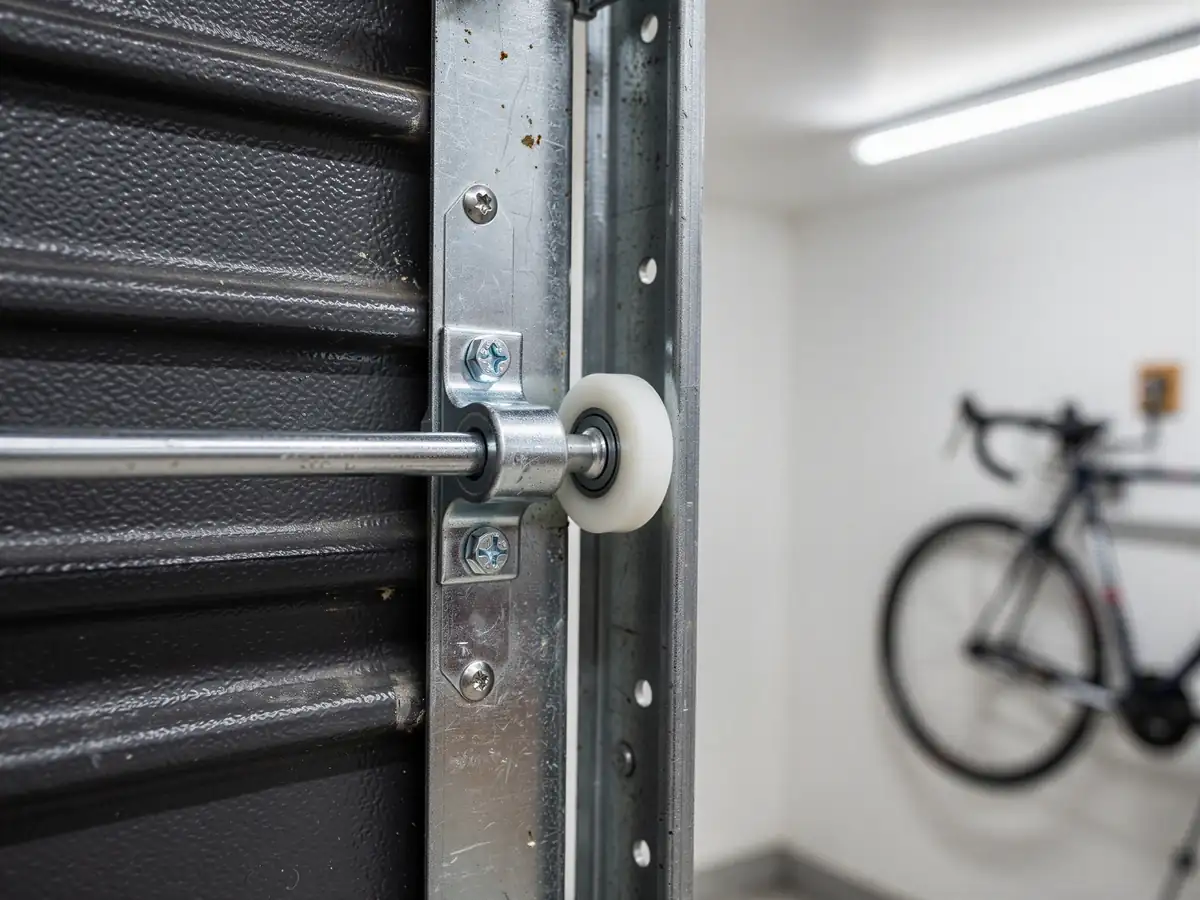
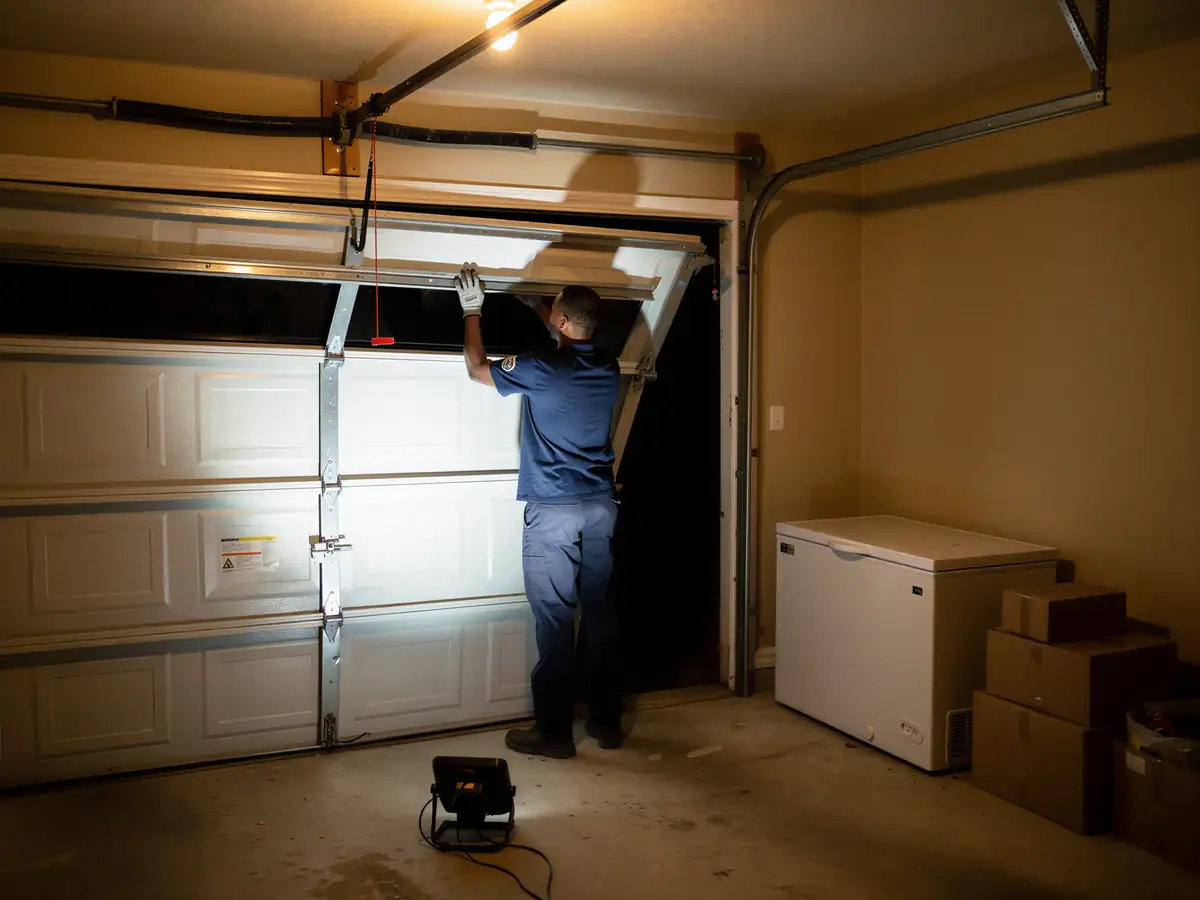
Most of the garage doors we get called out on in Lake Zurich went in sometime between 1938 and 2009, with the bulk of that stock built in the 1980s and 90s. That matters because doors from that era were spec'd for a lighter-duty torsion spring than what's common now, and after three decades of cold-weather cycling, those springs are past their rated life whether anyone's touched them or not. The area sits in a cold, moderate climate band, which means the steel in these doors and tracks goes through a real freeze-thaw swing every winter. Metal contracts in January, expands back in a warm stretch, and the fasteners on an original track bracket start working loose. We see it most on doors that still have their factory opener - the original motor wasn't built to fight a spring that's lost half its tension, so the opener strains, the gears wear faster, and homeowners often think they need a new opener when the actual problem is the spring it's been compensating for. Houses on the newer end of that 1938-2009 range, closer to 2000s construction, tend to have steel rollers instead of the older cast ones, and those rollers rust at the stem in a cold climate once the factory lubricant dries out - a slow failure that shows up as grinding, not a sudden break.
Booking a Visit
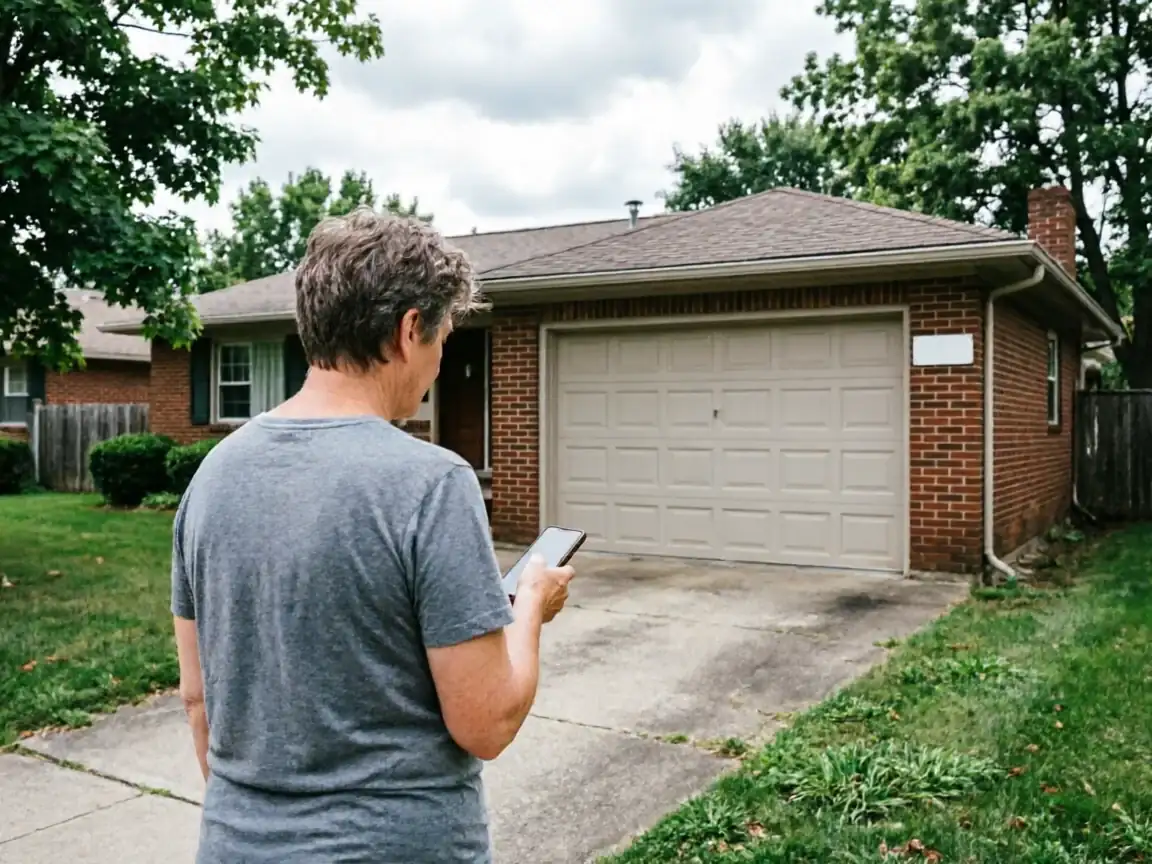
Call or use the contact link on our site to get a visit scheduled. We ask a few questions up front - whether the door is binding, off its track, or just noisy - so the truck that shows up has the right spring size and hardware for a 1980s or 90s build rather than guessing on site. Lake Zurich homes built in that window mostly ran a standard torsion setup, which we carry, but if your house has an unusual door width or a conversion from an older extension-spring system, tell us that when you call so we can check stock before we drive out. We don't keep every opener model on the truck - if yours is a less common brand or an older chain-drive unit, there can be a short wait on a part. We'd rather tell you that up front than have you wait on a truck that can't finish the job.
Can You Do This Yourself
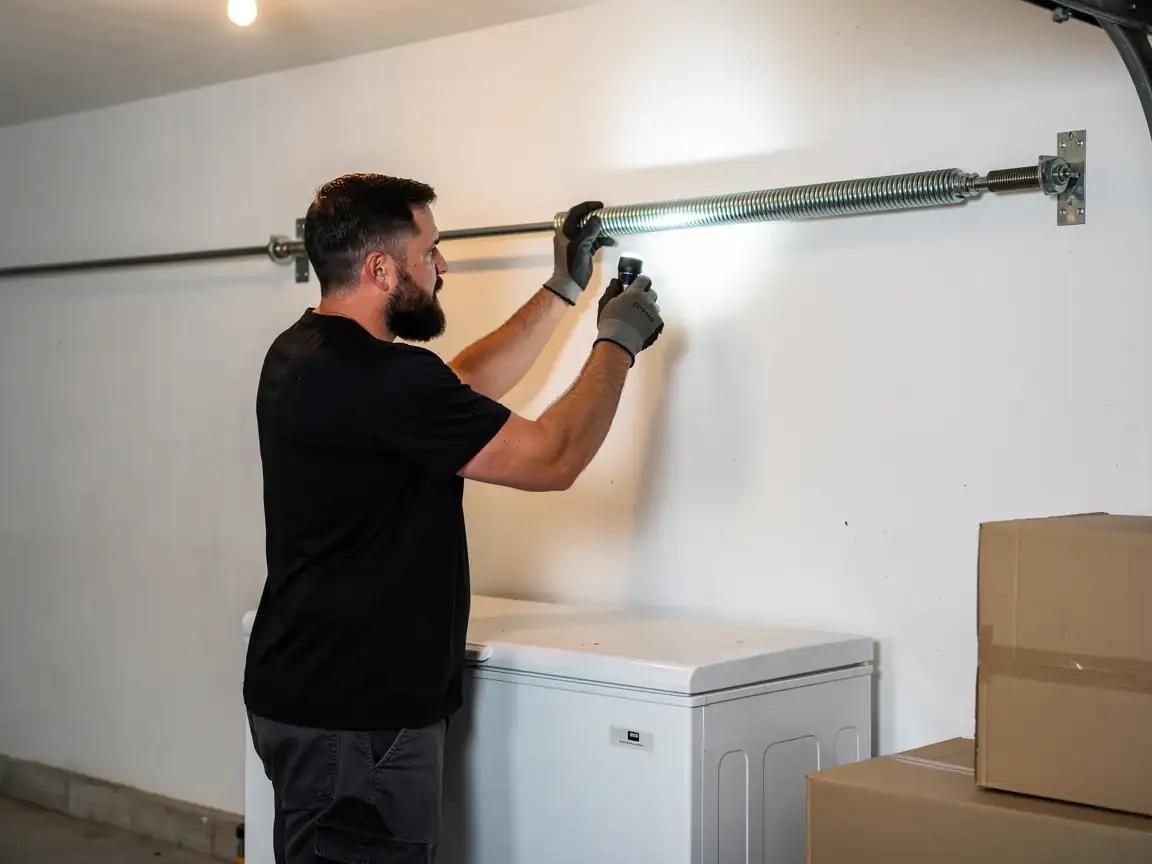
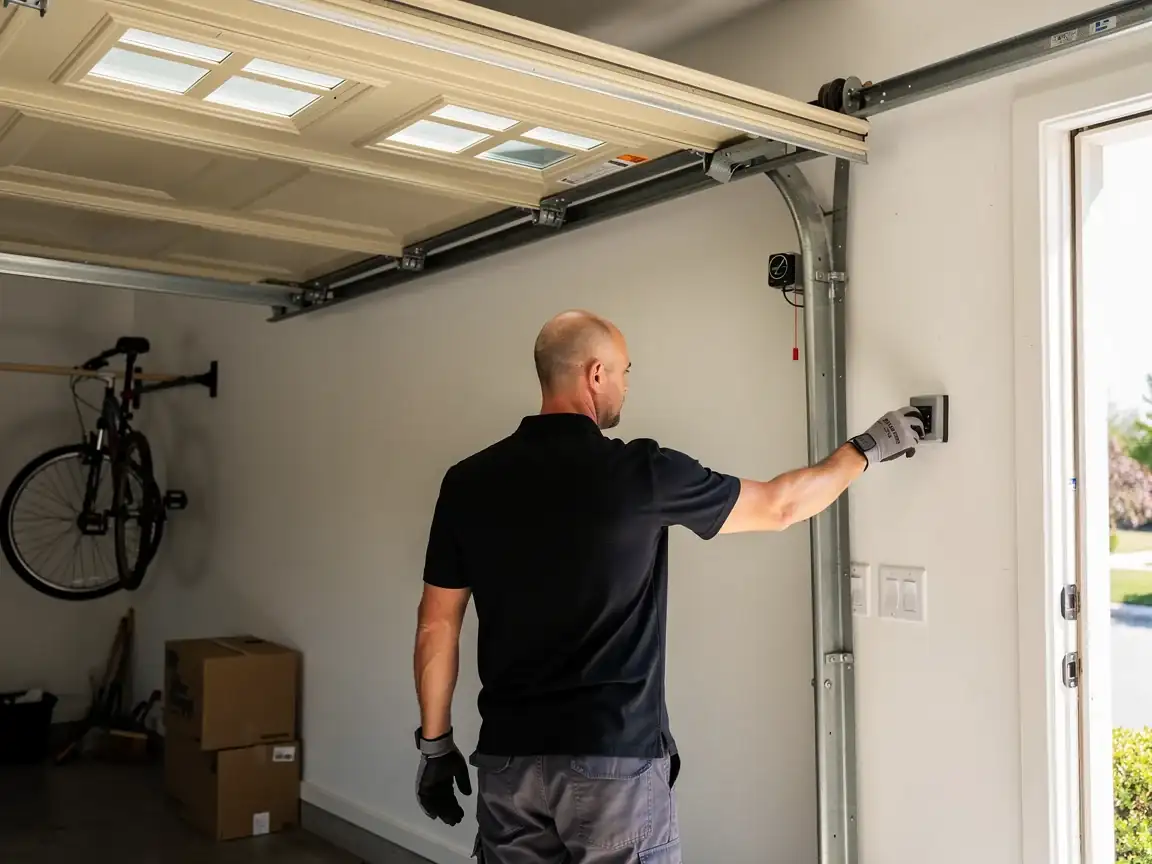
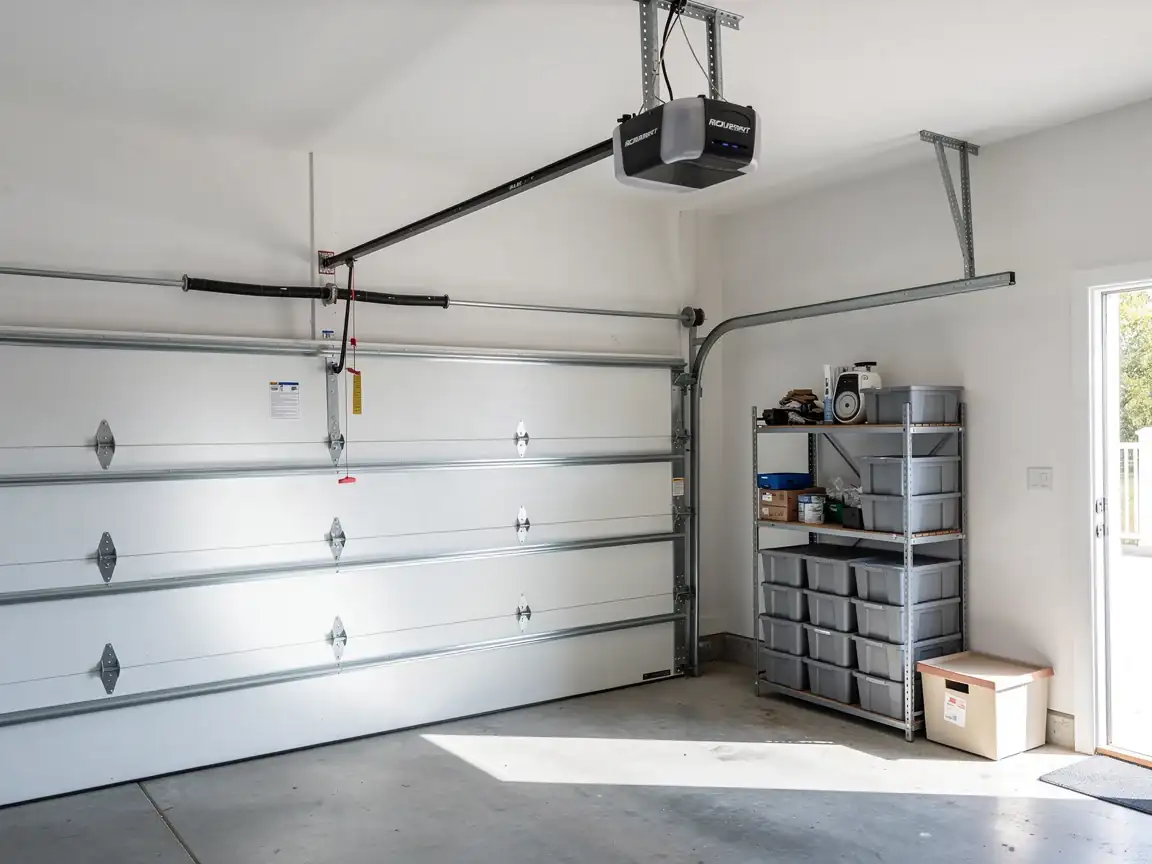
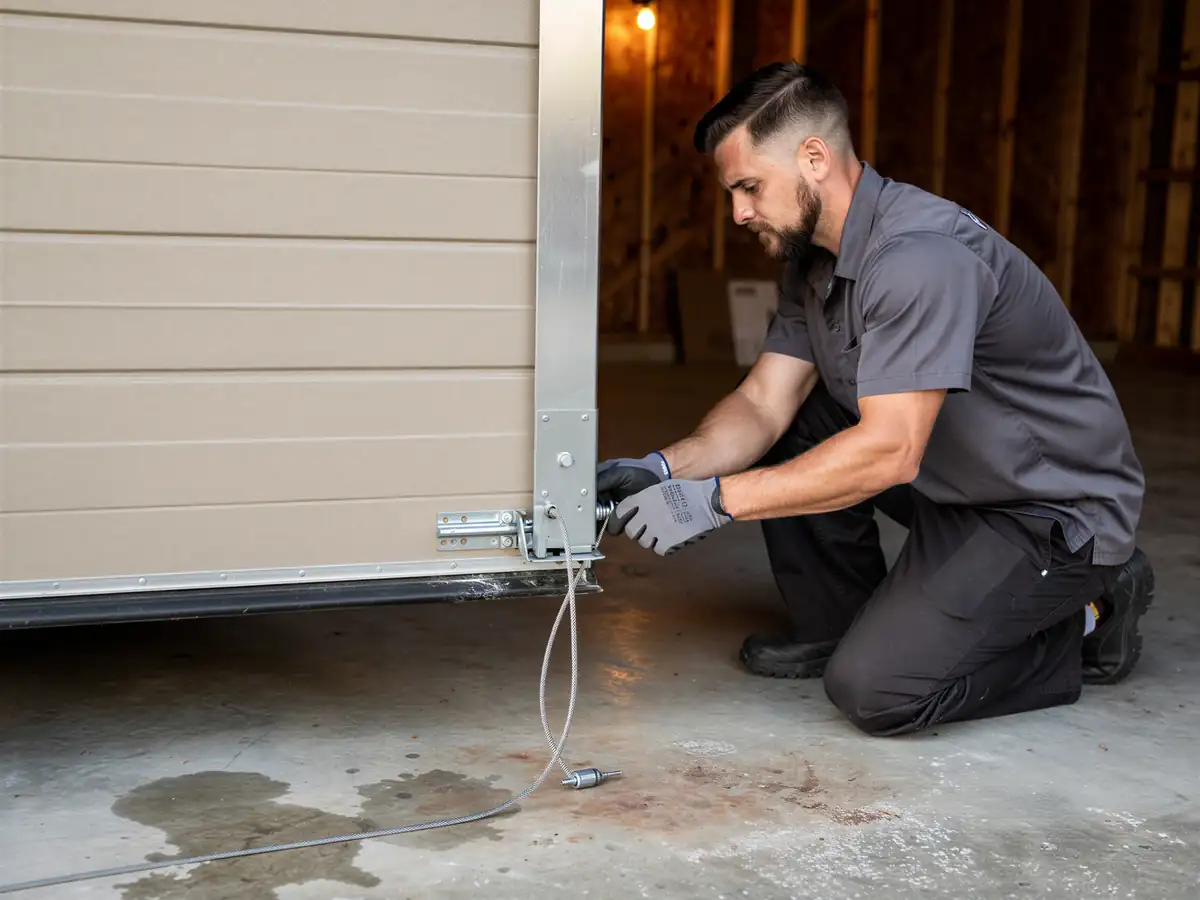
Some of this is fine to handle on your own. Tightening a loose track bracket, clearing debris off a photo-eye sensor, or lubricating a noisy roller are jobs a homeowner can do with basic tools and twenty minutes. What isn't a DIY job is anything touching the torsion spring itself - the spring on a standard double door is wound under enough tension to break a bone or worse if the winding bars slip, and that risk doesn't go down because the door looks old or weak. If your door is from the earlier end of the 1938-2009 range and still has the original spring, assume it's wound tight and treat it as a call, not a project. Cables are the same story - a frayed cable under load will snap, not fray slowly, and there's no safe way to inspect one up close while the door is in the air.
How It Shows Up
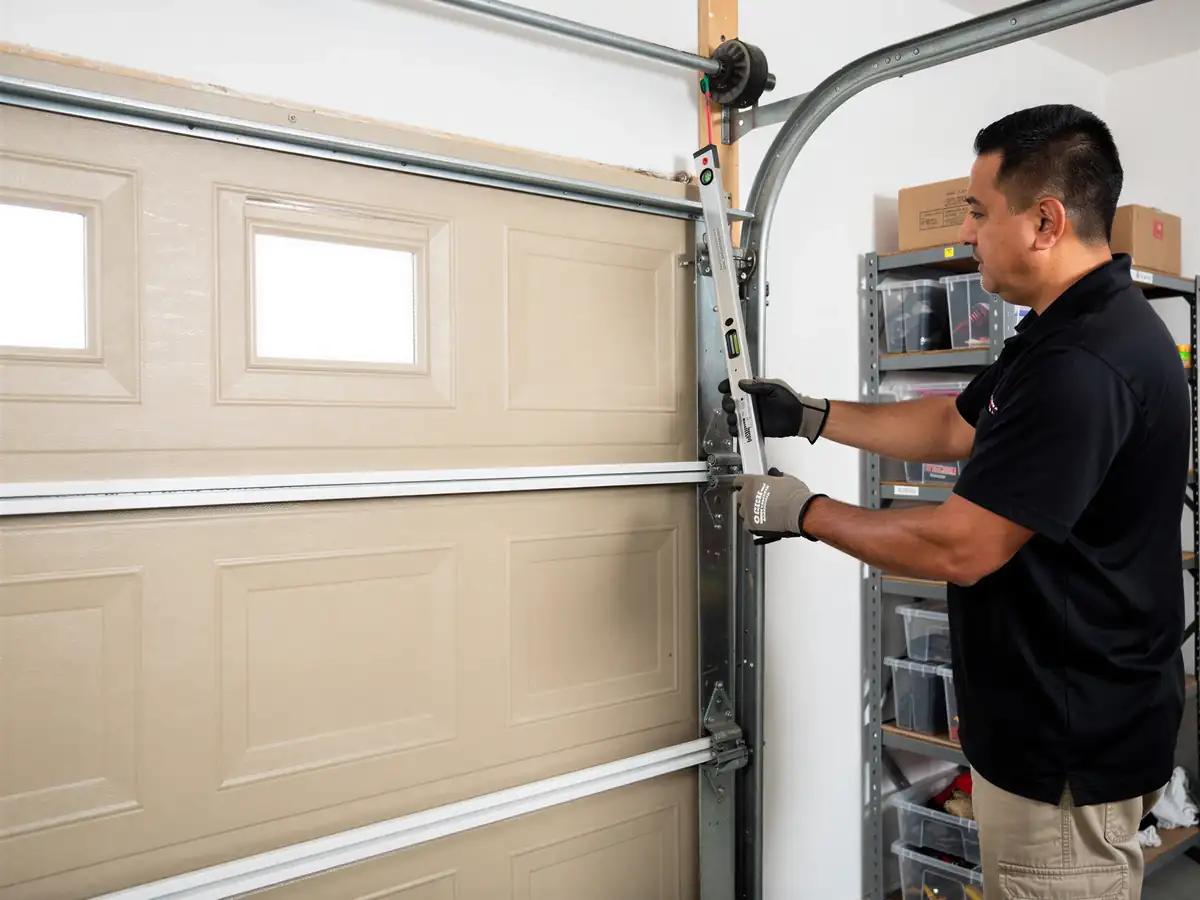
The failure usually announces itself in one of a few ways. A door that's noticeably harder to lift by hand than it used to be is a spring losing tension - gradual, not sudden, which is why people often wait until it's nearly gone before calling. A door that jerks or hesitates partway up is more often a cable or roller catching on a worn track, something that gets worse through a cold winter as metal contracts and clearances tighten. An opener that runs but the door barely moves is almost always the opener compensating for a spring problem, not an opener problem on its own - worth knowing before you spend money replacing the wrong part. And a door that won't close all the way, reversing instead, usually traces back to a misaligned photo-eye or a track that's shifted slightly out of plumb, both common once a house passes a couple decades of seasonal freeze-thaw movement.
How it works
From “it’s stuck” to “it’s fixed”
01
Tell us what’s wrong
Describe the symptom - won’t open, loud bang, opener runs but the door won’t move.
02
On-site diagnosis
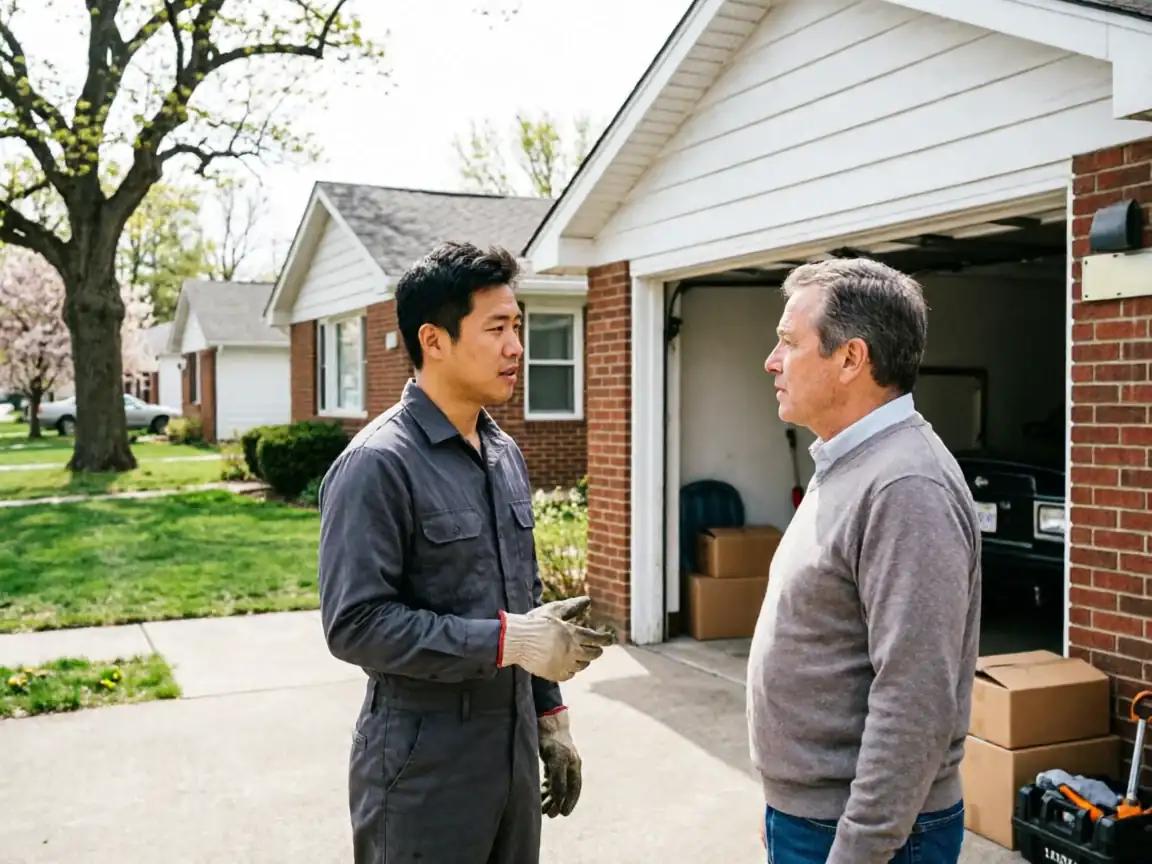
A technician tests the door under power and by hand and finds what actually failed.
03
Clear, up-front plan
You get the fix that’s needed and what drives the cost - before any work starts.
04
Repaired & tested
The repair is done, the door is set true and tested, and the work area left clean.
Not sure which repair your door needs in Lake Zurich, IL? Describe what it’s doing - every job starts with a diagnosis.
Why do garage door springs fail so often on older Lake Zurich houses?
A lot of Lake Zurich's housing stock dates to the 1980s and 90s, and the torsion springs installed then have a service life measured in cycles, not years. After three decades of daily use plus a cold-climate freeze-thaw swing every winter, most of those original springs are at or past the end of their rated life even if they haven't snapped yet.
Do you service areas near Lake Zurich like Kildeer or Hawthorn Woods?
Yes, we cover the surrounding area including Kildeer, Deer Park, North Barrington, and Hawthorn Woods, all within a few miles of Lake Zurich. Call to confirm we can get a truck to your address and to ask about the specific hardware common in your neighborhood.
Is it ever not worth repairing an old door?
Sometimes. If the door itself is warped, delaminating, or the track has rusted through rather than just the spring or cable failing, repair can cost close to what replacement runs. We'll tell you honestly on site if that's the case rather than patch something that'll fail again in a season.
Ready to get your garage door sorted?
Tell us what it’s doing and where you are in Lake Zurich - we’ll take it from there.