Serving Lake Zurich, IL & nearby
(847) 874-0872
Lake Zurich, IL

The Noise Your Garage Door Is Making, and What It's Telling You

A Lake Zurich homeowner's guide to garage door noises, tied to this area's 1980s-era housing stock and the cold winters that wear that hardware down faster.

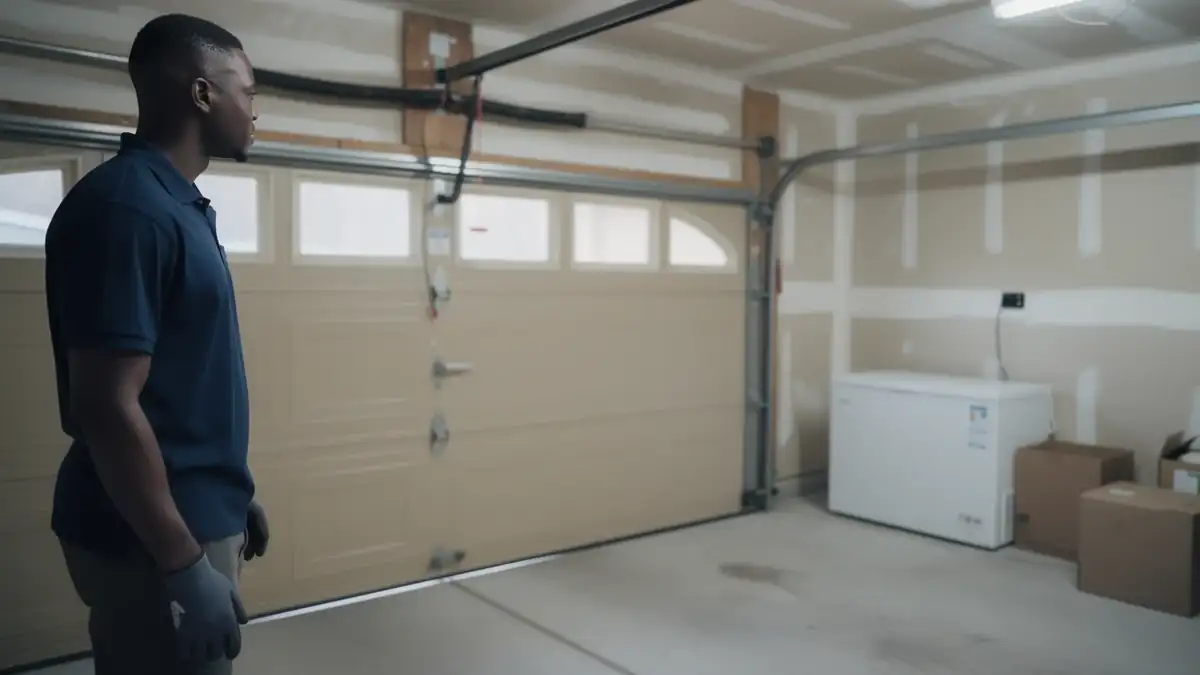
A technician in a blue shirt and gloves stands in a garage with a closed door.

What the Weather Here Does to It

  1. Lake Zurich sits in a cold moderate climate band

    And that matters more to a garage door than most people think. Steel contracts in the cold. Torsion springs lose a little tension, track bolts work a fraction looser, and the grease in an opener gearbox thickens up overnight. None of that is dramatic on its own, but it repeats every winter, year after year, on hardware that was never designed to be maintenance-free forever.

  2. The housing stock around here was mostly built between 1938 and 2009

    With the typical house going up around 1985. That means a huge share of the doors and openers in this area are the same age as the houses - 1980s and 90s units that have now gone through three or four decades of that freeze-thaw cycle. A door that banged quietly for years can start grinding, popping, or thudding once the cold sets in, and it's almost never a coincidence. It's metal that's been doing this dance since before a lot of current homeowners moved in.

  3. If your door only acts up in January and February and seems fine by May, that's the climate talking

    Not a one-time fluke.

Doing Nothing For Now

Not every noise means call someone today. A door that's always had a faint rattle on the bottom panel, and still rattles the same amount, is probably just an older door being an older door. Houses in this part of Illinois run from 1938 construction up through 2009, so there's a wide range of original hardware still in service, and some of it has simply always been a little loud. If the sound hasn't changed in pitch, frequency, or location, you can usually log it and move on.

What you shouldn't ignore is a new sound, or an old sound getting worse fast. A door built in the mid-1980s - which is the median build year for homes in this area - is now old enough that wear which used to be gradual can turn sudden. Bearings that have been dry for years don't fail slowly forever; they fail, then they're done. So the rule isn't "all noise is fine" or "all noise means trouble." It's: know your door's normal, and pay attention the day it stops sounding like itself.

We won't tell you to replace a door that's just old and a little noisy. Plenty of 1980s doors in this area still have years of life left in them.

The Problem

Most of the noises people call us about break into three groups, and the cold makes all three worse here. First: a sharp metallic snap or pop, usually from a torsion spring that's lost tension unevenly over the winters it's been through - common on doors from the 1980s-90s stock that makes up most of this area's garages. Second: a grinding or scraping sound as the door travels, which is almost always a dry roller or a track that's gone slightly out of alignment as the house has settled over its decades on the lot. Third: a opener that groans or strains right at the start of the lift, which points to a gearbox or drive mechanism that's thickened up with cold grease, or a spring that's no longer carrying its share of the door's weight.

The honest limitation here: we can tell you what a noise probably means from the sound and the symptoms, but we can't give you a firm diagnosis - or a price - without putting hands on the door. A spring problem and a track problem can sound similar from the kitchen. Guessing wrong and ordering the wrong part wastes everyone's time.

When to Get Help

  1. Call before the door quits on you, not after

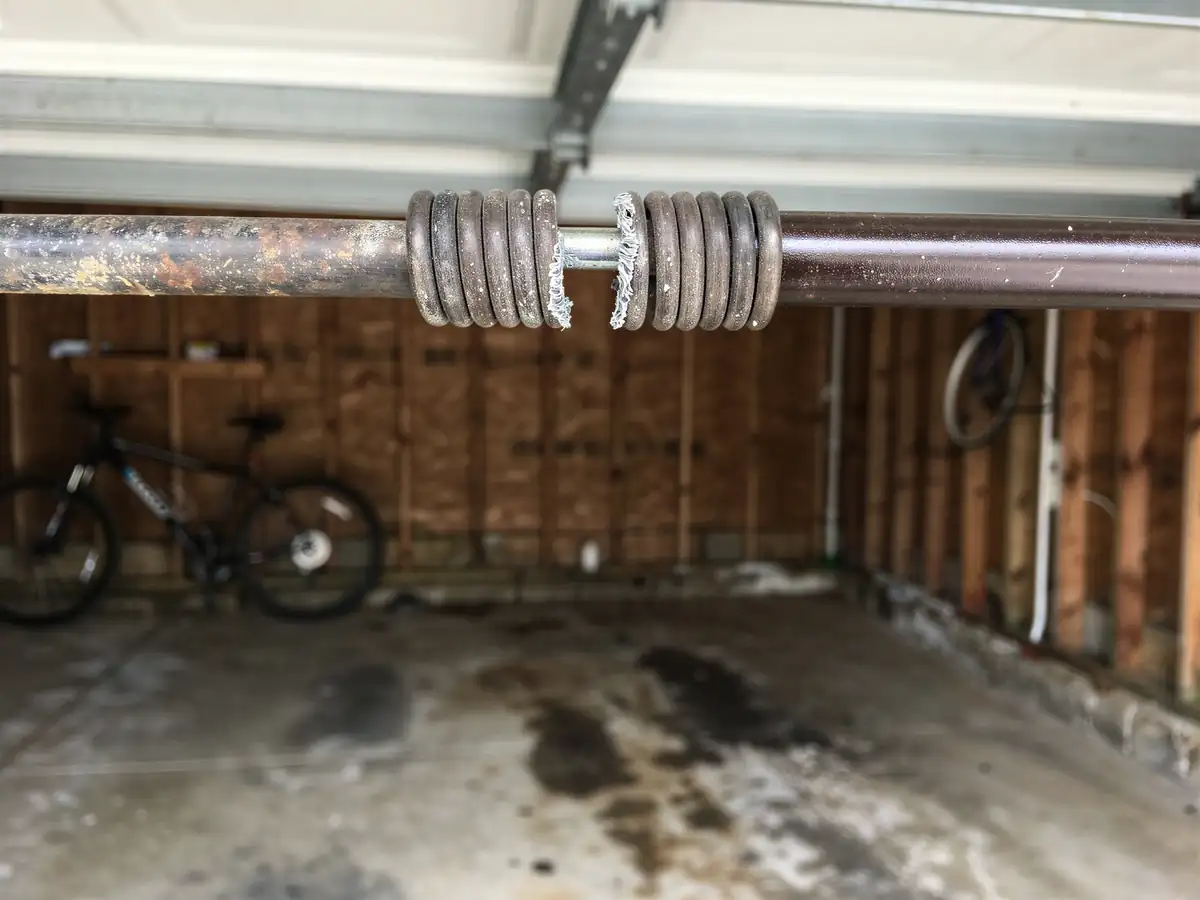
    If you've got a torsion spring that's visibly stretched or has a gap in one of its coils, that's not a wait-and-see repair - a spring under tension that fails completely can hurt someone. Same goes for a cable that's frayed or a track that's visibly bent; those are mechanical failures waiting for a day to happen, and they tend to happen on the coldest morning of the year, which in this area is exactly when you don't want to be stuck.

  2. If the noise is new within the last month, if it's gotten louder each time you've used the door

    Or if the door hesitates or jerks partway through its travel, that's worth a call rather than another winter of waiting. Given how much of the housing here dates to the 1980s and 90s, a lot of these doors are carrying original springs and original rollers that have simply run out of winters left in them. That's not a flaw in your house - it's just where the hardware is in its life.
How it works

From “it’s stuck” to “it’s fixed”

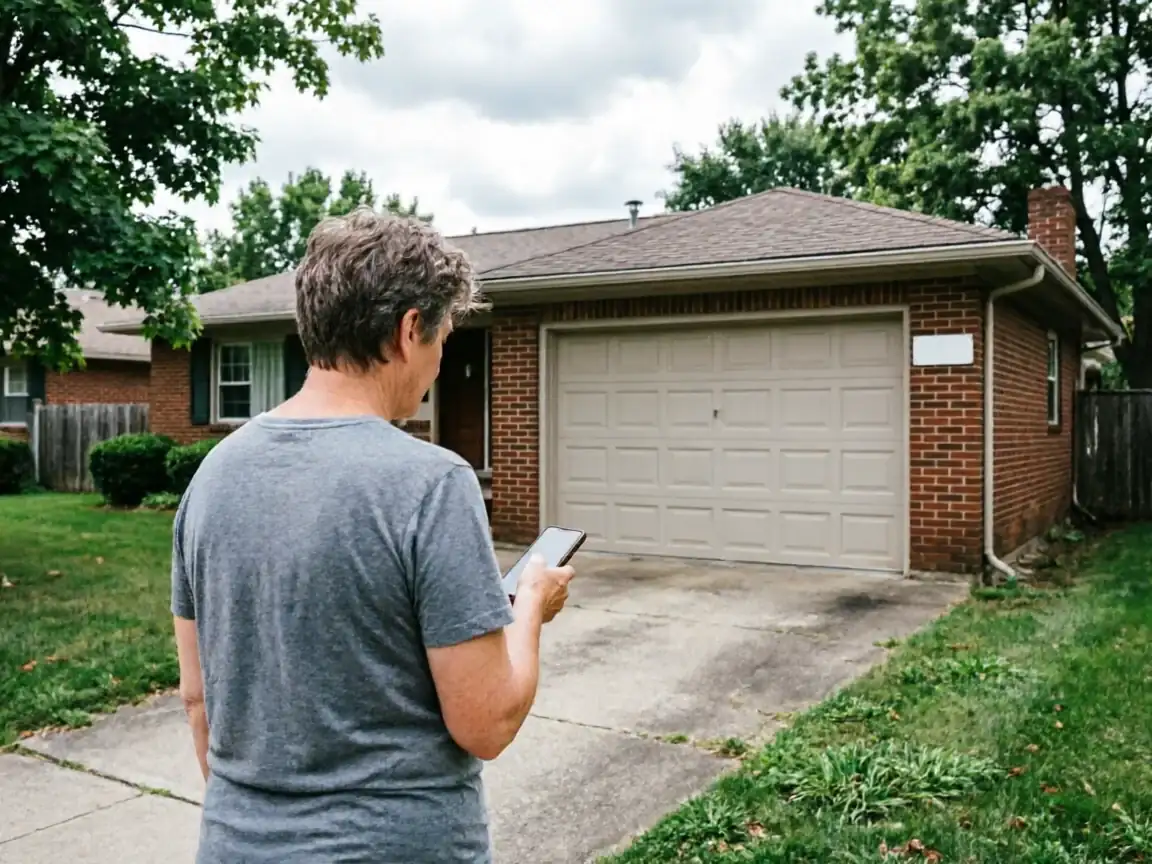
A person stands in a driveway looking at a phone with a house and garage in the background.

Tell us what’s wrong

Describe the symptom - won’t open, loud bang, opener runs but the door won’t move.

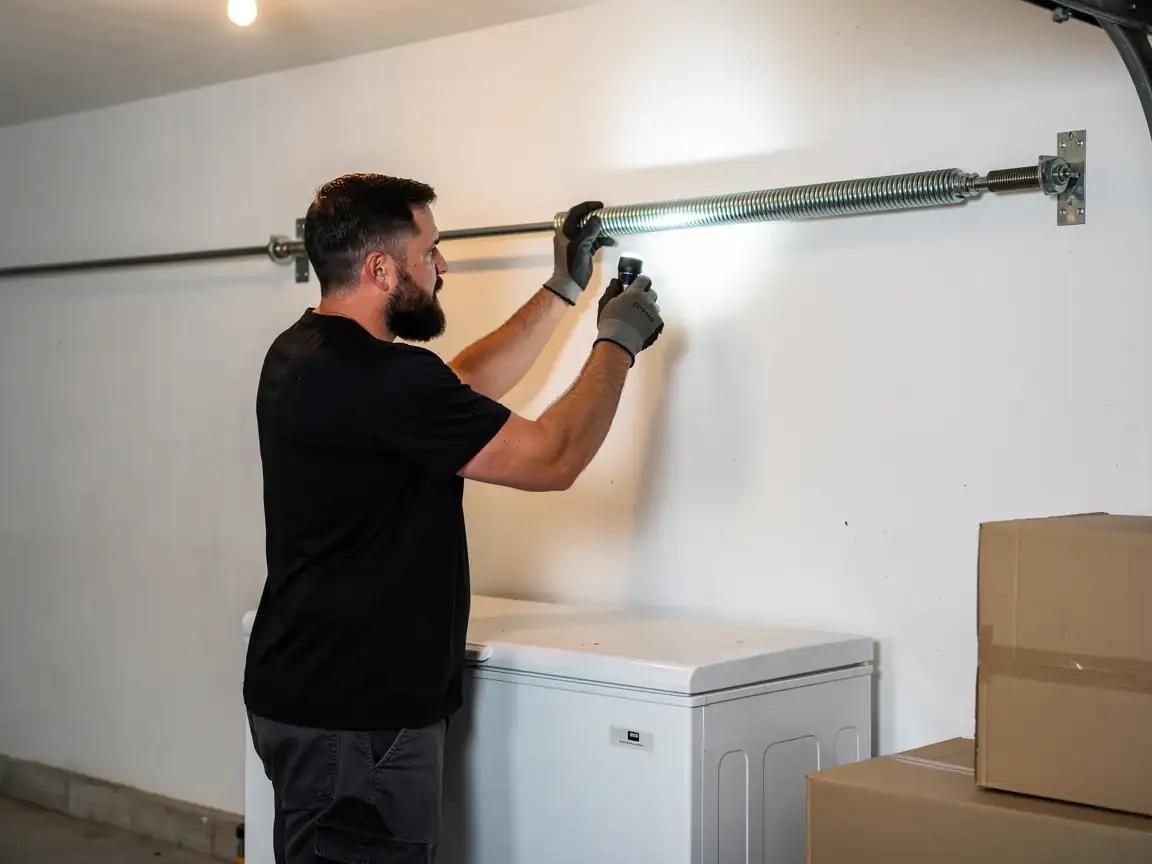
A technician inspects a garage door torsion spring with a flashlight.

On-site diagnosis

A technician tests the door under power and by hand and finds what actually failed.

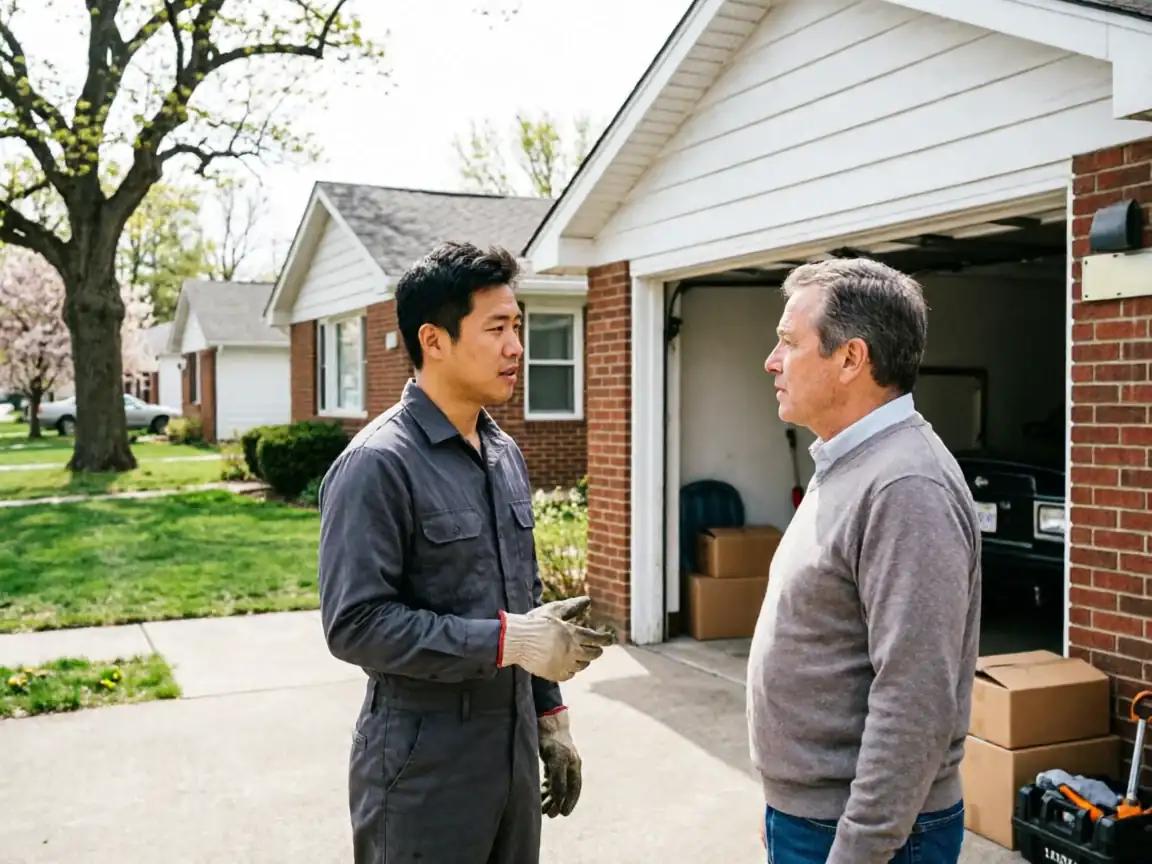
A technician in a gray jumpsuit talks to a man in a gray sweater in a driveway.

Clear, up-front plan

You get the fix that’s needed and what drives the cost - before any work starts.

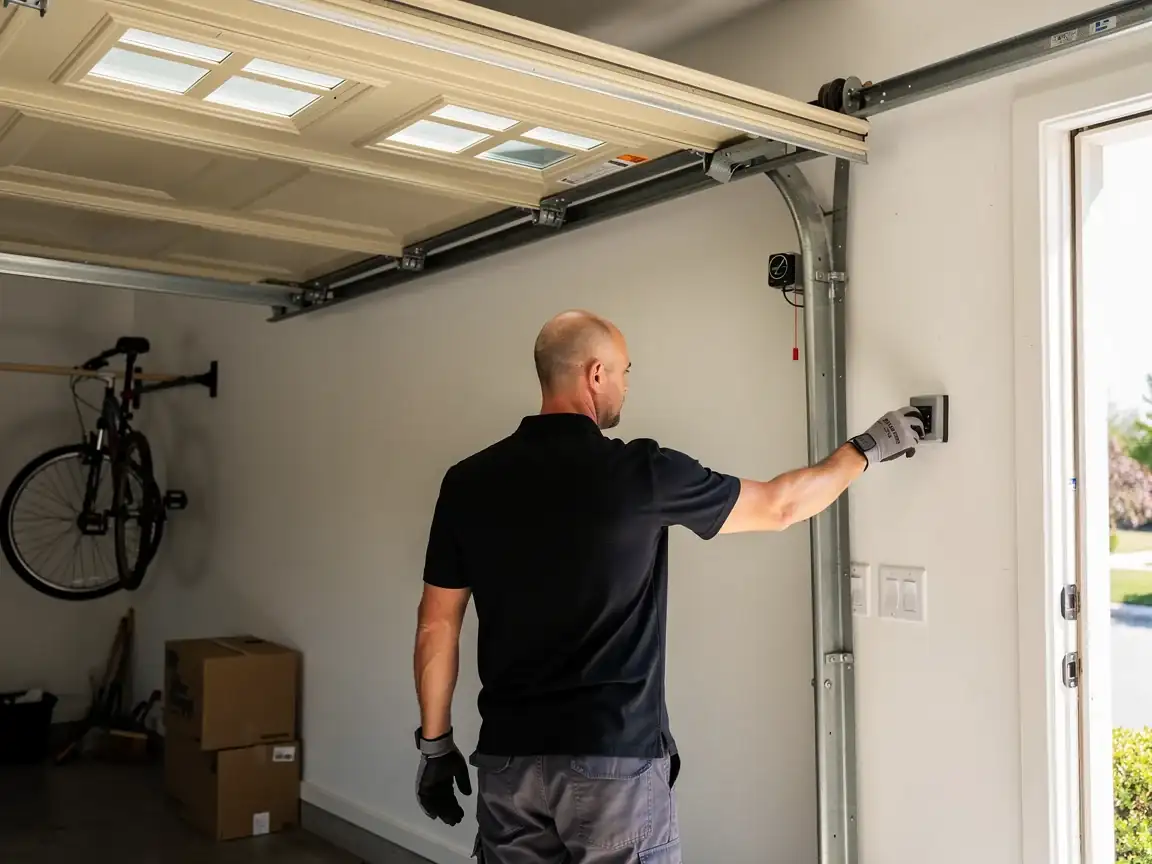
A technician in gloves presses a button on a garage wall.

Repaired & tested

The repair is done, the door is set true and tested, and the work area left clean.

Not sure which repair your door needs in Lake Zurich, IL? Describe what it’s doing - every job starts with a diagnosis.

How we work

What to expect

Diagnosis firstEvery visit starts by finding what actually failed - not a pre-written parts list.
The right part for the doorSprings and openers matched to the door’s weight and age, so the fix holds up.
Straight answersWhen a repair makes more sense than a replacement - or the reverse - you hear it plainly.
Clean, careful workTension released safely, hardware set true, the door tested under power before we leave.
What we do

Garage Door Services

Repair and installation work for Lake Zurich homes and businesses.

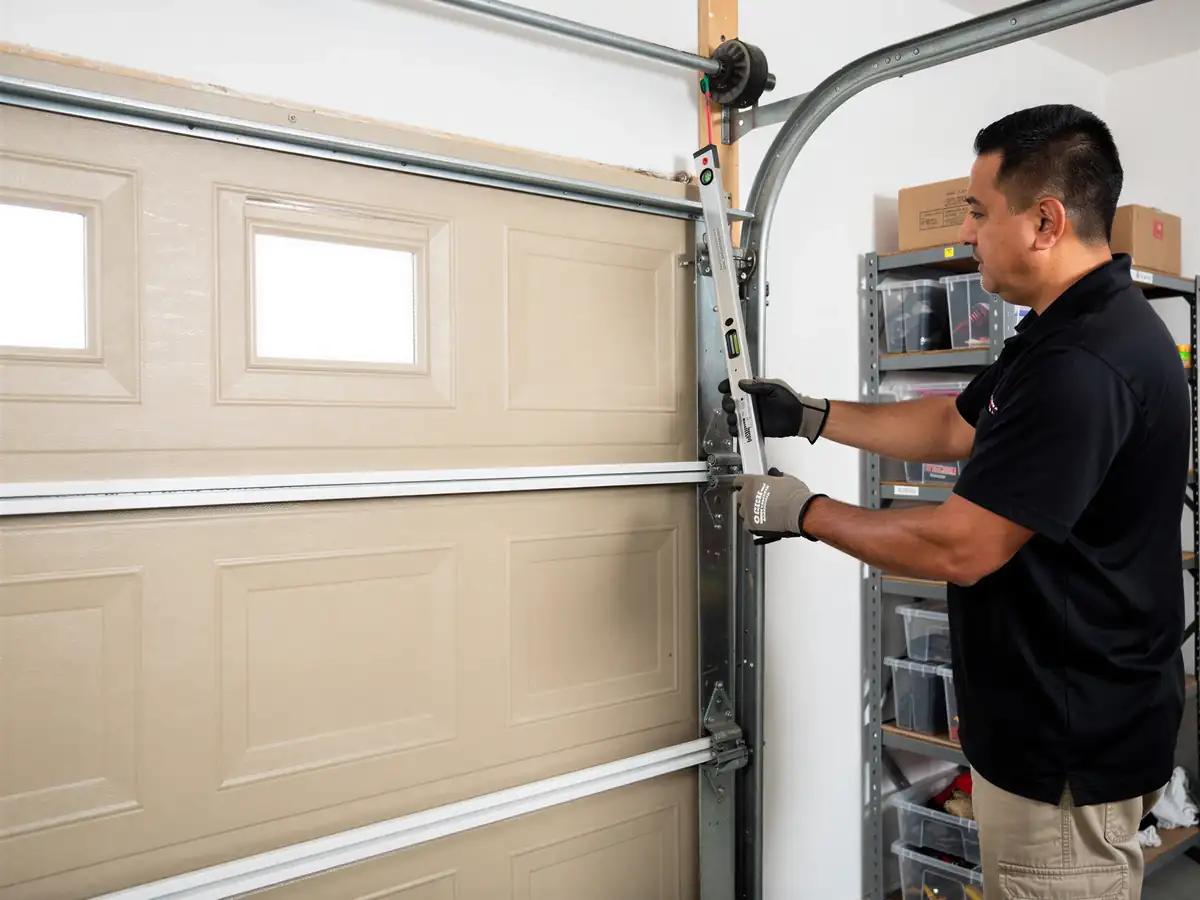
A technician uses a level on a tan garage door.

Garage Door Repair

Lake Zurich Garage Door Pros fixes springs, openers, and tracks on the 1980s-90s doors common across Lake Zurich's housing stock. Same-week booking.

Learn more
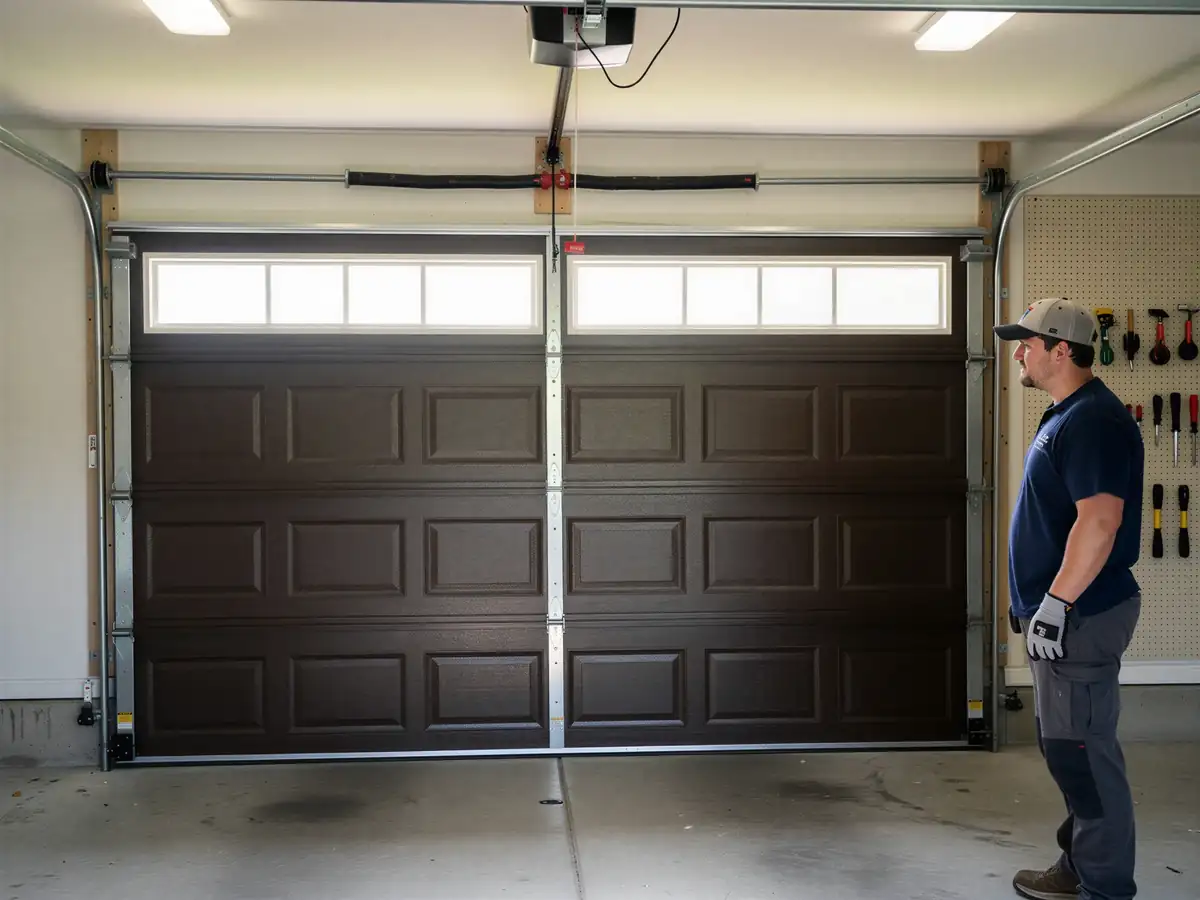
A technician stands next to a closed brown garage door with windows.

Garage Door Installation

Garage door installation sized for Lake Zurich's 1980s-era housing stock and cold winters. Straight talk on what fails, what it costs you, and when replacement wins.

Learn more
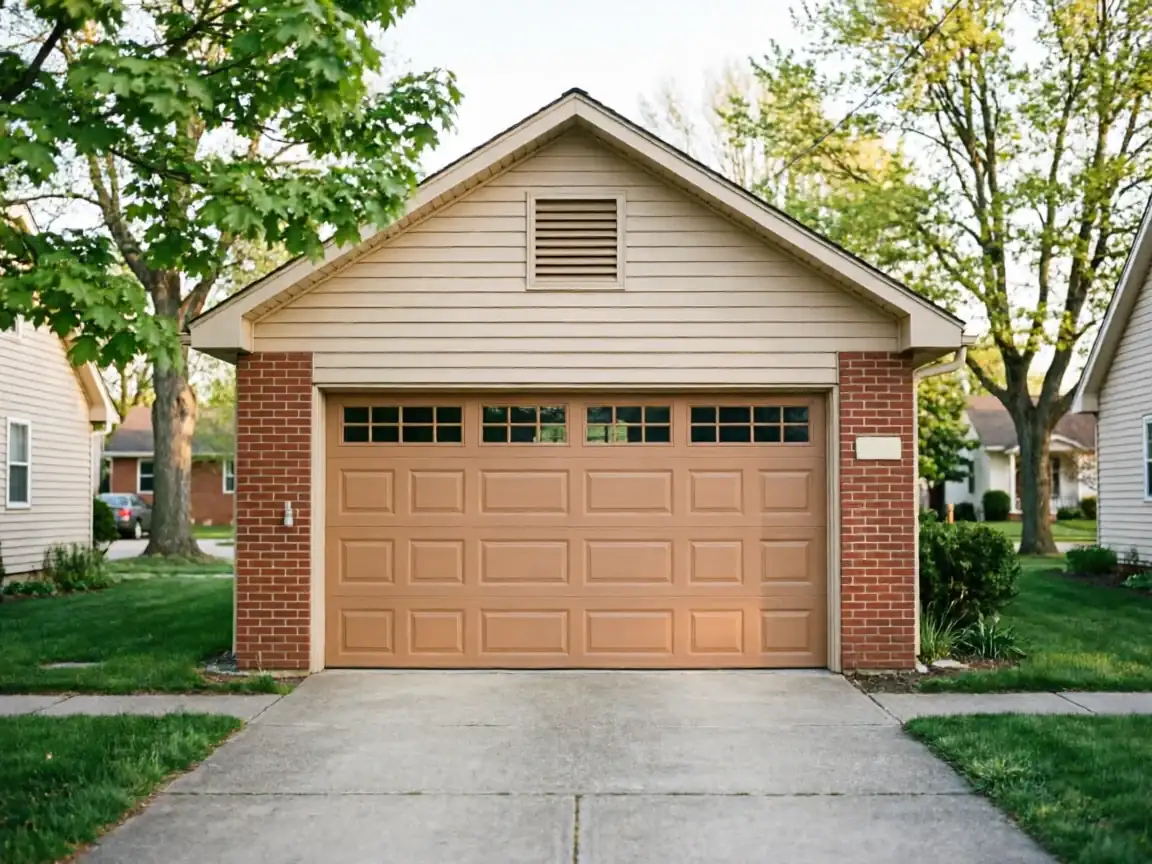
A brown garage door with windows is on a house with tan siding and brick.

Garage Door Service

Lake Zurich homes built mostly in the 1980s and 90s are hitting the age where springs, openers, and rollers fail together. Here's why, and what a visit looks like.

Learn more
A broken torsion spring is visible on a garage door shaft.

Spring Repair

Broken torsion springs are common across Lake Zurich's 1938-2009 housing stock. Same service area coverage, straight talk on what a repair actually involves.

Learn more
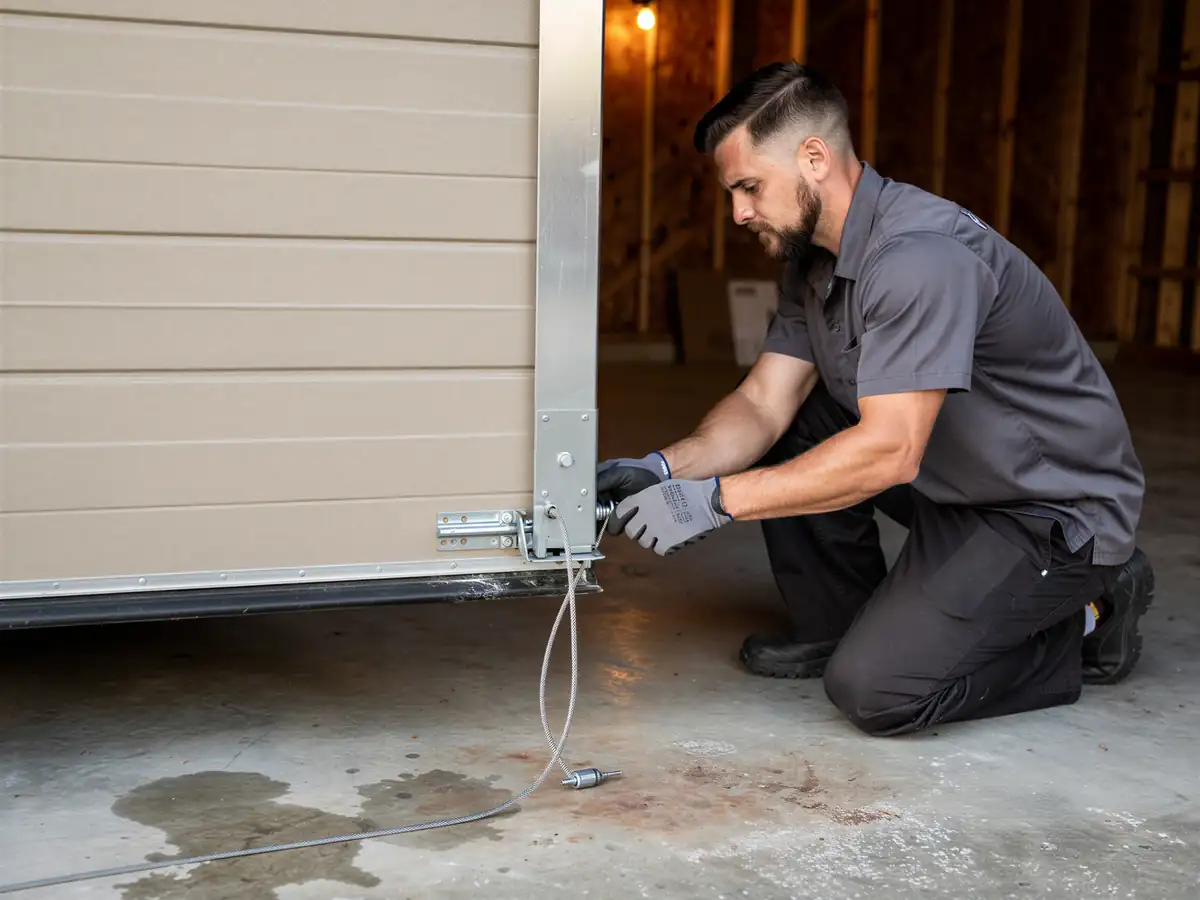
A technician kneels, adjusting a beige garage door's bottom bracket and cable.

Cable Repair

Broken or frayed garage door cables are common in Lake Zurich homes built 1938-2009. We diagnose and repair cable failures fast, before the spring lets go too.

Learn more
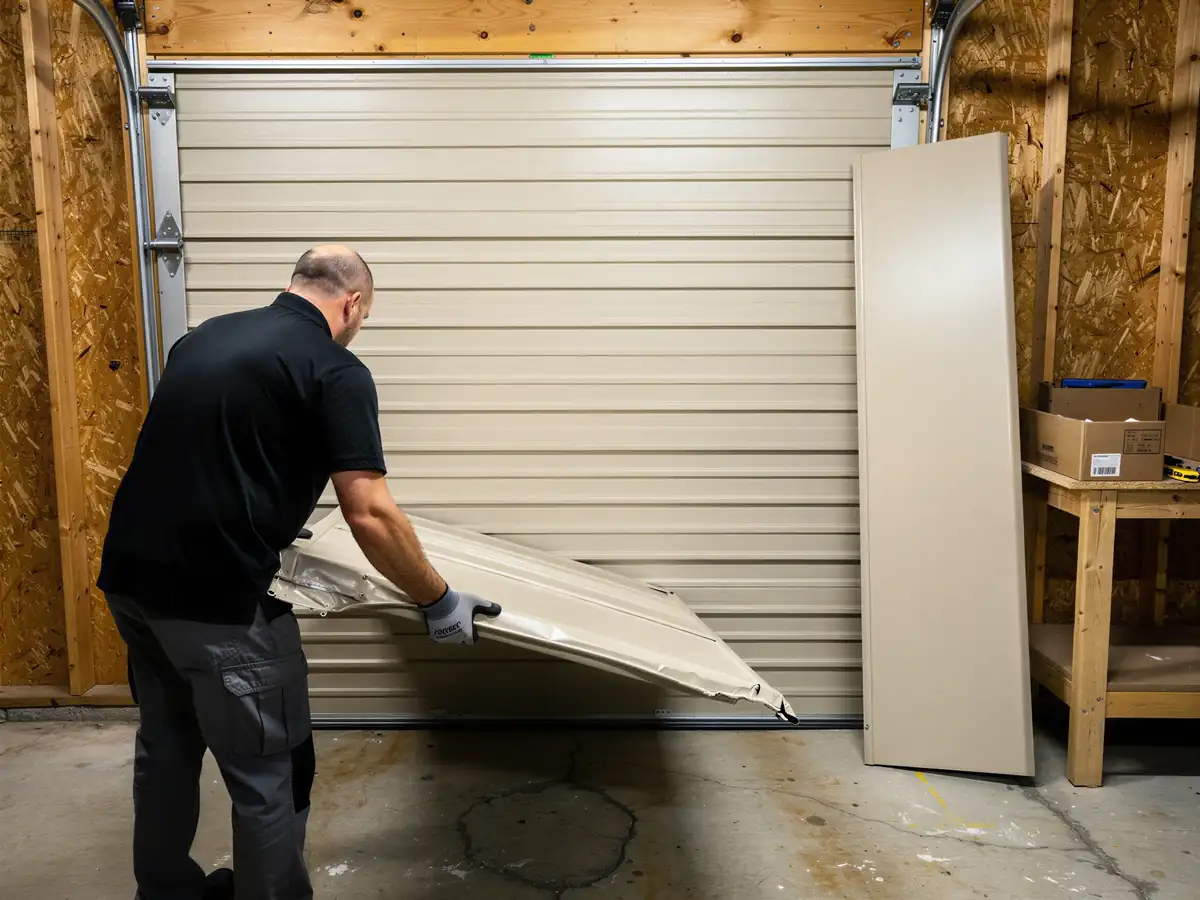
A technician is installing a new tan garage door panel.

Panel Replacement

Panel replacement for Lake Zurich-area homes built 1938-2009, where cold winters crack and dent original steel sections. Serving towns within a 12-mile radius.

Learn more
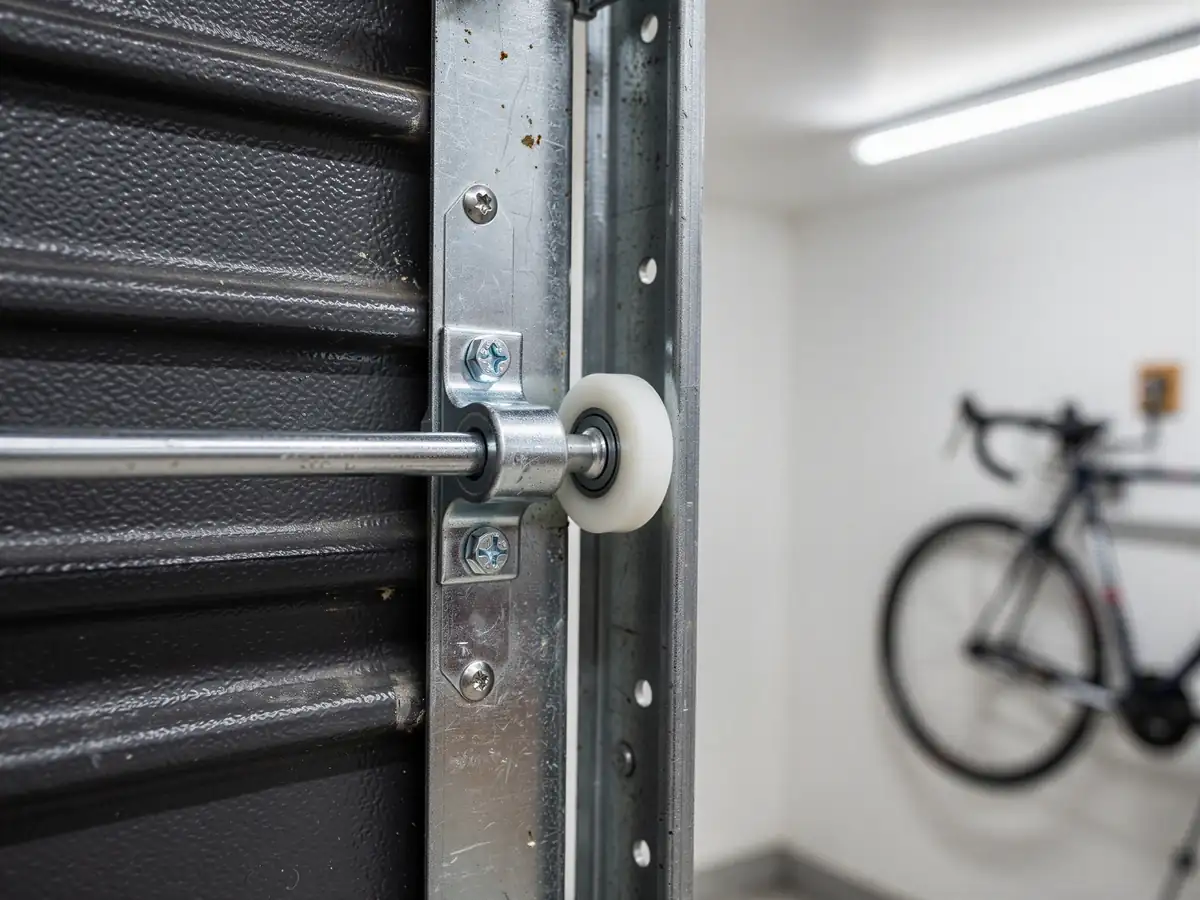
A garage door roller is visible on a metal track, with a bicycle in the background.

Roller Replacement

Worn or seized rollers on Lake Zurich garage doors built in the 1980s and 90s. See why cold winters and original hardware make roller failure common, and how we fix it.

Learn more
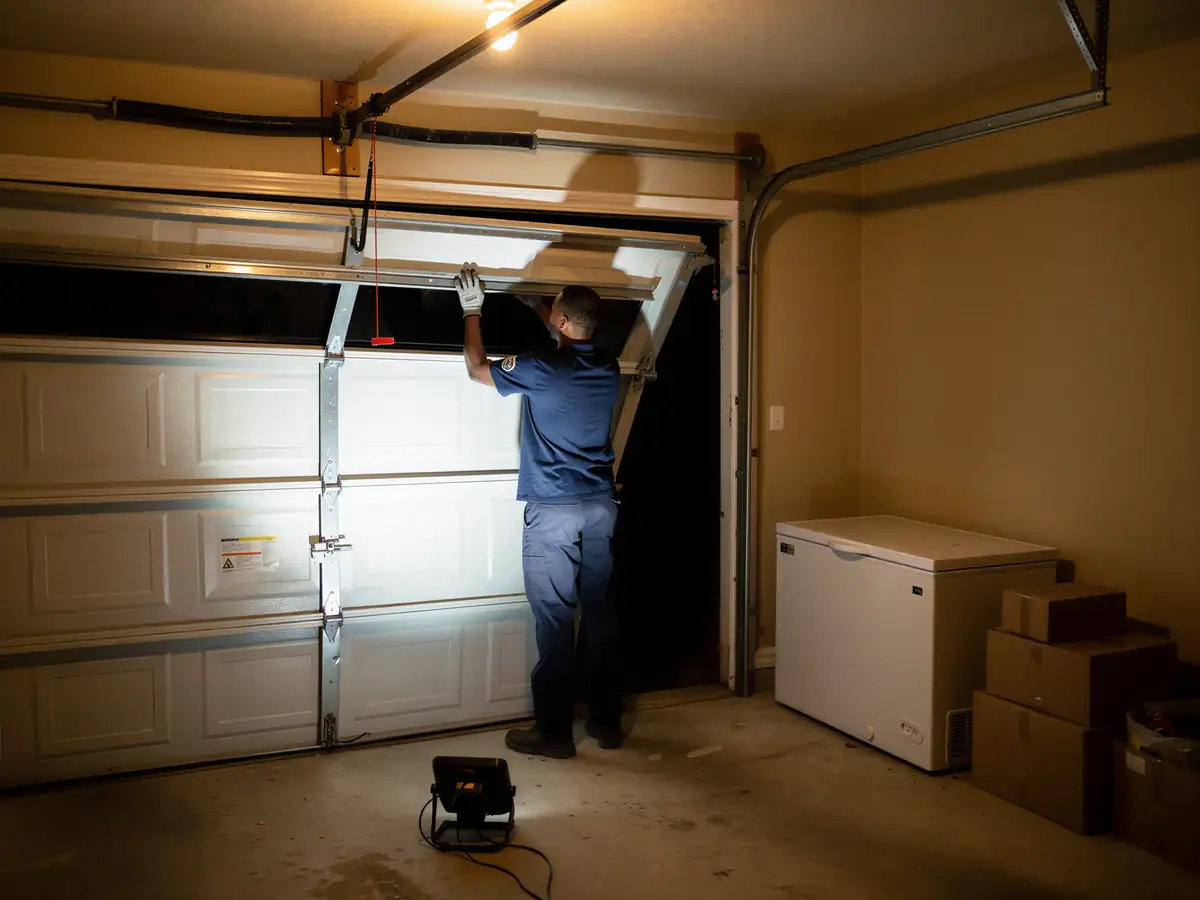
A technician in a blue shirt adjusts a white garage door inside a garage.

Emergency Garage Door Repair

Spring snapped or opener dead in Lake Zurich? We work on doors from homes built the 1930s through the 2000s, in a climate that's hard on steel hardware every winter.

Learn more
Questions

Frequently asked

Straight answers about garage door repair in Lake Zurich. Still unsure? Ask us directly.

Why does my garage door only make noise in the winter?

Cold steel contracts and lubricant thickens, so springs carry slightly less tension and rollers drag a bit more than they do in summer. In Lake Zurich's cold moderate climate band, that cycle repeats every winter, and on older hardware the extra strain shows up as new or louder noise rather than staying silent.

Is a loud garage door normal for a house this age?

It can be. A lot of houses in this area were built in the 1980s or 90s, right around the local median build year of 1985, so plenty of original doors and openers are now three to four decades old. Some baseline noise on hardware that age is normal; a sudden change in the sound usually is not.

What noise means I should stop using the door?

A sharp bang or pop from the spring area, a visibly frayed cable, or a door that jerks and hesitates partway through its travel. Those point to hardware that's close to failing outright rather than just aging normally. Stop using the opener and get it looked at before it fails on its own schedule.

Ready to get your garage door sorted?

Tell us what it’s doing and where you are in Lake Zurich - we’ll take it from there.

Request a QuoteCall