Where This Job Goes Sideways
Across the wider service area we cover, the median house was built in 1985
Wauconda runs a touch newer, averaging out to about 1990 - five years that matter more than they sound. Doors installed around 1990 tend to use thicker insulated steel panels and a different hinge spacing than the plain, uninsulated steel sections common on mid-1980s builds elsewhere in the area. That matters the moment a panel cracks or rusts through, because the replacement section has to match that specific hinge pattern and panel height, not whatever's sitting on a shelf from an older production run.
The cold winters here don't help
Steel panels contract and expand with the swing from summer heat to winter freeze, and over thirty-plus years that cycling loosens rivets and stresses the seams around dents that started small. A panel that looked fine in October can split wide open by February once the metal's already weakened. We see this pattern a lot on doors from Wauconda's building era - newer than the area's overall median, but now old enough that the first generation of insulated panels is reaching the end of its service life.
What the Repair Takes
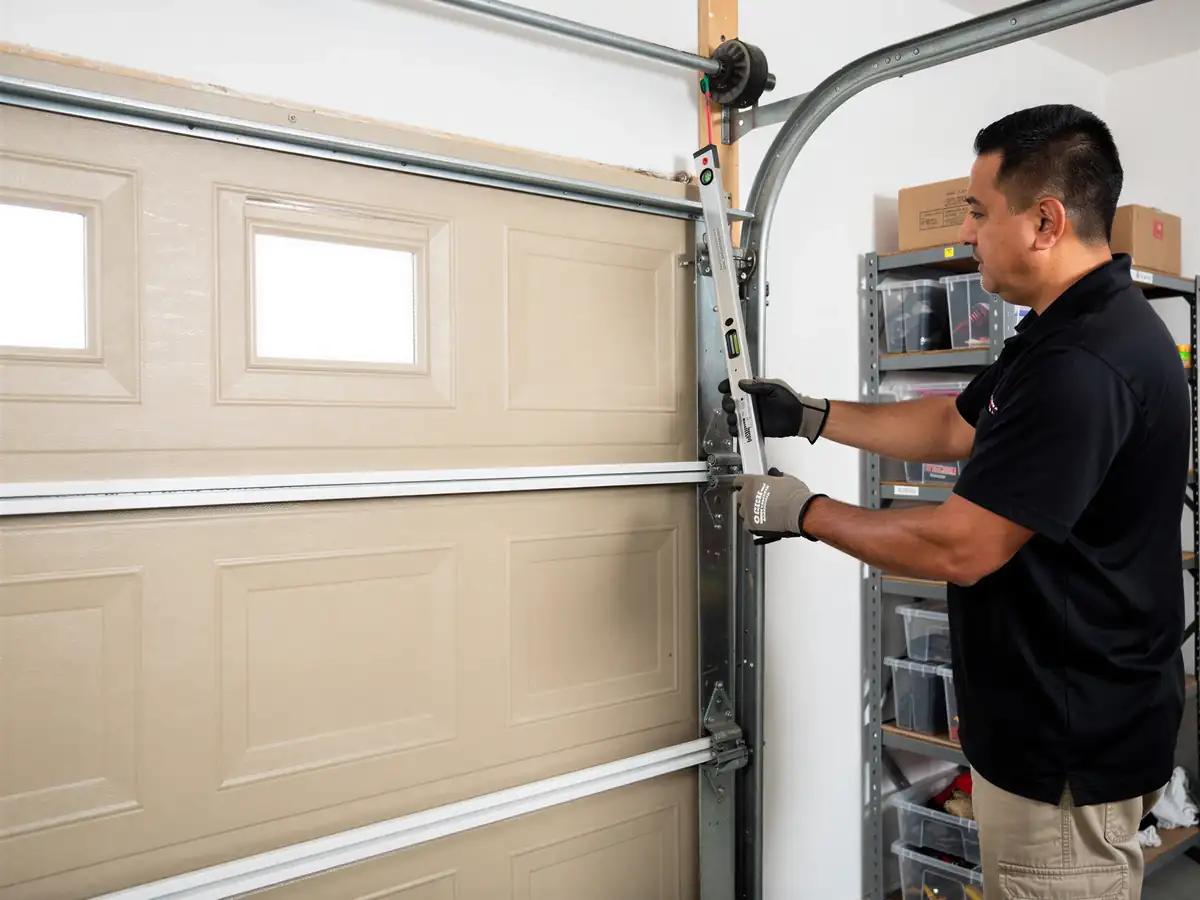
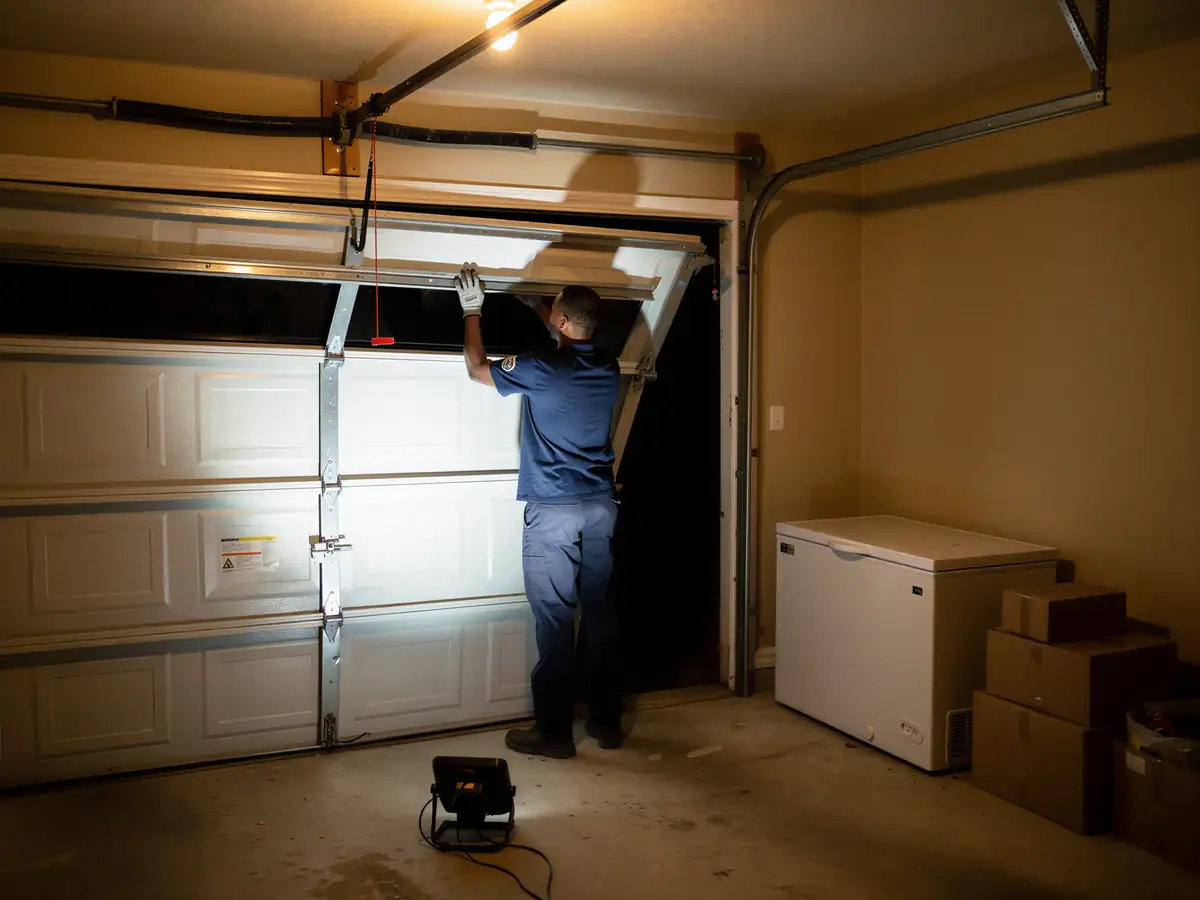
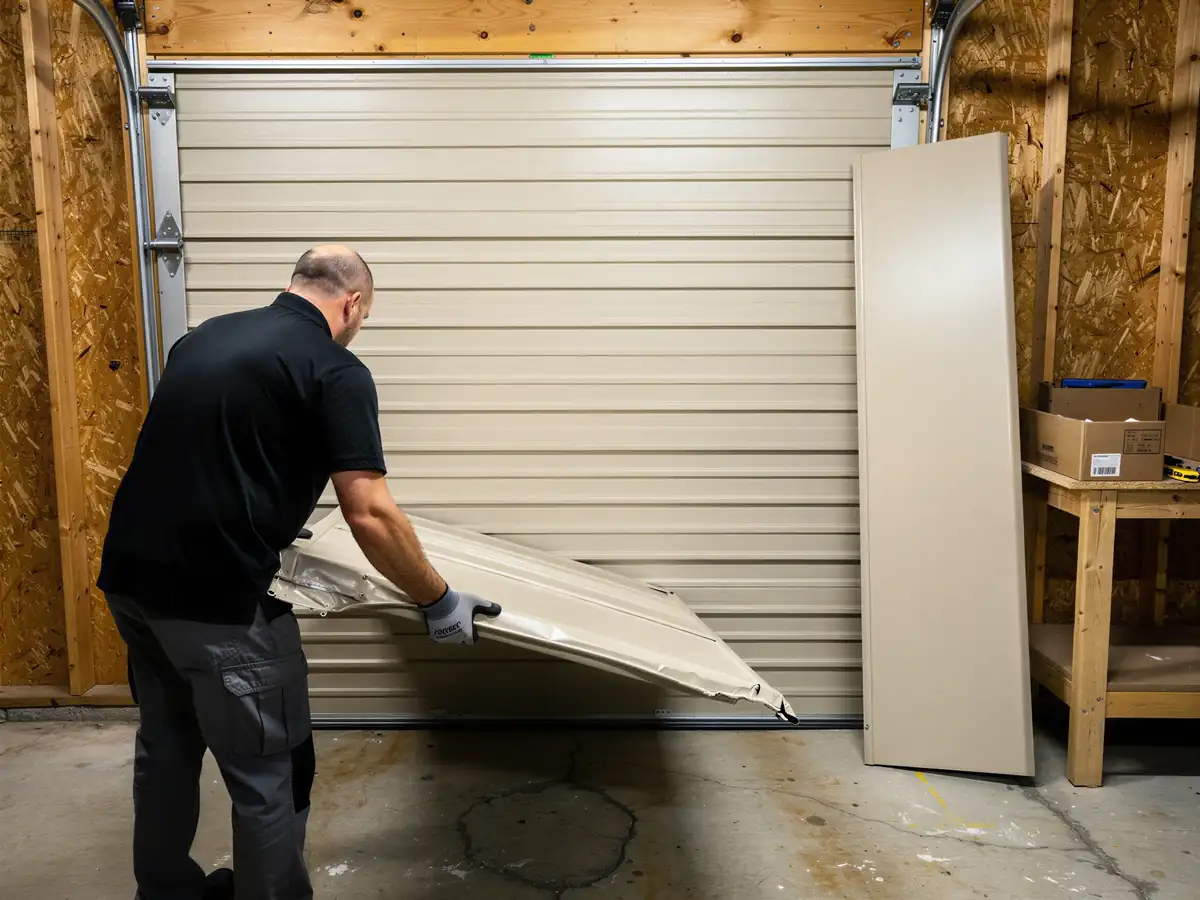
The first step is matching the panel: width, height, hinge hole spacing, and the embossed pattern on the steel. On a door from around 1990, that usually means a double-layer insulated section rather than the single-skin steel some older area homes still carry. We measure the existing panels, pull the damaged section, and bolt the hinges and rollers from the old panel onto the new one so the hardware you've already got stays in use.
Color is the part that trips people up. A panel ordered new almost never matches a thirty-year-old factory finish exactly, even in the same shade - the sun fades steel unevenly over that much time. On some jobs the honest answer is to repaint the whole door after the swap rather than leave one section looking obviously newer. If the damage is on a middle panel where it's less visible, most owners are fine leaving the slight mismatch. We'll tell you which situation you're in before we order anything, not after.
Can You Do This Yourself
A single bottom panel with no spring or cable involved is within reach for someone comfortable with a socket set and a weekend. Pull the hinges, support the section, swap the panel, rebolt. Where it gets dangerous is any panel near the top of the door on a torsion system - the spring is under load the whole time you're working, and letting it go wrong can break fingers or worse.
The other risk with 1990-era doors specifically is stripped or rusted bolt heads. Thirty years of winter moisture in an unheated garage corrodes fasteners more than people expect, and a stripped bolt on a hinge you're trying to remove under tension is how a simple panel swap turns into an emergency room visit. If you're not sure which panel you're dealing with or whether the spring is loaded, that's the point to stop and make a call rather than push through it.
Booking a Visit
We run out of Lake Zurich, about six miles from Wauconda
So there's no local branch or storage yard here - every panel job starts with a drive out, not a drop-in. That's close enough that it doesn't add meaningfully to the job, but it's worth knowing we're not based in town.
When you call, have the door's approximate age and the panel location (top, middle, bottom) ready if you know it
That's usually enough for us to bring the right stock panel on the first trip instead of a second visit to get the match right. For more on how we work across nearby towns, see our page for the area, or check the full panel replacement rundown on our Lake Zurich page for the general process we follow on every job.
Why This Fails Locally
Wauconda sits in the same cold-weather band as the rest of the service area, which means panels see real freeze-thaw cycling every winter, not just an occasional cold snap. That cycling is harder on the newer insulated panels common here than it is on older single-skin steel, because the foam core and steel skin expand at different rates - over enough winters that mismatch works the seams loose from the inside, which is why dents that would just dent elsewhere sometimes crack clean through here.
Income plays into the decision too. Wauconda's median household income runs below the wider service area's figure, and in practice that shows up in which jobs we get called for: more single-panel swaps to stretch a door's life, fewer full-door replacements ordered on the first call. That's a reasonable way to handle it - a panel swap on a door that's otherwise sound is usually the right money decision, not a compromise.
Parts We Carry
For doors from Wauconda's building era, we stock steel panel sections sized for the common door widths and heights that run through the 1980s-to-2000s production years, in both plain and insulated builds. Hinges, end caps, and the fasteners that go with them come along on the truck too, since the originals on a thirty-year-old door are often too corroded to reuse.
What we don't carry is every discontinued color or embossing pattern a manufacturer ever ran - some finishes from that era simply aren't made anymore, and we'll say so rather than promise an exact match we can't deliver. In those cases the choice is between a close match on one panel or repainting the full door, and we'll walk you through both before ordering anything.