What You Pay
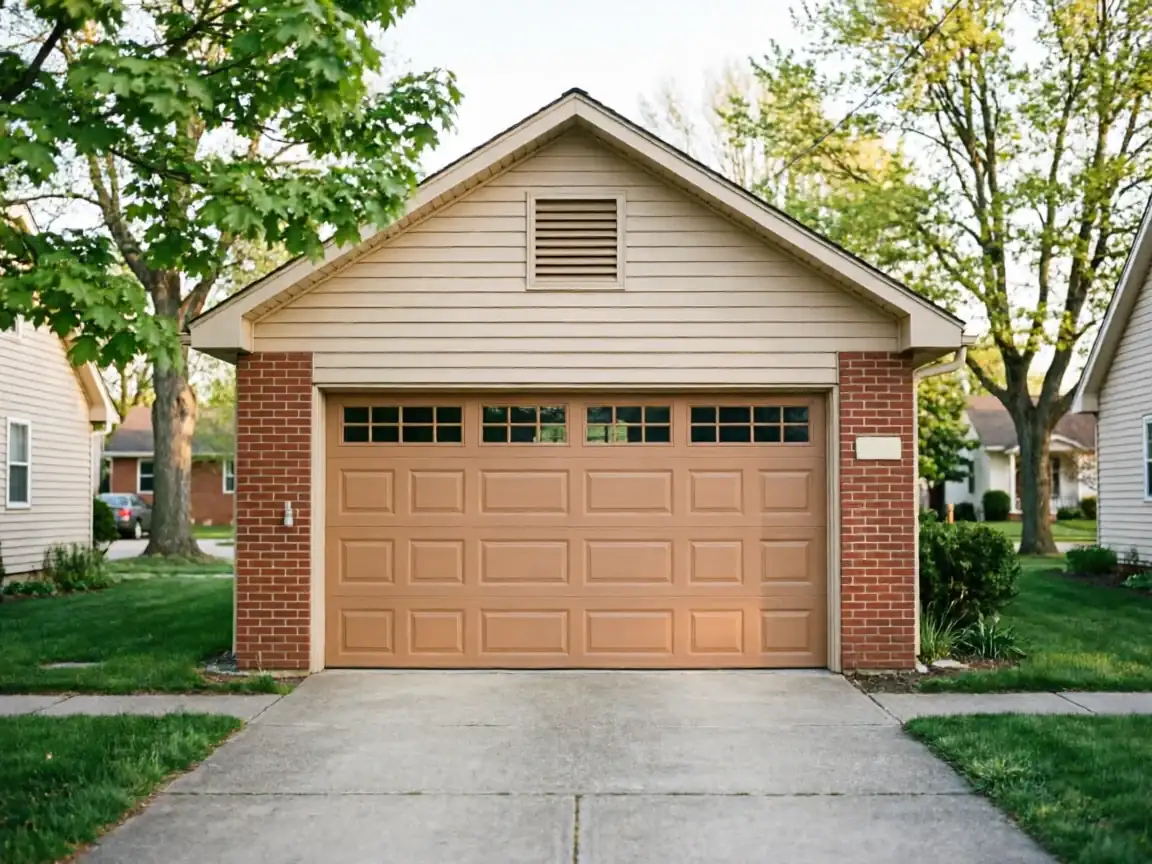
North Barrington homes run a median build year of 1982
A touch earlier than the 1985 median across the wider Lake Zurich service area. That three-year gap matters more than it sounds: doors from the early 1980s were still shipping with steel rollers on steel tracks as the standard, before nylon rollers became the common upgrade later in the decade. Steel rollers wear louder and faster, and by now most of them are past due.
We don't have a flat rate to quote you here
What you pay depends on whether you're swapping a handful of rollers or doing the full set of ten to twelve plus hinges, and whether the track needs truing at the same time. A worn steel roller on an otherwise sound door is a straightforward swap. A door that's been grinding on bad rollers for years sometimes has bent track or chewed-up hinge holes too, and that adds labor. We'll tell you which one you've got before we start, not after.
What the Repair Takes
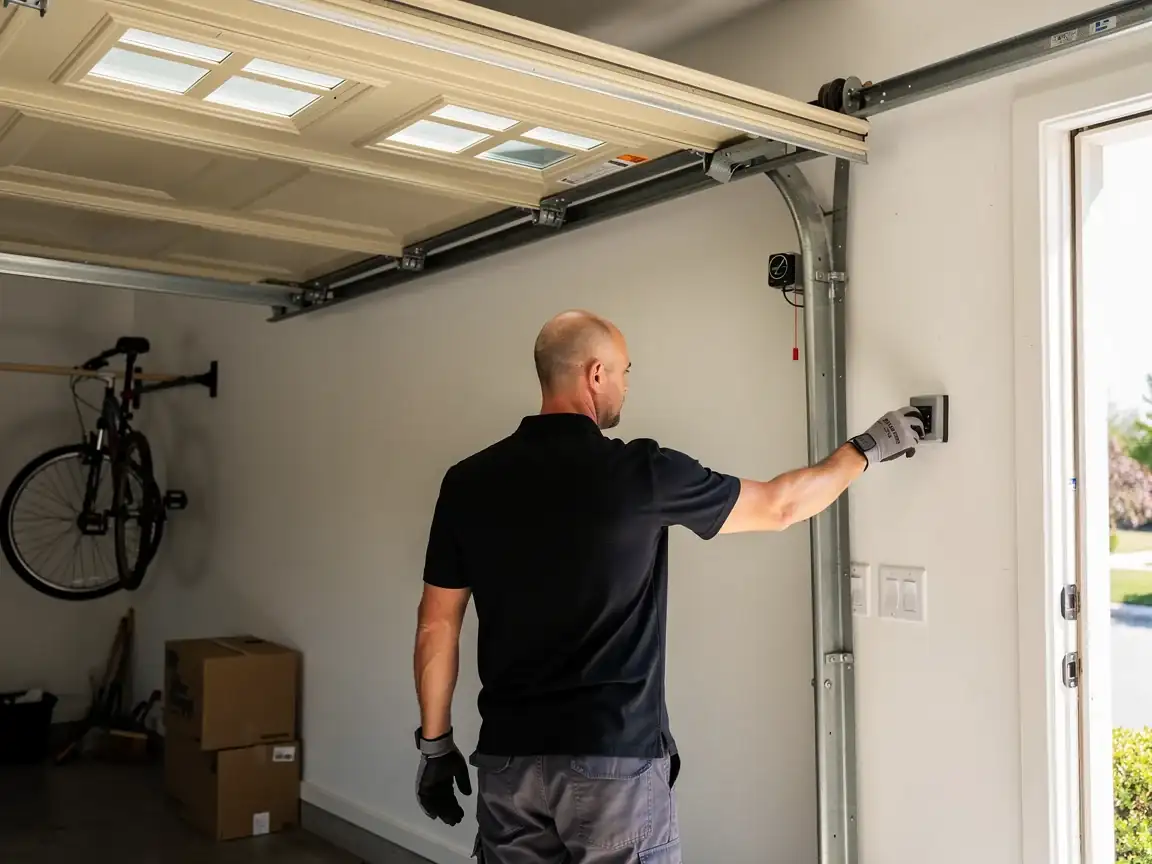
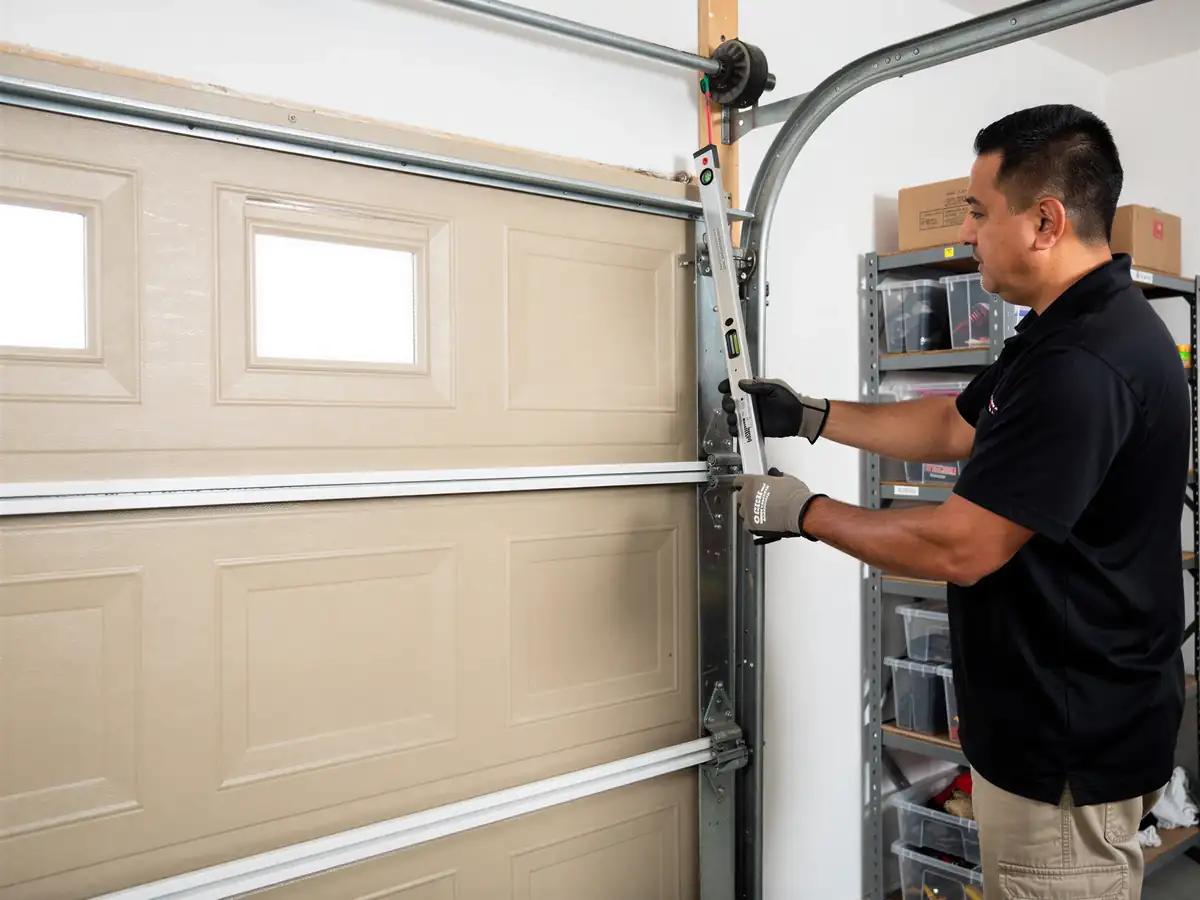
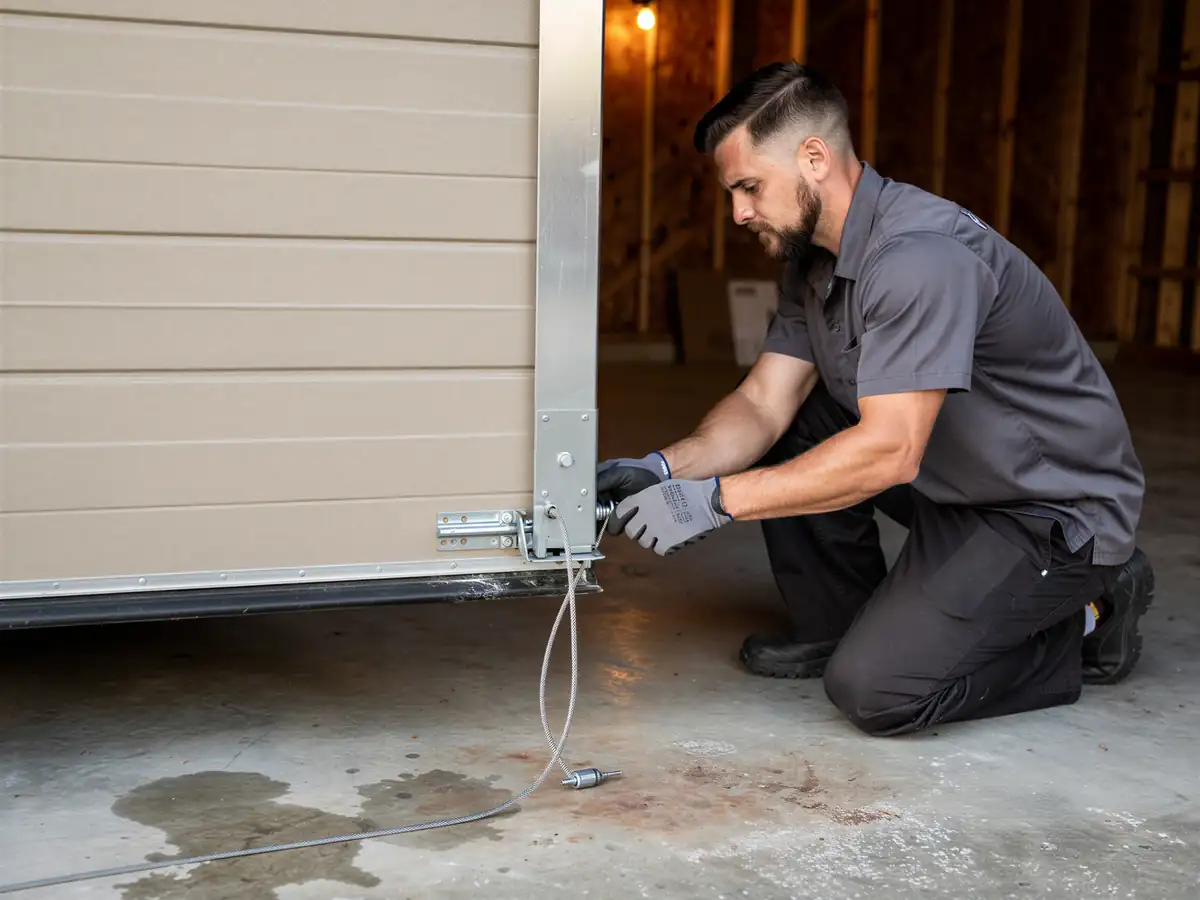
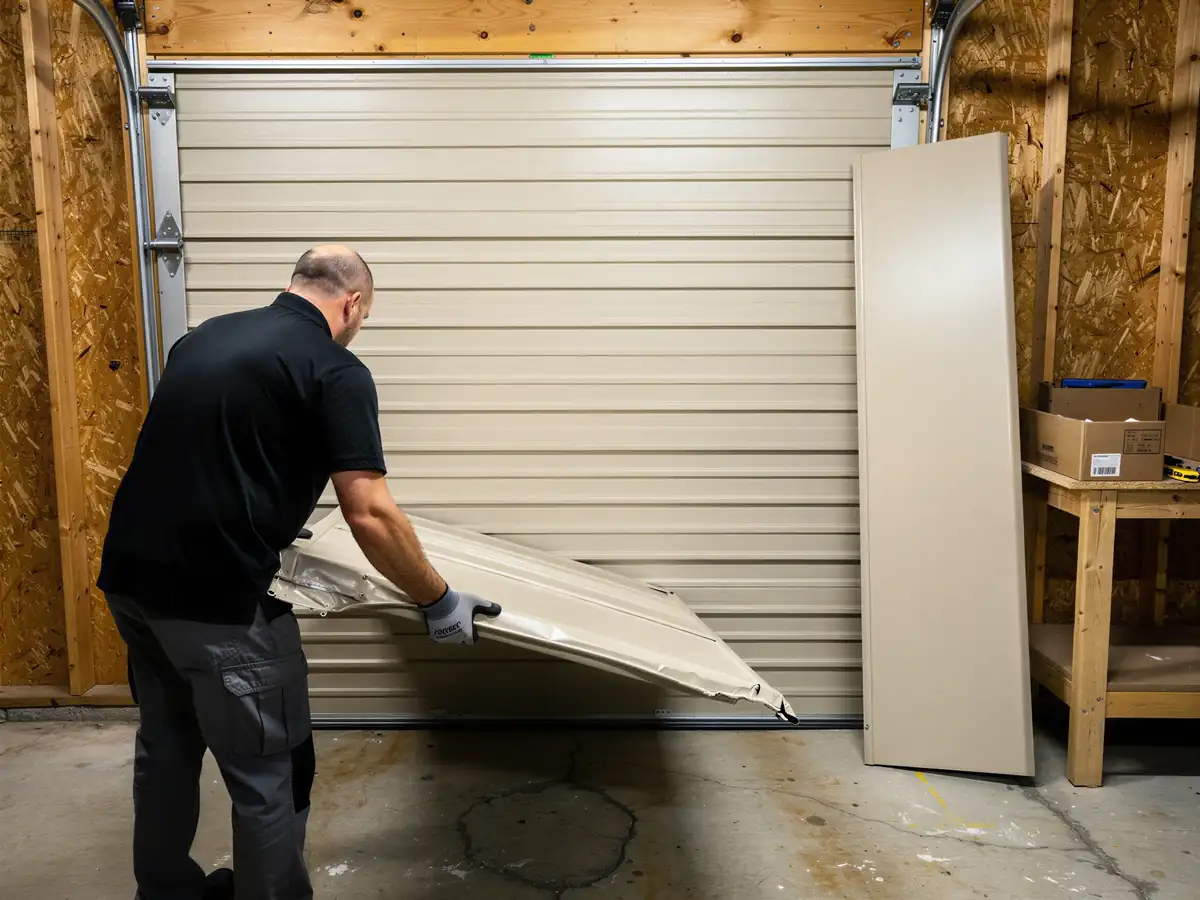
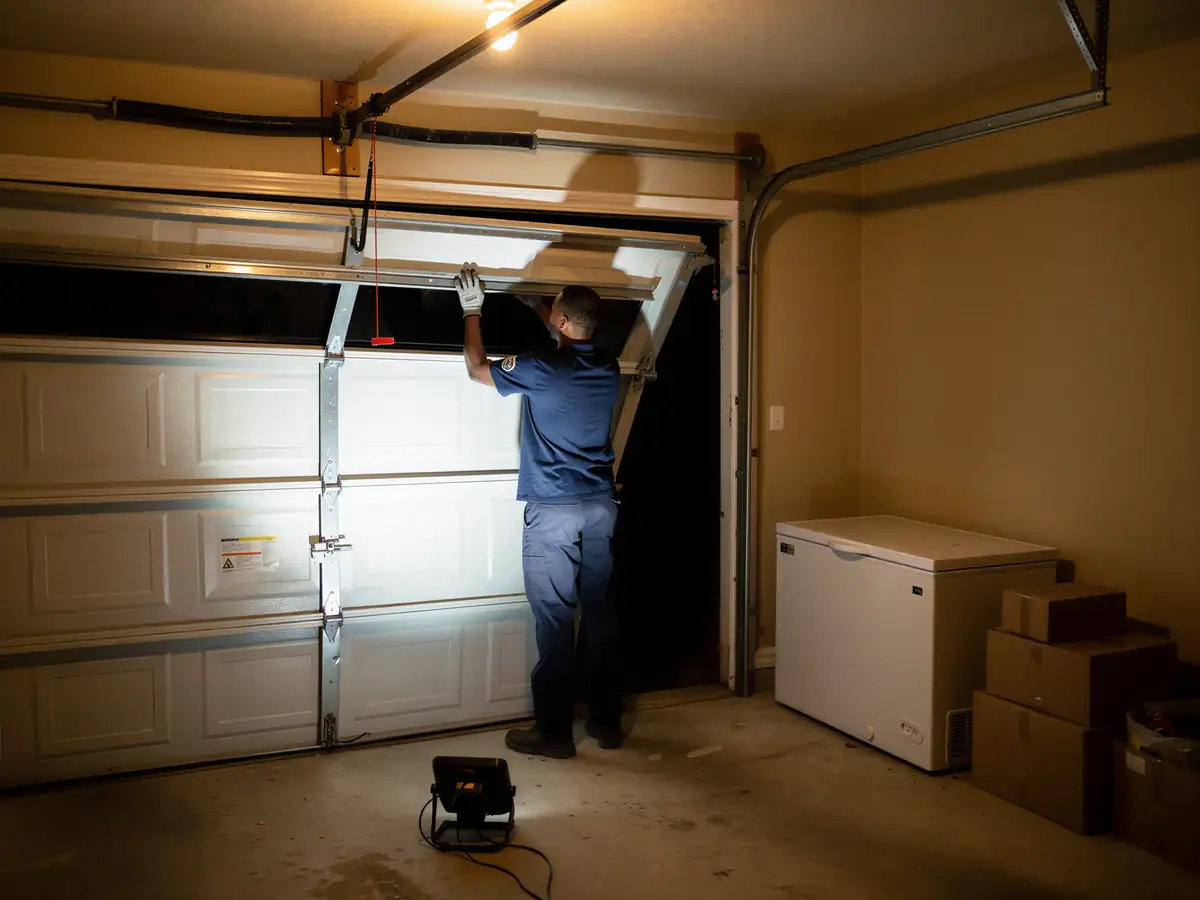
The job itself is mechanical, not electrical: lift the door off its cables with a clamp, pull the old rollers out of the hinges and bottom brackets, set new ones in, check the track is straight, re-tension. On a two-car door with steel rollers original to a 1982-ish build, we're usually also checking the hinges for elongated holes - thirty-plus years of a roller riding slightly off-true wears the hinge pivot point oval instead of round, and an oval hinge will chew through a brand-new roller just as fast as the old one.
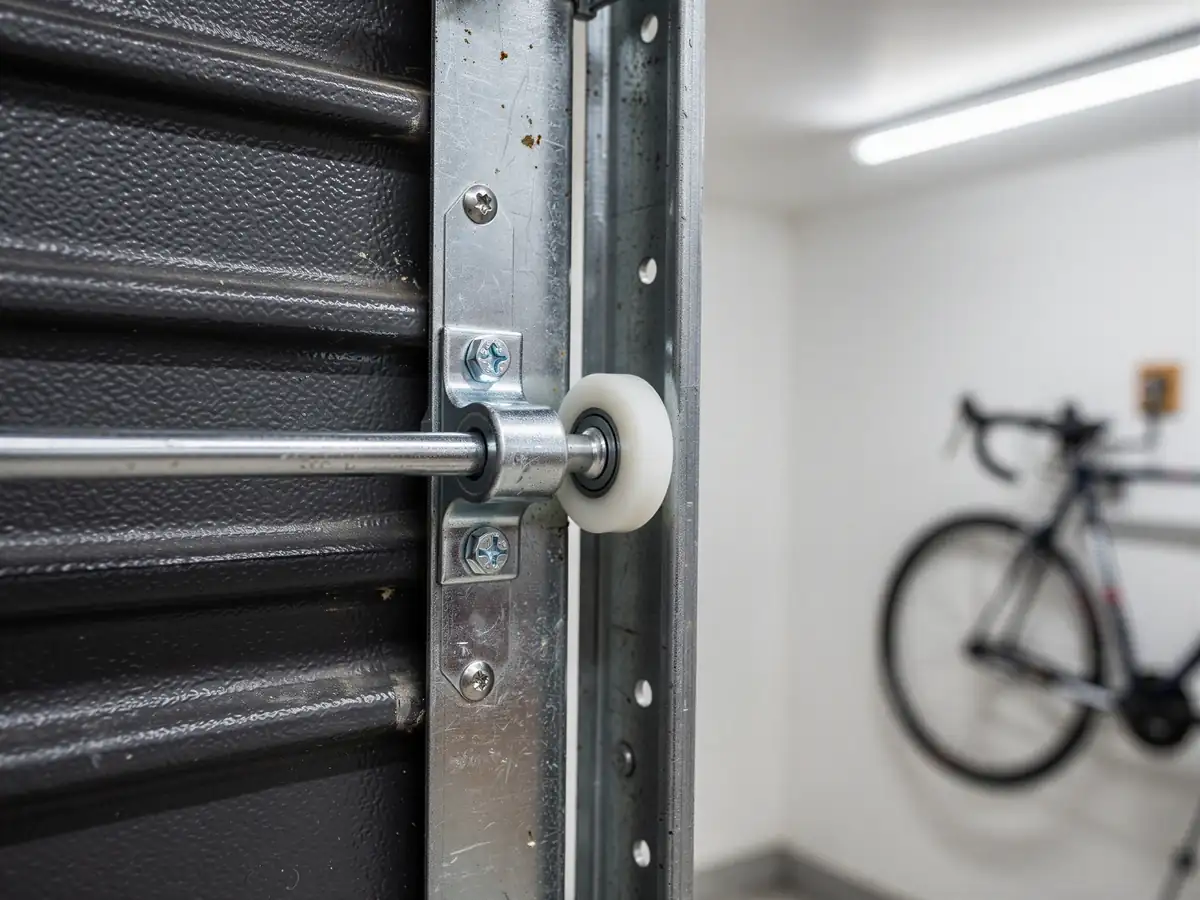
We carry nylon rollers as the standard replacement. They run quieter than steel and don't need the lubrication steel rollers do, which matters in a climate that swings from humid summers to hard winter cold - moisture and road salt get into an unsealed steel bearing faster than people expect.
Booking a Visit
We cover North Barrington from our Lake Zurich location, about 2 miles out. That's close enough that a roller job doesn't turn into a half-day wait, but we're not based in North Barrington itself and we don't pretend to be - no local branch, no storefront here. One truck, one trip, same crew that handles the rest of the Lake Zurich service area.
If you're not sure whether it's the rollers or the opener acting up, tell us what you're hearing - a grinding scrape versus a sharp bang are different problems - and we can usually tell you over the phone which one it sounds like before we schedule anything.
Can You Do This Yourself
Swapping rollers is one of the more DIY-friendly garage door jobs
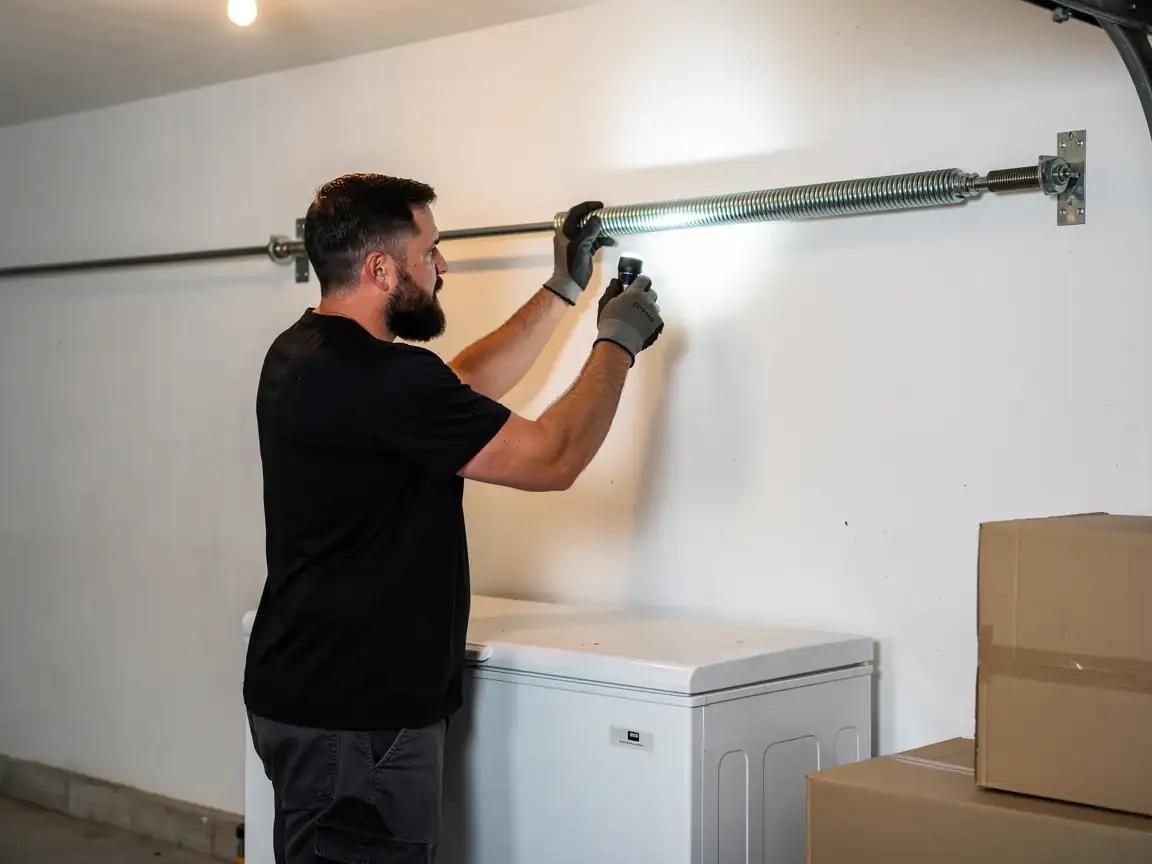
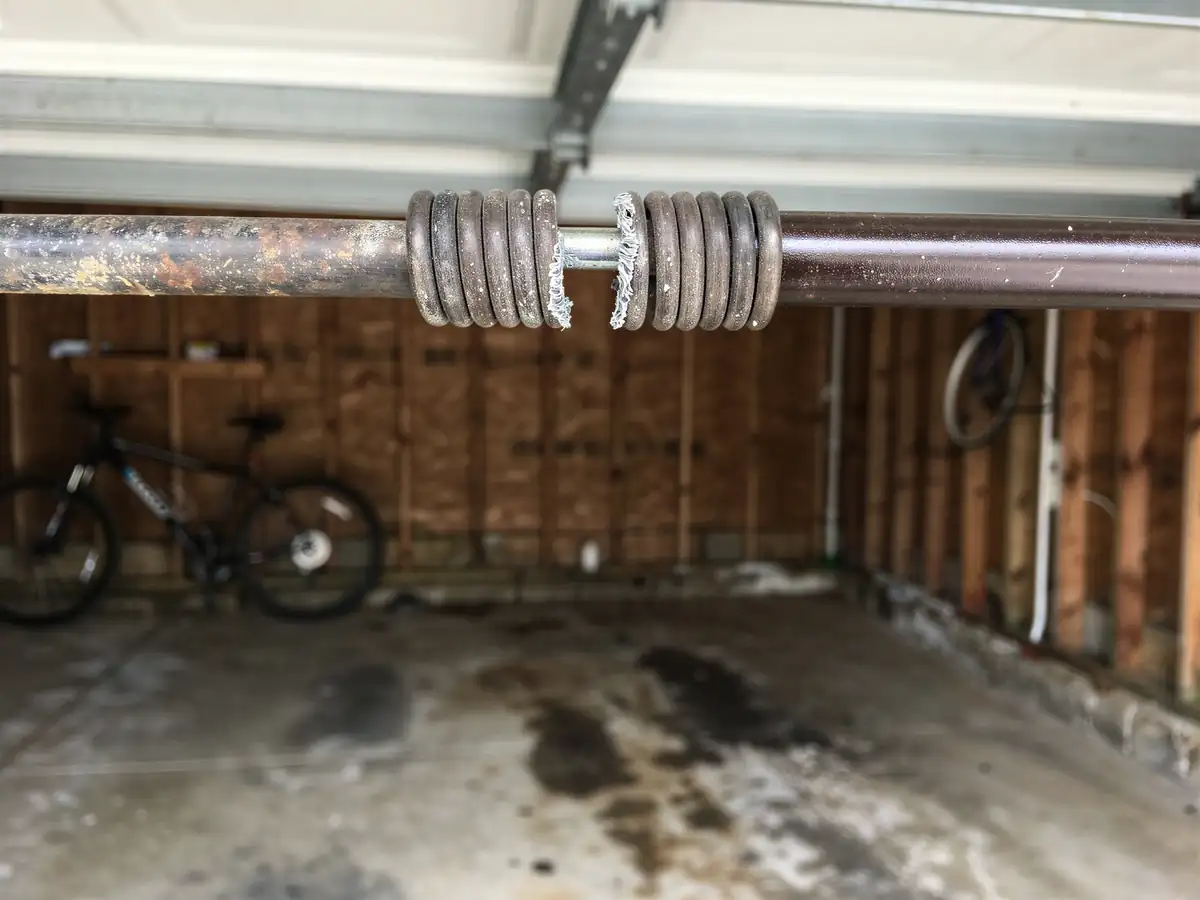
And plenty of handy homeowners do it. The risk isn't the roller - it's the door. A standard torsion-spring double door weighs more than most people guess, and once you've got it off the cables to pull the rollers, there's nothing holding it up but you and a clamp. If the clamp slips or the door isn't balanced right to begin with, that's a crushed finger or worse, not a redo.
If you're comfortable with hand tools and you've got someone spotting
A single roller or two on the bottom bracket is low-risk. Replacing the full set on all four tracks, especially with hinges that might be worn oval, is where we'd tell you to call instead - not because the fasteners are complicated, but because the door under tension is not forgiving of a bad guess.
How Long It Takes
A straight roller swap - ten to twelve rollers, hinges in decent shape, track true - runs about 45 minutes to an hour once we're on site. Add bent track straightening or hinge replacement on a door that's been grinding for a while, and you're looking at closer to two hours. We don't carry every hinge size on the truck for every door era, so if yours needs a part we don't have on hand, that can mean a short-order wait rather than a same-visit fix. We'll tell you up front if that's the case rather than guess.
How It Shows Up
The usual sign is sound: a rhythmic squeak or grind that gets louder as the door moves, especially noticeable in the quiet of a North Barrington driveway rather than a busier street. Some owners describe it as a shopping-cart-wheel sound, one thump per roller per foot of travel. Worn rollers also tend to show as a door that sticks slightly at the same spot on the track every time, or jumps visibly as it passes a bent section.
With a median household income of $216,250 in this area - well above the roughly $121,583 median across the broader Lake Zurich service area - we see fewer owners riding a bad roller all the way to total track failure here than in some other towns we cover; most call once the noise starts, not once the door won't move at all. That's the right call. A roller problem caught early is a parts swap. Caught late, after it's bent the track, it's a bigger job.