How Long It Takes
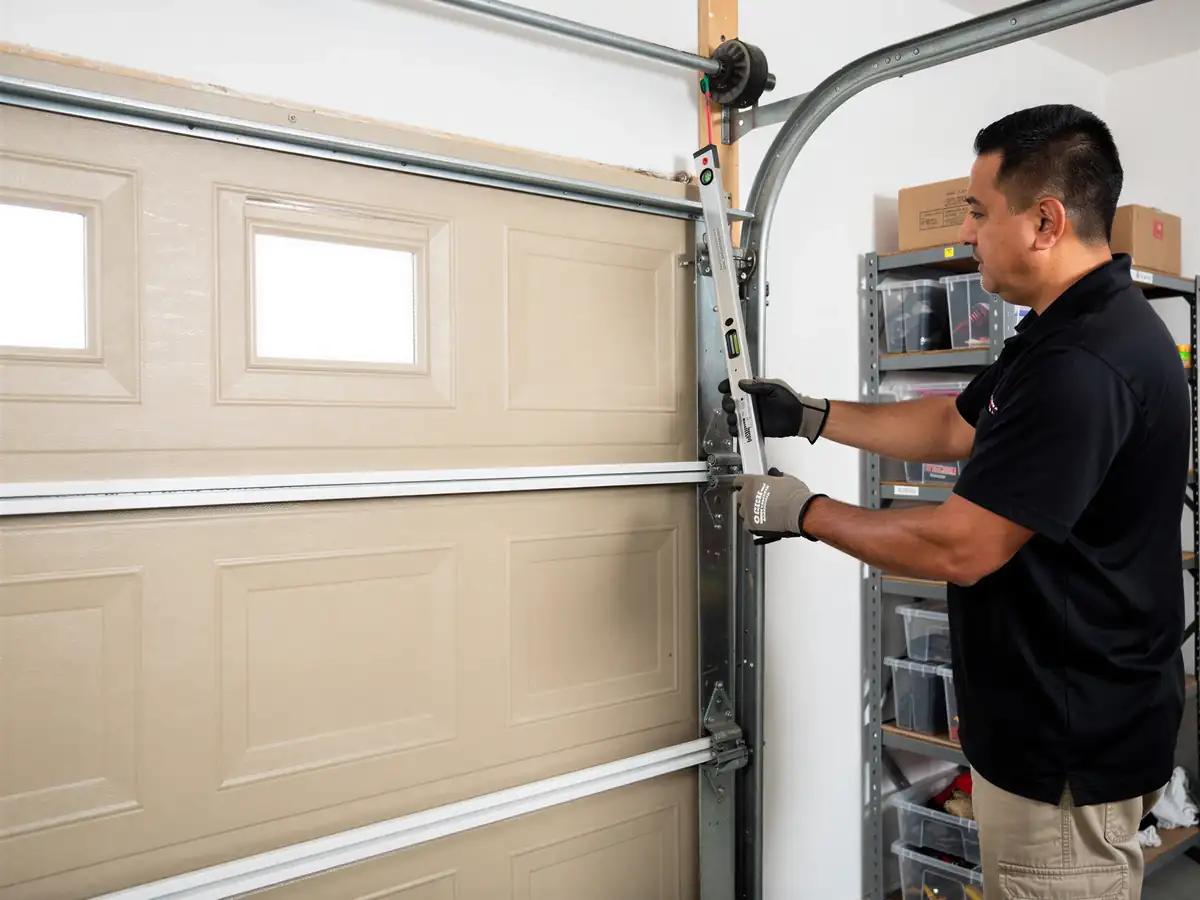
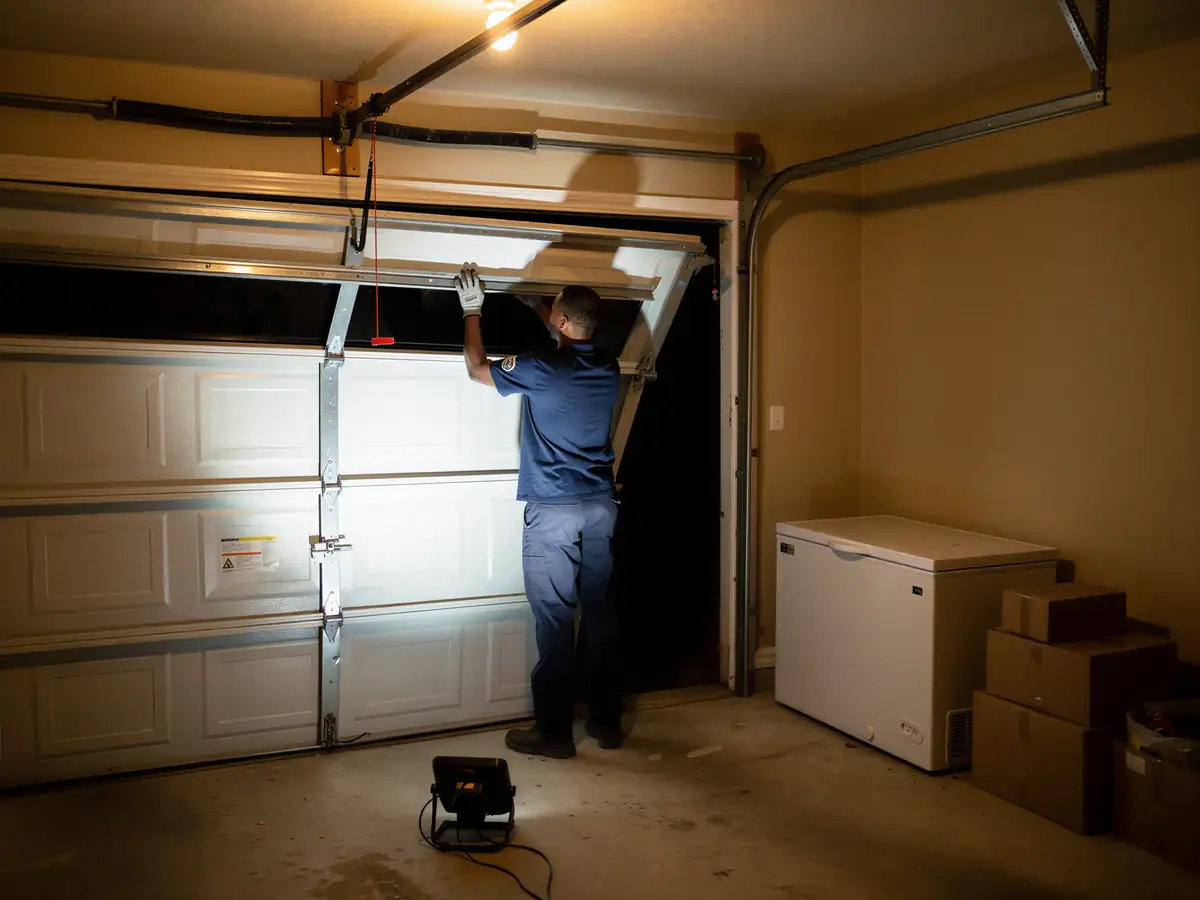
We run this job out of our Lake Zurich shop, and Deer Park sits about 2 miles out, so there's no meaningful drive built into the visit. The roller swap itself is a focused job - pull the old rollers, check the track for scoring or bends at the spots where they were sticking, set new ones, cycle the door a few times to confirm smooth travel. What can stretch the visit is track condition. If 35 years of worn rollers have deformed the track groove, that's a separate repair, not something a roller swap alone fixes. We'll tell you on site if that's the case rather than guess over the phone.
What You Pay
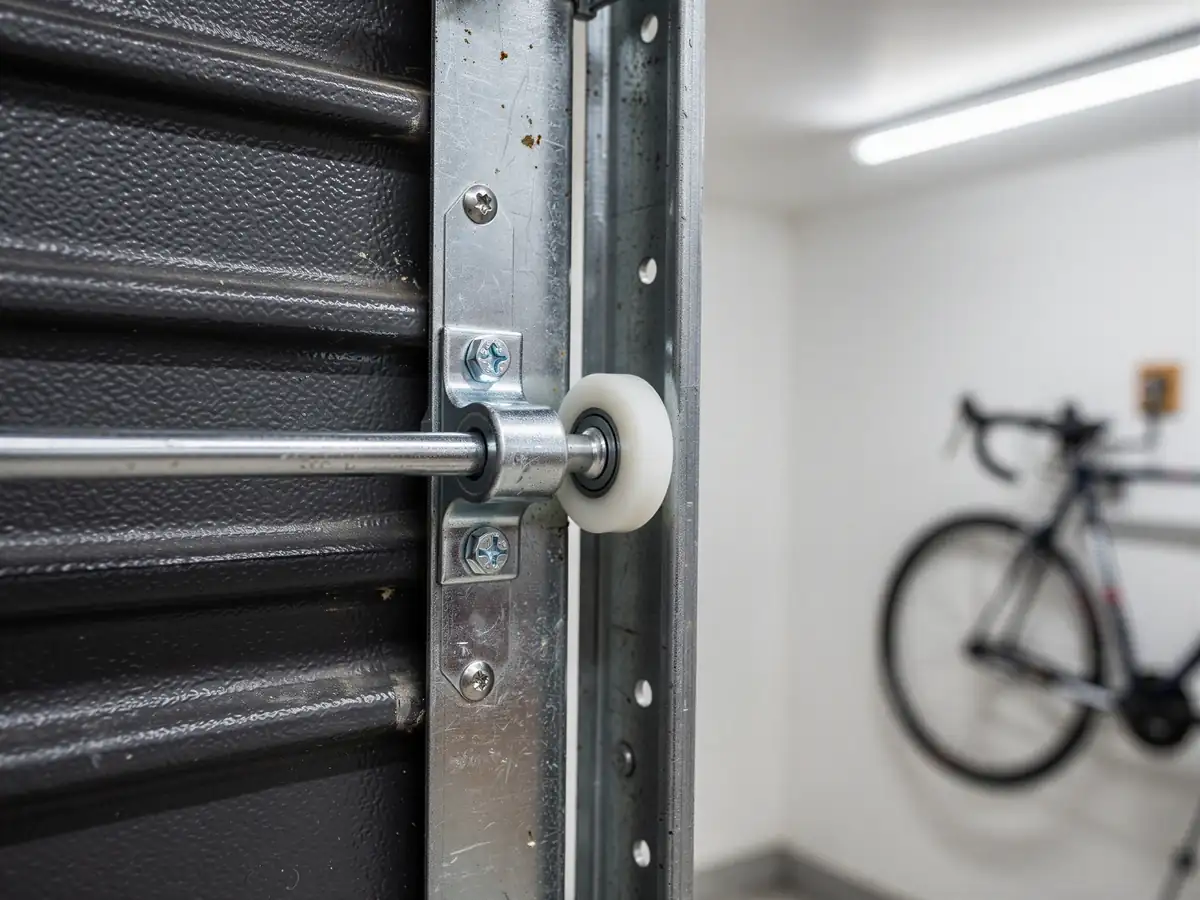
What you pay here depends on three things: how many rollers need replacing (sometimes it's just the bottom two or three taking the load, sometimes it's the whole set of ten), whether you want steel or sealed nylon, and whether the track needs correcting alongside the rollers. A full double-door set in sealed nylon costs more up front than steel, but on a 1988-era door that's already outlived its original hardware, it's usually the one worth paying for - nylon doesn't need the periodic lubrication steel does and runs quieter on an older, slightly worn track. We don't carry a published flat rate for this because the track condition varies house to house even within the same build year.
Why This Fails Locally
Deer Park's homes clustering around a 1988 median build year means a large share of doors in town are running original or first-generation replacement hardware - steel rollers on steel stems, built to the standard of that decade, not today's sealed-bearing nylon. In a cold-moderate climate, steel rollers without sealed bearings are more exposed to grease stiffening in winter and moisture working into the stem over repeated freeze-thaw cycles. That combination of age and climate exposure is what pushes these rollers from