How It Shows Up
Deer Park's median household income runs $160,750
Well above the $121,583 median across our whole service area. That number matters more than it sounds like it should, because it changes the call we get. In lower-income pockets of the territory, a broken spring often turns into a patch job - whatever keeps the door moving another year. Here, homeowners more often skip the patch and ask what a full replacement costs, because the door is twenty-some years old anyway and they'd rather not pay twice.
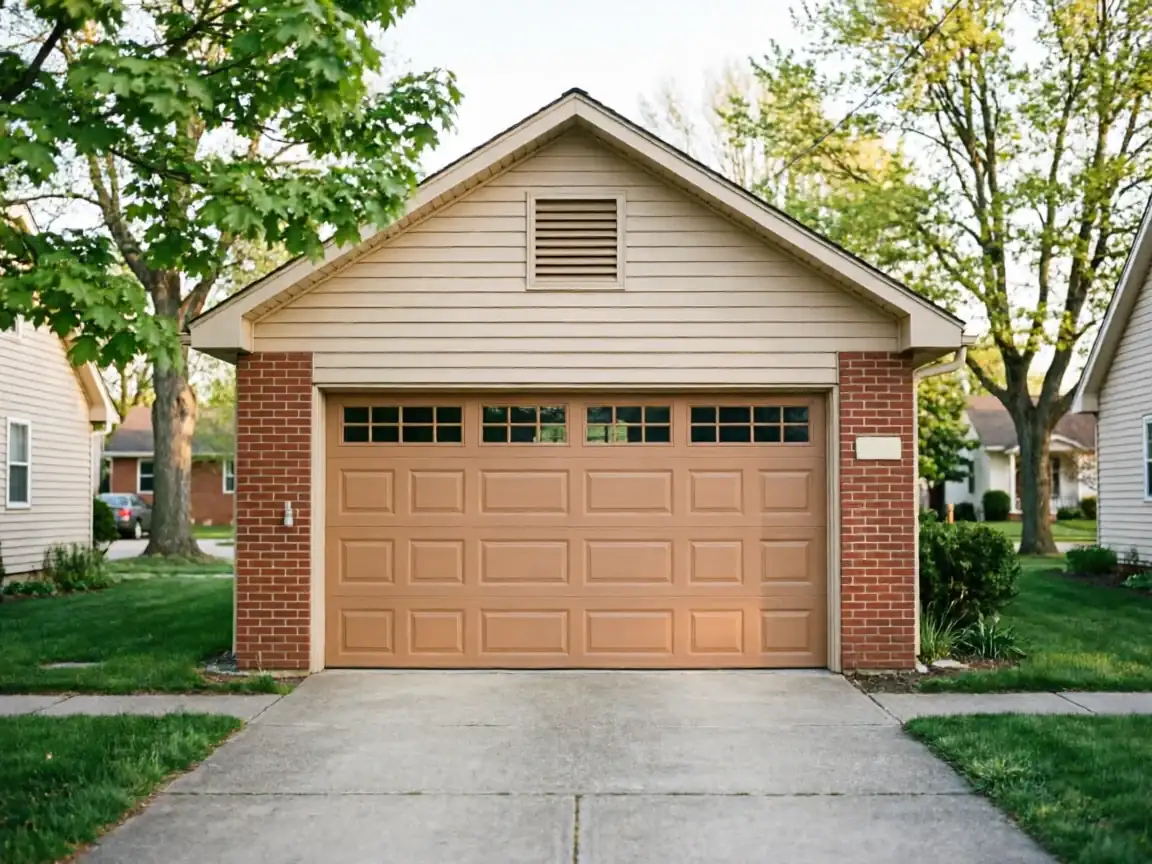
Most houses in Deer Park went up around 1988
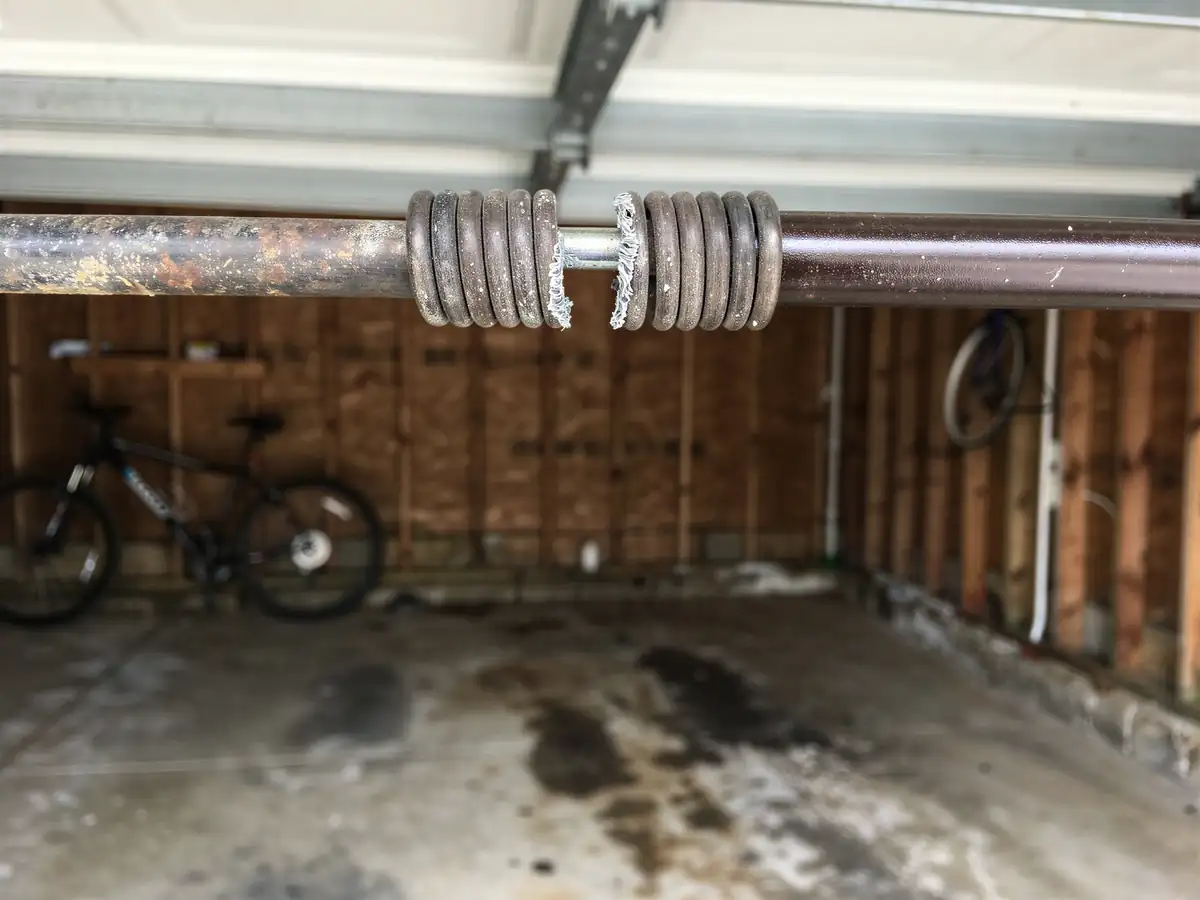
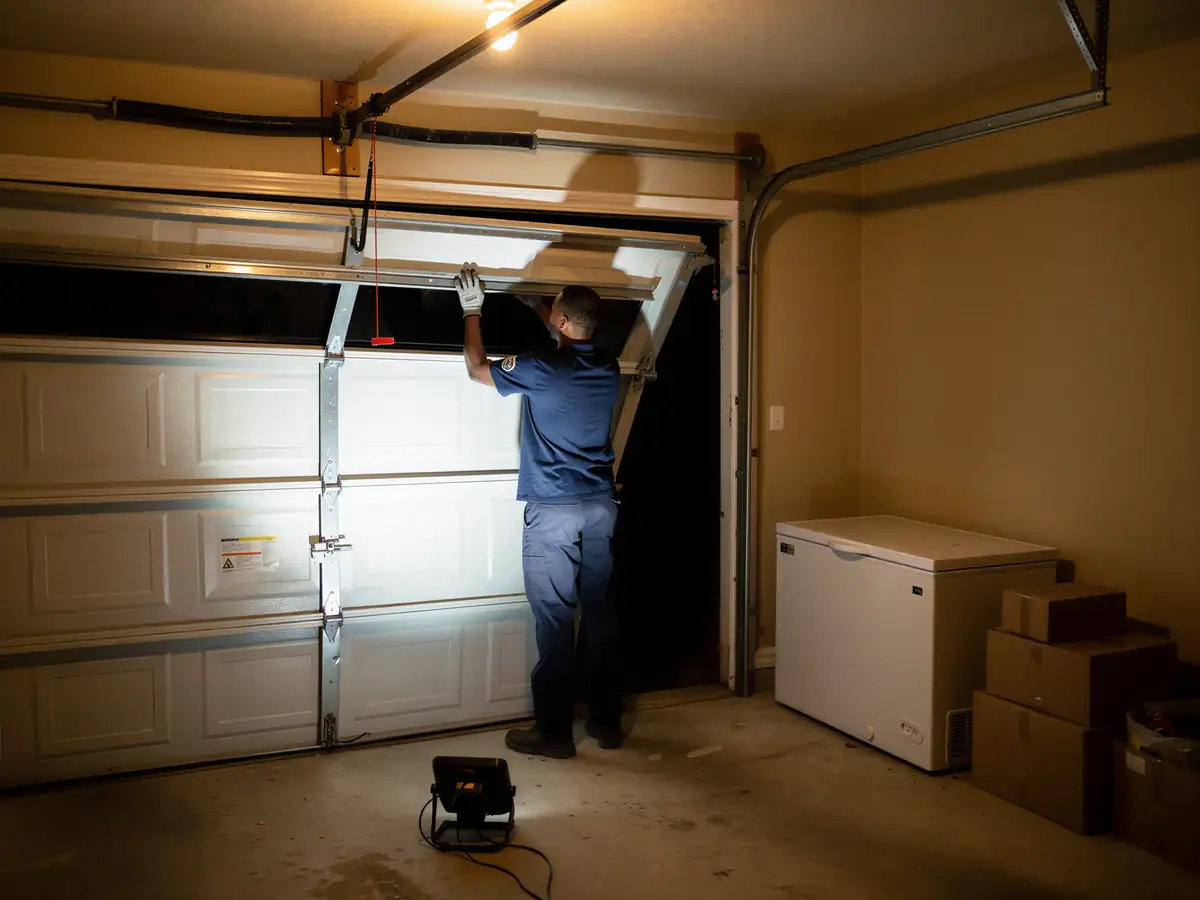
A touch later than the service area's overall median build year of 1985. That means the garage doors failing now are steel sectional doors on torsion or extension spring setups from the late 80s - not the older wood panel doors you'll find in the earliest-built sections of the territory. Springs sag, cables fray, and openers from that era are long past their rated cycle count. The symptom is usually the same: a door that groans going up, sticks halfway, or won't open at all some cold mornings.
How Long It Takes
We run this job out of Lake Zurich, about 2 miles from Deer Park. There's no branch or depot in town - the truck comes from Lake Zurich every time, which is a short drive by any measure but still means we're not sitting on the street waiting.
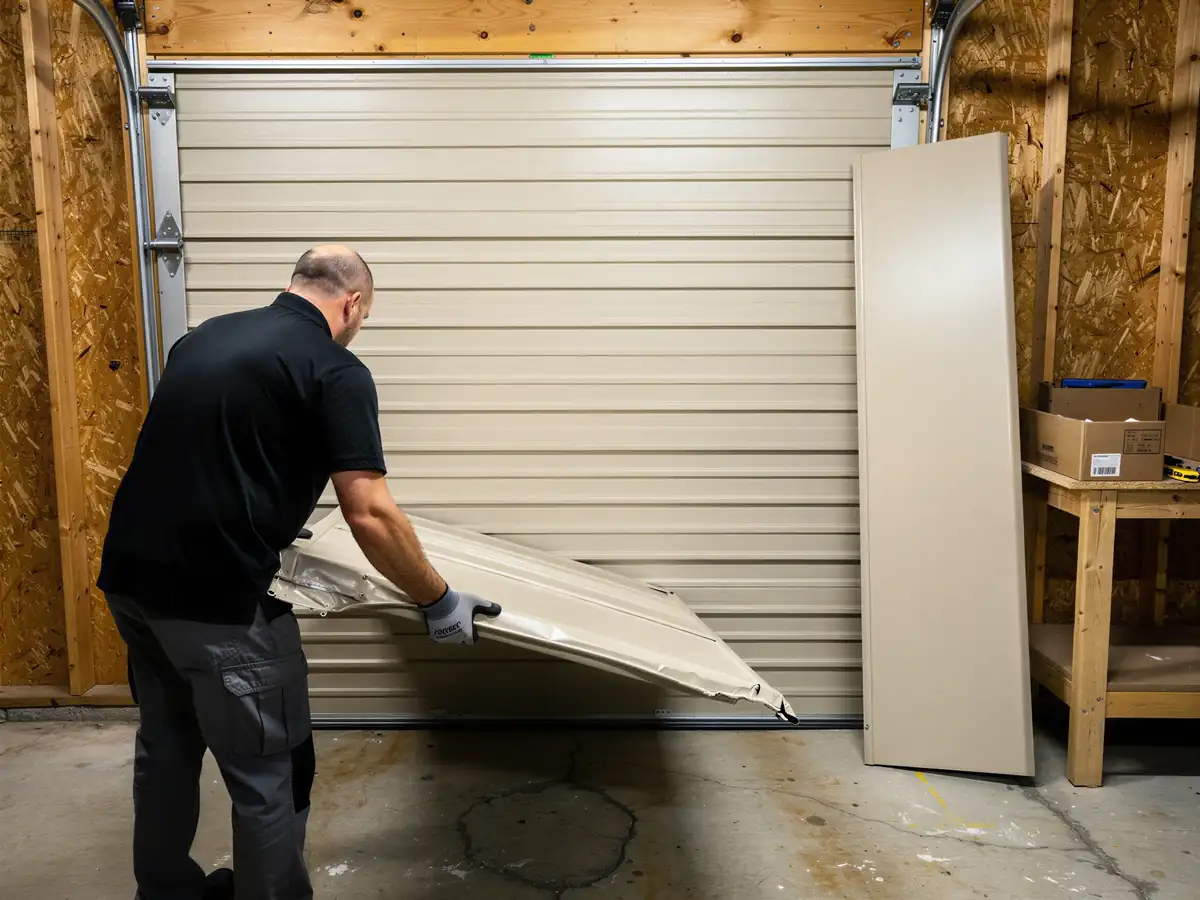
Once we're on site, most single-spring repairs or opener swaps are a same-visit job. Full door replacements usually need a second trip if the panel size or track width isn't something we're carrying that day, since we don't stock every dimension on the truck. We'll tell you straight on the first visit whether it's a one-trip fix or a two-trip job - we're not going to promise a timeline we can't back up.
What You Pay
We don't post a price list for this page because a torsion spring job and a full door replacement aren't the same expense, and quoting a number without seeing the door is how you end up over or under what it actually costs. What we can tell you is how the income picture here shapes the decision: at a $160,750 median household income, more Deer Park owners choose replacement over a third or fourth repair on an aging door, because the math on a new door amortized over its life often beats stacking repair bills on hardware from 1988.
That's not true everywhere in our territory - in areas where household income sits closer to the $121,583 service-area median, repair stays the default longer, and that's a reasonable call too. We'll give you both numbers - repair and replace - on the visit, and let you pick.
Where This Job Goes Sideways
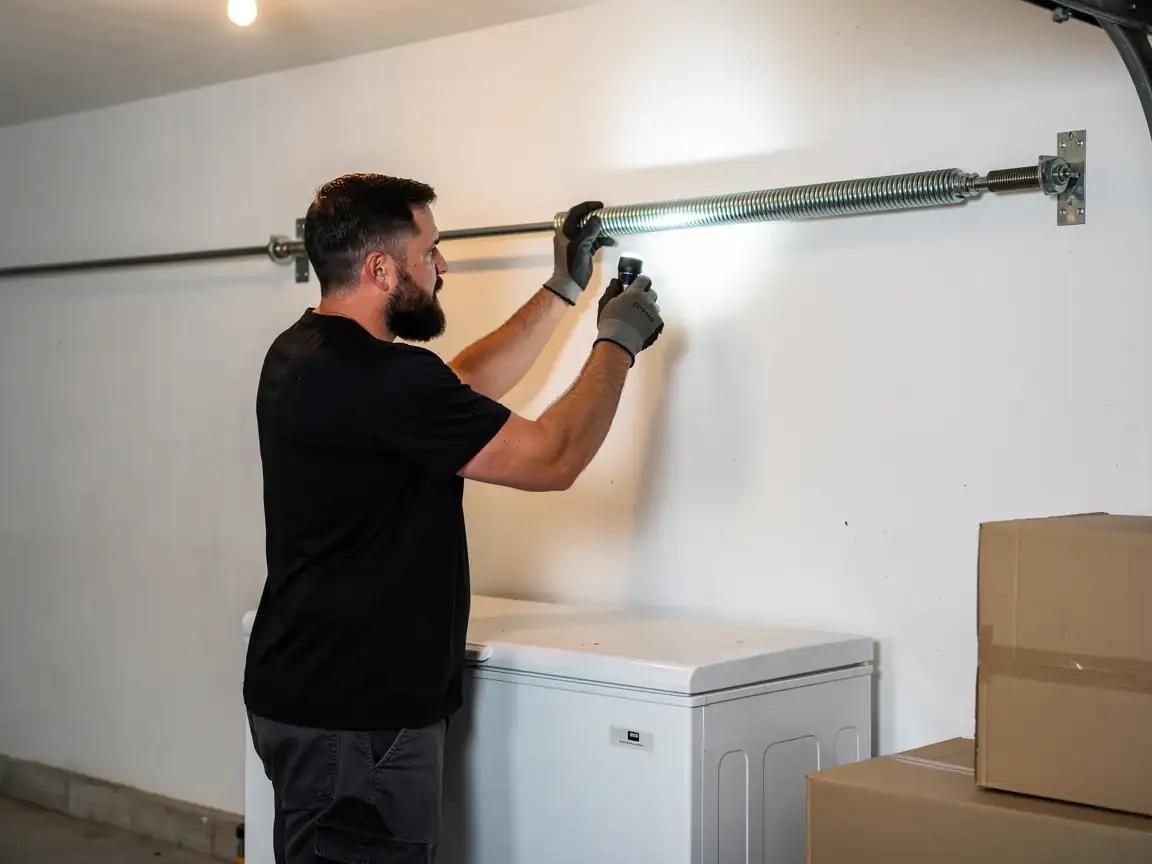
The late-80s steel doors common in Deer Park often came with extension springs mounted along the horizontal track rather than torsion springs over the header
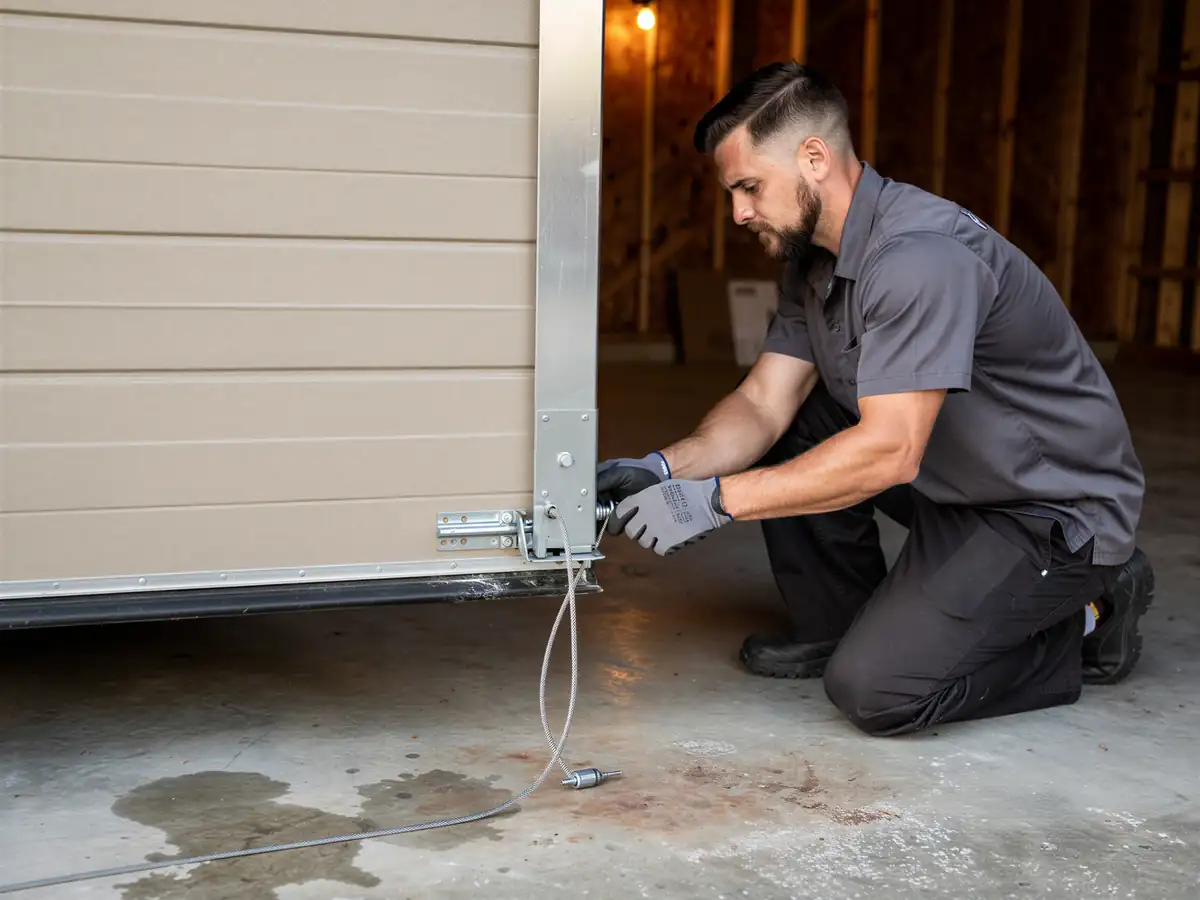
Extension spring systems are cheaper to install but nastier to work on - no drum, no cable drum tension to manage the same way, and the safety cables that are supposed to catch a broken spring are sometimes missing on older installs because they weren't code-required when the door went in.
We also run into openers from that era with chain drives and no modern safety reversal sensors
If a homeowner wants to keep the existing opener but add photo-eye sensors for safety, that's a straightforward add. If the opener itself is seized or the gearbox is stripped, patching it isn't worth the labor - replacement is the honest answer, and we'll say so instead of billing for a repair that won't hold.
Why This Fails Locally
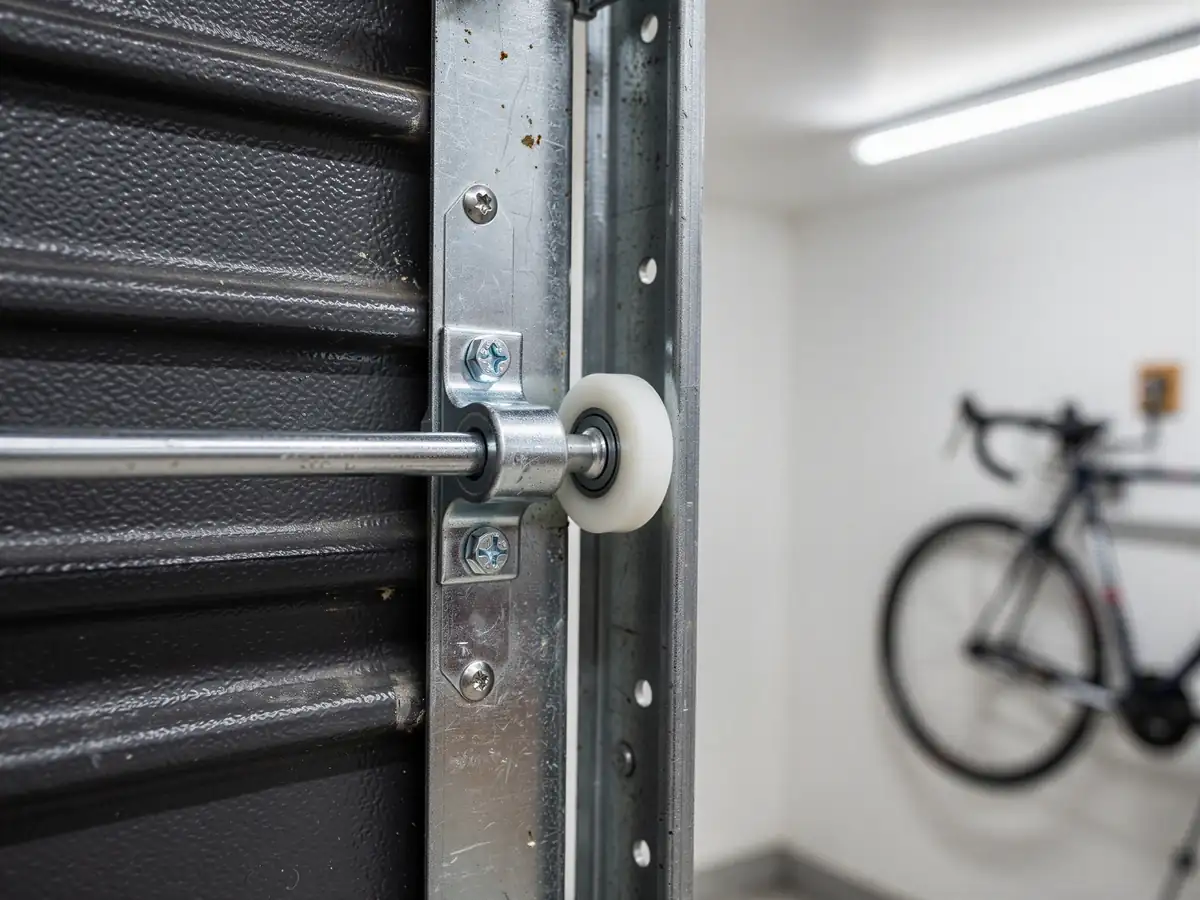
Our whole service area sits in a cold moderate climate band, and a door installed around 1988 has been through three decades of freeze-thaw cycles. Steel panels don't crack from cold the way wood does, but the grease in the rollers and hinges stiffens up, and wood jambs around the door opening swell and shrink with the seasons even when the door itself is steel. That seasonal movement is what throws tracks out of alignment over the years - not a single event, just thirty winters doing their slow work.
Deer Park counts 1,311 households (its own figure, not part of the area-wide 174,673 total we cover), which tells us this is a small, specific pocket rather than a sprawling subdivision with ten different build eras mixed together. Most of the doors we see here share the same age and the same failure points, which is useful - we know roughly what we're walking into before we knock.
What the Repair Takes
For a torsion spring job on a door this age, we're measuring the existing spring wire size and winding cone before ordering a replacement, since late-80s doors sometimes used spring specs that newer manufacturers don't stock off the shelf anymore. That can mean a short delay if the exact wire gauge isn't on the truck.
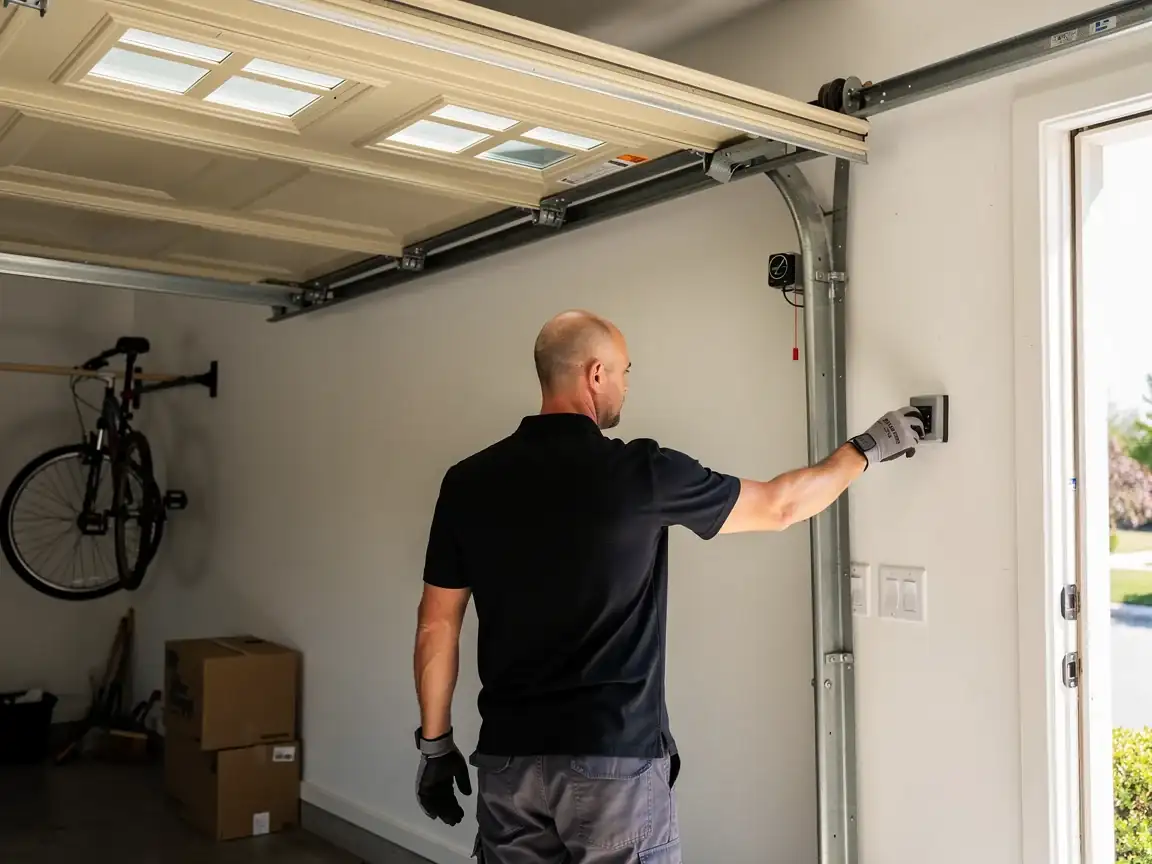
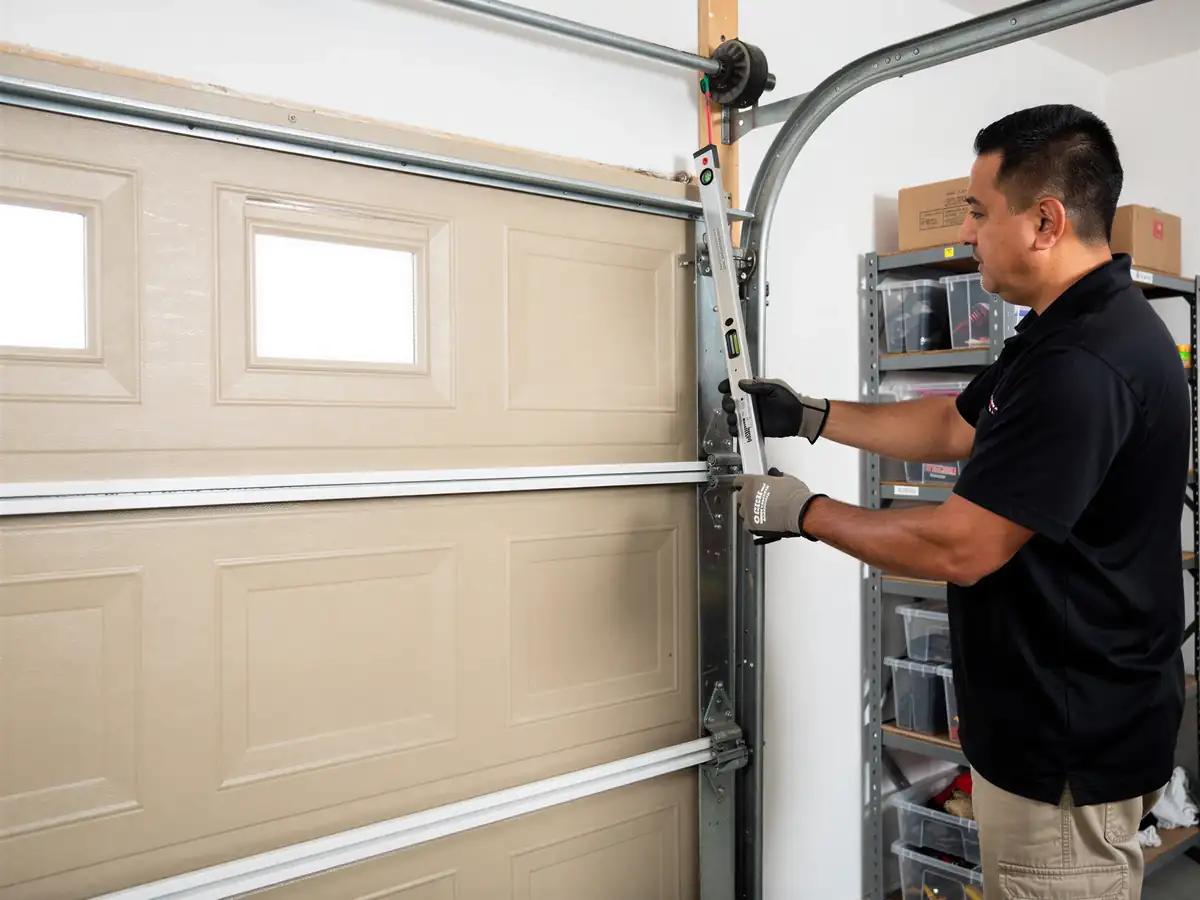
For extension spring setups, the job includes checking whether safety cables are present and adding them if not - that's a code and safety item we won't skip even if it adds to the bill. Track alignment is almost always part of the visit on a door this old, since thirty years of seasonal jamb movement rarely leaves a track perfectly square. We true up the track, lubricate rollers and hinges, and test the door through a full open-close cycle before we call the job done.